
You are using an out of date browser. It may not display this or other websites correctly.
You should upgrade or use an alternative browser.
You should upgrade or use an alternative browser.



Given the strides DRDO has made in missile tech (former Chief Satish Reddy said on record India could develop practically any type of missile), it'd be difficult for GoI to foreclose any ongoing projects you mention as mere TD. Could imports cut into order volumes? Absolutely.Well arms lobby is huge in western countries. Even climate lobby, Islamist lobby will dwarf compared to them.
Only caveat is that domestic system have taken backseat in past. If same is repeated with Helina, UPLMG-3, VSHORADS, then it's a massive compromise cum betrayal to govts own agenda. ( How much time to judge? Year, two years? Five for mass deployment? )
In any case if this LMM deal was just an MoU, GoI likely did it just for the optics. But now that Igla-S is being license mfg in India, there is absolutely no room for any other imported manpads.
Look, the first part, what the armed forces could have chosen & what not I can not tell or even predict. Choice is done by high rank people and often there are scandals involved which we sometimes get to know or simply do not. eg Bofors, a gun with scandals but served well during Kargil. So what would you classify it as ? success or failure? (don't consider tot or other aspect, just as use case only)If the IA wanted LBMR manpads so much, they could've chosen RBS-70NG years ago, instead of getting Starstreak through a back-channel deal. Tech wise, LMM's guidance tech is derived from SS.
So buying 2 comparable missile systems from the same vendor (Thales) makes no sense, especially since neither was chosen through a competitive bidding process.
I don't see any tech/economic merits either in robbing Peter (Saab) to pay Paul (Thales UK). They are part of the same trade bloc. Btw, Saab already makes Carl Gustaf in India.
The trade deal probably stands on its own merit. The UK had been desperate for FTA with India since Brexit. India needed to find new markets for its exports after the US imposed higher tarrifs. It's not standard practice for countries to mix defence and trade.
Sadly, the GoI doesn't appear to have changed its policy of leveraging defence deals for geopolitical/trade benefits.
Thing with the Thales product, I do not know how much armed forces wanted it or govt wanted to push thru deals as showoff or whatever. Given we have rather limited resource available, there must have been a demand which instigated this purchase. Just the user experience pov will do.
Using this system will help you gain unique experience that otherwise is very hard to imagine & implement. case in point, use of simulators. Today army is using training simulators for even atgm firing training, something that was unthinkable decades ago. This is the sort of knowledge you gain, that help you make better useful jugaads in house for a different system but used in same manner when the need comes. In our diverse theater of war terrains, that is extremely highly valued. What works in desert will not work as good in high alt. So the diversified sourcing always help.
Yeah what helps GOI in this trade pact is easier access to EU market for the critical imports. We did not have that before & we needed a lot of critical items import that are denied. Now some of those items we won't get denied like before.

It's not really a MANPAD, it's a multirole missile that can be fired by an individual, from a vehicle or from an aircraft or a ship against any stationary or moving target either on air, sea or land. I doubt we have any missile of this kind, but importing them still makes no sense that I agree.Given the strides DRDO has made in missile tech (former Chief Satish Reddy said on record India could develop practically any type of missile), it'd be difficult for GoI to foreclose any ongoing projects you mention as mere TD. Could imports cut into order volumes? Absolutely.
In any case if this LMM deal was just an MoU, GoI likely did it just for the optics. But now that Igla-S is being license mfg in India, there is absolutely no room for any other imported manpads.
Look, the first part, what the armed forces could have chosen & what not I can not tell or even predict. Choice is done by high rank people and often there are scandals involved which we sometimes get to know or simply do not. eg Bofors, a gun with scandals but served well during Kargil. So what would you classify it as ? success or failure? (don't consider tot or other aspect, just as use case only)
Thing with the Thales product, I do not know how much armed forces wanted it or govt wanted to push thru deals as showoff or whatever. Given we have rather limited resource available, there must have been a demand which instigated this purchase. Just the user experience pov will do.
Using this system will help you gain unique experience that otherwise is very hard to imagine & implement. case in point, use of simulators. Today army is using training simulators for even atgm firing training, something that was unthinkable decades ago. This is the sort of knowledge you gain, that help you make better useful jugaads in house for a different system but used in same manner when the need comes. In our diverse theater of war terrains, that is extremely highly valued. What works in desert will not work as good in high alt. So the diversified sourcing always help.
Yeah what helps GOI in this trade pact is easier access to EU market for the critical imports. We did not have that before & we needed a lot of critical items import that are denied. Now some of those items we won't get denied like before.
The point is the IA spent years testing the best manpads on the global market. Ultimately, they selected the older-gen Russian Igla-S (over arguably more modern competitors like Mistral, RBS-70) and which is now being produced in India. This prog has been such a long-running saga marred by corruption allegations. Finally, the way SS/LMM was chosen in a track 2 deal between Thales and BDL is suspicious.
I don't blame BDL. It was a commercial opportunity for them. But the IA procurement strategy seems to be all over the place, be it WhaP, SPAAG, ATAGS/MaRG or AK-203 + SiG- 716 or VShorads.

It is an opportunity that they did not explore inadvertently or spontaneously , pretty much a GoI mandated move just like BEL to do the work share part on Indian side for the long range radar from Russia, Voronez or something ? Traditionally the top rank people make the decision, ministers sign it off , MoD officials facilitate the whole agreement process & PSUs do the work. This is the model that is well established. So at every stage of this process there is Govt control around it.The point is the IA spent years testing the best manpads on the global market. Ultimately, they selected the older-gen Russian Igla-S (over arguably more modern competitors like Mistral, RBS-70) and which is now being produced in India. This prog has been such a long-running saga marred by corruption allegations. Finally, the way SS/LMM was chosen in a track 2 deal between Thales and BDL is suspicious.
I don't blame BDL. It was a commercial opportunity for them. But the IA procurement strategy seems to be all over the place, be it WhaP, SPAAG, ATAGS/MaRG or AK-203 + SiG- 716 or VShorads.
Army or the armed forces if like pakistan were allowed to work in choose your own budget & buy your own stuff sort of modus operandi, we would still have had corruption but the arsenal also would have been way bigger and versatile and probably would have had more leverage in the Western world via sheer volume of arms trading.
So this sort of policy paralysis is kind of human enforced. Armed forces want stuff, the more the better. If pockets can be lined up then preferably via that route. But survival is of paramount to them. This same equation is not applicable for the policymaker because they have their own viewpoint, live in their own bubble & decisions made by them reflect that. Stakes are high & diverse, everyone try to get own share via any crooked means available, every stakeholder try to influence it their way. Result is the sad state of affair we see today.
Even laser guided rockets like APKWS are now being adapted for S2A applications (as low-cost CUAS) while Hellfire ATGM has been tested with Stryker M-Shorad.It's not really a MANPAD, it's a multirole missile that can be fired by an individual, from a vehicle or from an aircraft or a ship against any stationary or moving target either on air, sea or land. I doubt we have any missile of this kind, but importing them still makes no sense that I agree.
Iirc, Thales lists LMM as an AD solution on their website. Although I've seen cgi images of RN Lynx helos carrying them so it looks like they are now adapting it for other applications.
The missile itself is okay and as someone even pointed out that it is quite versatile. Even though it was adopted by the UK forces recently, it has been used extensively in the Russo-Ukraine war. The gripe is the import and to be honest as a lot of people have pointed out that for half a billion other things that were necessary could have been acquired if they had to get something via the import route.Even laser guided rockets like APKWS are now being adapted for S2A applications (as low-cost CUAS) while Hellfire ATGM has been tested with Stryker M-Shorad.
Iirc, Thales lists LMM as an AD solution on their website. Although I've seen cgi images of RN Lynx helos carrying them so it looks like they are now adapting it for other applications.
It's not really a MANPAD, it's a multirole missile that can be fired by an individual, from a vehicle or from an aircraft or a ship against any stationary or moving target either on air, sea or land. I doubt we have any missile of this kind, but importing them still makes no sense that I agree.
If you were going to go the import route, this could have been another option:The missile itself is okay and as someone even pointed out that it is quite versatile. Even though it was adopted by the UK forces recently, it has been used extensively in the Russo-Ukraine war. The gripe is the import and to be honest as a lot of people have pointed out that for half a billion other things that were necessary could have been acquired if they had to get something via the import route.
Contrary to popular belief peddled by the PAF, the SCALPs were not shot down by the tens by their 'advanced' EW systems or what they call soft kills.
The Rafales have now been notched up in the IN and IAF beyond 50. Since other ALCMs built by India cannot be launched from it why not keep these in inventory till MBDA offers something next gen. or something else comes along.

We've already bought ASRAAM + SCALP and had almost purchased CAMM anti-missile systems for the IN (before VLSRSAM spoiled the party).The gripe is the import and to be honest as a lot of people have pointed out that for half a billion other things that were necessary could have been acquired if they had to get something via the import route.
The only other British item we're reportedly interested in is RR's IEPS propulsion tech and perhaps Griffon hovercraft (which incidentally Pak has beaten us to).
I'm hoping the SS/LMM MoU remains just that and doesn't convert into a firm order.
Last edited:
The more versatile & diverse the better. Every such system is highly software centric, each product comes with unique features that you gain knowledge about by using only because the user manuals are available only when you buy the system & then get trained on it. Traditionally we have had no MIC or experience in developing complex weapon systems. DRDO itself research from open literature and then build things up step by step. So how are you going to arrive even in a benchmark config, a PDR stage when you simply have not enough knowledge on military gears & advantages features etc offered by different product?
Next, your in house knowledge base expand with your diverse inventory, it also helps to create job specific jugaad config that is fit for the diverse challenges put forward by the different environment across the 4 corners of the country. Every single battlefield terrain poses a different set of challenge and we have almost all imaginable terrain from snow to desert to high altitude to plains to mountains in our country. One size fits all will not work in our case.
I do not get why many of you do not wish to have even more diverse portfolio of weapon systems in a world where many things are denied to us via specific control regimes? Domestic weapon making has just started, DRDo rarely made any tactical battlefield weapon before, so expecting a 100% perfect job that deserve mass order right away is mistaken viewpoint. Neither a huge order placing nor the reluctance to diversification of inventory is ideal. Buy a medium size lot of each and try to build up stock with small supplementary order while improving the system batch by batch is the best way. Look back again after 10-15 years & you will find a huge inventory built up already that is not even much used.
Next, your in house knowledge base expand with your diverse inventory, it also helps to create job specific jugaad config that is fit for the diverse challenges put forward by the different environment across the 4 corners of the country. Every single battlefield terrain poses a different set of challenge and we have almost all imaginable terrain from snow to desert to high altitude to plains to mountains in our country. One size fits all will not work in our case.
I do not get why many of you do not wish to have even more diverse portfolio of weapon systems in a world where many things are denied to us via specific control regimes? Domestic weapon making has just started, DRDo rarely made any tactical battlefield weapon before, so expecting a 100% perfect job that deserve mass order right away is mistaken viewpoint. Neither a huge order placing nor the reluctance to diversification of inventory is ideal. Buy a medium size lot of each and try to build up stock with small supplementary order while improving the system batch by batch is the best way. Look back again after 10-15 years & you will find a huge inventory built up already that is not even much used.
The more versatile & diverse the better. Every such system is highly software centric, each product comes with unique features that you gain knowledge about by using only because the user manuals are available only when you buy the system & then get trained on it. Traditionally we have had no MIC or experience in developing complex weapon systems. DRDO itself research from open literature and then build things up step by step. So how are you going to arrive even in a benchmark config, a PDR stage when you simply have not enough knowledge on military gears & advantages features etc offered by different product?
Next, your in house knowledge base expand with your diverse inventory, it also helps to create job specific jugaad config that is fit for the diverse challenges put forward by the different environment across the 4 corners of the country. Every single battlefield terrain poses a different set of challenge and we have almost all imaginable terrain from snow to desert to high altitude to plains to mountains in our country. One size fits all will not work in our case.
I do not get why many of you do not wish to have even more diverse portfolio of weapon systems in a world where many things are denied to us via specific control regimes? Domestic weapon making has just started, DRDo rarely made any tactical battlefield weapon before, so expecting a 100% perfect job that deserve mass order right away is mistaken viewpoint. Neither a huge order placing nor the reluctance to diversification of inventory is ideal. Buy a medium size lot of each and try to build up stock with small supplementary order while improving the system batch by batch is the best way. Look back again after 10-15 years & you will find a huge inventory built up already that is not even much used.
It makes sense ideally and perhaps would've worked if it was without the risk. Risk on developing a dependency, both from user side as well as the one researching and developing it.
It's idea to get to know different gears and weapons, try to take them apart but by but and then slowly build indigineous version of a customised version. But the risk here is that depending too much on "learning" from foreign systems is like placing a limit on yourself. The unintended effect of import dependency. Kind of like a writer's block, that if someone doesn't give you a manual, a weapon.. you can't discern the theory behind it.
Or make one yourself. Perhaps which wasn't and isn't built in other part of world suiting our needs the best. Although technology means , there will be lots of commons but work from self means something to adding value to whole organisation.
It made sense in earlier days. But for an organisation to be nation's premier and perhaps only defense R&D for more than 50 years.. it's looking down on itself and self defeating to rely on borrowed tech. + I believe it's time DRDO switched to pure R&D and focus their time only for that.
It should leave the role of prototyping, integration and overall development for users.. to the other DPSUs or Pvt ltd companies. They should be the ones to connect with armed forces and develop a product by leveraging+licensing the DRDO tech & some own inhouse R&D. Will also free up DRDO from armed forces' ever changing demands and let scientists do their job while babus do their job ( pushing files, deciding overall direction, priority, budget etc).
Let the businessman do the business. No changing demands since they won't work for developing a whole package but the core technologies that those packages can be made by others. Can also merge institution of Bio-Tech R&D, Chemical, Mathematics etc..
Benchmarking and requirements gathering is done by the services as part of setting G/A/NSQRs. The process is highly subjective, often resulting in technically impractical requirements (as seen in the case of multi-caliber assault rifle (MCIWS), Nag mk2 ATGM programs.)The more versatile & diverse the better. Every such system is highly software centric, each product comes with unique features that you gain knowledge about by using only because the user manuals are available only when you buy the system & then get trained on it. Traditionally we have had no MIC or experience in developing complex weapon systems. DRDO itself research from open literature and then build things up step by step. So how are you going to arrive even in a benchmark config, a PDR stage when you simply have not enough knowledge on military gears & advantages features etc offered by different product?
Next, your in house knowledge base expand with your diverse inventory, it also helps to create job specific jugaad config that is fit for the diverse challenges put forward by the different environment across the 4 corners of the country. Every single battlefield terrain poses a different set of challenge and we have almost all imaginable terrain from snow to desert to high altitude to plains to mountains in our country. One size fits all will not work in our case.
I do not get why many of you do not wish to have even more diverse portfolio of weapon systems in a world where many things are denied to us via specific control regimes? Domestic weapon making has just started, DRDo rarely made any tactical battlefield weapon before, so expecting a 100% perfect job that deserve mass order right away is mistaken viewpoint. Neither a huge order placing nor the reluctance to diversification of inventory is ideal. Buy a medium size lot of each and try to build up stock with small supplementary order while improving the system batch by batch is the best way. Look back again after 10-15 years & you will find a huge inventory built up already that is not even much used.
It is a vicious cycle because all it ends up achieving is 'fast-tracked' sub-optimal imports (for Indian conditions) like AK-203, Spike-MR, etc.
In any case, without iterative development based on real-time user feedback, no system can be developed to its full potential. In case of imports, that feedback ends up benefiting foriegn oem with nothing of value received in return. This may have been justified in the past, but not when our MIC is maturing and IDDM products are stuck in endless trials.
In the case of the CAMM, the motor and airframe are based on ASRAAM. As for other elements like RF seeker, we have in-house expertise.
If you've noticed MBDA uses the same modular D&D philosophy as DRDO with cross-polination of tech across multiple programs (like MICA × Aster-15 × MICA VL.)
Same with DRDO Vshorad airframe, seeker which is heavily based on Nag with miniaturized electronics.
Other than cut-rate prices, I don't see any reason to go for SS/LMM.

Great find @marich01.Nibe doing work ,
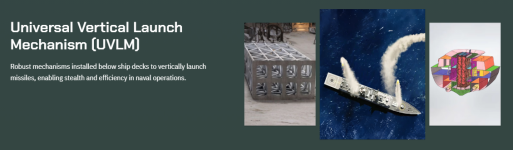
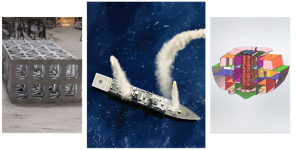
@Fatalis does that image make any view on why so much space is kept clear on the deck?
View attachment 46988
View attachment 46989
Though it looks like Brahmos UVLM.
I will be more than happy if I am proved wrong.
yeah they make the Brahmos stuff so likely for that. I also wondered why so much space is kept free on deck unoccupied.Great find @marich01.
Though it looks like Brahmos UVLM.
I will be more than happy if I am proved wrong.
 . Cheers gents.
The deal went through. The UK was probably promised that the order would follow and they would not be left hanging. MoD and MEA babus kept their word.I'm hoping the SS/LMM MoU remains just that and doesn't convert into a firm order.