
People's Liberation Army Air Force : News & Discussions
- Thread starter Aashish
- Start date
You are using an out of date browser. It may not display this or other websites correctly.
You should upgrade or use an alternative browser.
You should upgrade or use an alternative browser.


With that nose design and size they can house a j10 size radar, along with those engine with fterburner.
They basically are unmanned single engine stealth jets.
Not following the the "low cost" philosophy of CCA'a.


They're gonna make these face India in numbers rather than J36 imo. Smaller, likely stealthier meaning better suited for gaining air supremacy in LaC. J36 will be launched to penetrate our IACCS and launch precision bombing campaigns but the bulk would be aimed towards the pacific id reckon.
Dont worry we got the greatest jet in all of mankind RAFALE and 2nd greatest tejas mk1aThey're gonna make these face India in numbers rather than J36 imo. Smaller, likely stealthier meaning better suited for gaining air supremacy in LaC. J36 will be launched to penetrate our IACCS and launch precision bombing campaigns but the bulk would be aimed towards the pacific id reckon.

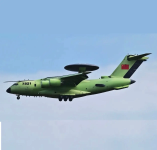
A new picture floating around of Chinese KJ-3000 AEW&C aircraft, based on the Y-20B Aircraft that's in service with the PLAAF.




Absolutely phenomenal rate of research and development.
Although the Z-21 attack helicopter (bottom left) is derived from their Z-20 Sino Seahawk utility design while the Z-8D is derived from the French Super Frelon amphib helo. They have continuously iterated this design since the 80s.
The Y-30 could have significant design input from Ukraine's Antonov just like the Y-20.
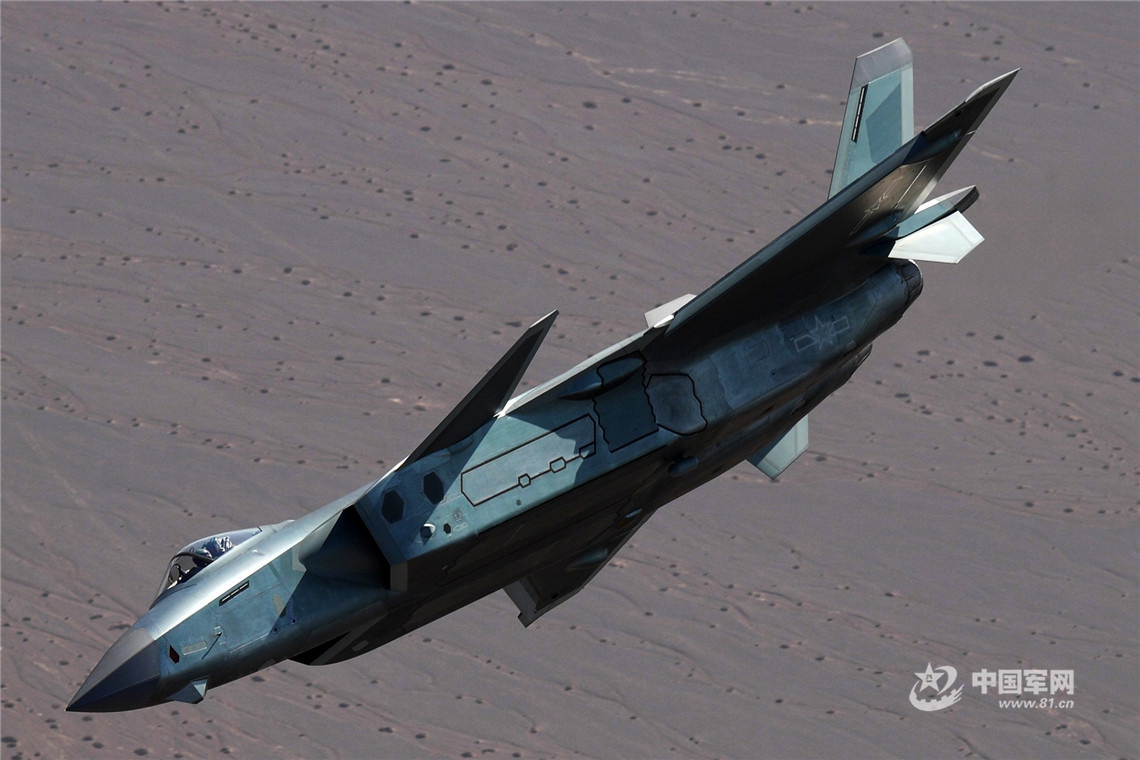
China surges production capacity for J-20 and J-35 stealth fighters
Commercial satellite imagery shows that China’s state-owned aviation company has dramatically expanded manufacturing facilities for military aircraft, including the fifth-generation J-20 fighter, with total fighter production capacity set to reach 300-400 units annually.
China is aggressively expanding its ability to assemble and deliver new tactical military aircraft, including hundreds of the latest stealth fighters.
That is the conclusion of a research analyst in Washington, DC, who used commercially available satellite imagery to track activity at several key hubs for China’s state-owned aerospace conglomerate – the Aviation Industry Corporation of China, or AVIC.
“China’s inventory of fighter and attack aircraft is going to grow significantly over the next five years,” says J Michael Dahm, a senior fellow at the Mitchell Institute for Aerospace Studies.
Since 2021, Dahm says AVIC has added some 278,700sq m (3 million sq ft) of manufacturing space at the Chengdu plant that assembles China’s fifth-generation J-20 air superiority fighter. Five J-20 production lines are now active at that facility.
“Looking back at commercial satellite imagery and substantial infrastructure improvements support the assessment that the Chengdu plant has increased its capacity and could be producing as many as 100 J-20s per year,” says Dahm, who presented his findings at the 2026 Air & Space Forces Association’s Warfare Symposium in February.
Other estimates, including one by the Royal United Services Institute, put China’s 2025 J-20 production figure at 120 aircraft.
Similar to the recent expansion at the Chengdu plant, other AVIC locations also show signs of growth. That includes the development of a new factory in Shenyang, which geospatial analysis suggest will include over 370,000sq m of manufacturing space and a dedicated 3,660m (12,000ft)-long runway.
This site, it is hypothesised, will assemble the new Shenyang J-35 and J-35A fifth-generation fighters – China’s answer to the Lockheed F-35 stealth fighter – respectively for the People’s Liberation Army Navy and People’s Liberation Army Air Force.
A separate 93,000sq m expansion is underway at the Changhe Aircraft Industries plant that assembles military helicopters, including attack and heavy-lift transport varieties. That represents a 30% increase in capacity.
Between the three sites in Chengdu, Shenyang and Changhe, AVIC is adding more than 743,000sq m of space, presumably to support additional aircraft production.
“Those 8 million sq ft are more than the entire F-35 manufacturing complex in Fort Worth, Texas,” Dahm says.
Meanwhile, the existing AVIC assembly line in Shenyang is continuing to deliver fourth-generation models, including the J-15 and J-16 fighters.
“Starting next year AVIC will have the capacity to produce 300-400 fourth- and fifth-generation fighters per year for the PLA,” Dahm says.
Beijing may not opt to make use of that full capacity, or could direct some portion of the output toward supporting export sales of its latest fighter types.
Regardless of the exact breakdown, Dahm predicts a minimum volume of at least 250 aircraft per year across AVIC’s entire fighter aircraft enterprise.
And quantity has a quality all its own, as goes the famous axiom attributed to the Soviet Union’s military-industrial strategy during the Cold War.
If it makes full use of all that new production capacity, Dahm says China will have the largest fighter force on the planet by 2029. That comes as Beijing is also expanding its fleet of aircraft carriers and maturing its ability to conduct air operations from those naval vessels.
Dahm notes the latest satellite images indicate that around 20ha (50 acres) of land have been cleared on the north side of the current Chengdu plant, space previously occupied by Sichuan University. He posits that space could eventually be used to support production of a sixth-generation Chinese fighter or further expand J-20 capacity.
So what will China do with all that firepower?
The obvious answer is be ready to mount an operation to forcibly integrate Taiwan, whether via a protracted blockade or a cross-strait assault.