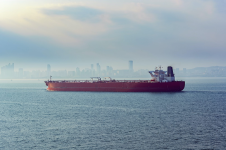
Indian Shipbuilding Industry : News & Updates

Indian Oil, BPCL and HPCL plan tanker order for domestic use in move to boost shipbuilding industry

India’s state-run refiners are planning to order 10 domestically-built vessels to transport fuels around the country as the government pushes ahead with its ambition to expand the shipbuilding industry.

Indian Oil Corp., Bharat Petroleum Corp. and Hindustan Petroleum Corp. plan to jointly issue a tender later this year for the medium-range tankers, according to people familiar with the matter who asked not to be identified because the information isn’t yet public. The proposal could be valued at as much as $600 million, and will require delivery to start by 2028, they said.

The South Asian nation is seeking to bolster its domestic building capacity, with ships increasingly viewed globally as national strategic resources for energy, trade and defence. India currently has at least 40 yards, but only four have the ability to make vessels that are bigger than the medium-range tankers.

Still, refiners are lukewarm to the idea of owning and operating tankers, and have approached the government for financial support, according to the people. It’s more economical for the processors to charter ships, they said.

Indian Oil Corp., BPCL and HPCL didn’t reply to emails seeking comment.

The medium-range tankers will be in the range of 50,000 to 60,000 deadweight tons, and the tender could price the ships at $55 million to $60 million each, the people said. Indian Oil Corp. is expected to own six of the vessels, while BPCL and HPCL will each own two, they said.

Pursuing locally built ships could come at a higher cost for the refiners. The average price for a South Korean-built medium-range tanker — often viewed as top of the range — was about $50 million last month, while China-made vessels came in about $7 million cheaper, according to Braemar Plc.

About 13 per cent of India’s petroleum products are transported over coastal routes, while more than half of the nation’s domestically produced fuels are moved via pipelines, according to the oil industry’s downstream regulator.
 
GRSE, a preferred destination for Specialised Research Platforms, signscontract with GSI for two Coastal Research Vessels

Kolkata (June 11, 2025): In yet another major achievement, Garden ReachShipbuilders and Engineers (GRSE) Ltd, signed a contract for construction of twoCoastal Research Vessels (CRVs) for the Geological Survey of India (GSI), onWednesday, June 11th, 2025.

The contract for the two Coastal Research Vessels (CRVs) was signed byCdr Shantanu Bose, Director (Shipbuilding), GRSE and Dr N. M. Shareef, DeputyDirector General & HoD, Marine & Coastal Survey Division, GSI, in the presence ofShri Asit Saha, Director General, GSI, and other senior officials from GRSE & GSI.

The signing of this contract highlights GRSE’s expertise in the field of researchplatforms. The shipyard is currently building an Ocean Research Vessel (ORV) for theNational Centre for Polar and Ocean Research (NCPOR), under the Ministry of EarthSciences, Government of India, and an Acoustic Research Ship (ARS) for the NavalPhysical and Oceanographic Laboratory (NPOL), an establishment under the DefenceResearch and Development Organisation (DRDO).

Each CRV will have a length of 64 meters with a width of 12 meters. Thedeadweight tonnage of each CRV will be about 450 Tons. The vessels will have anendurance of 15 days with a top speed of 10 knots. Each ship will have facilities for 35personnel on board.

These specialised vessels will have capabilities to carry out offshore geologicalmapping, mineral exploration (including dredging), ocean environment monitoring andresearch. The ships will have modern, well-equipped scientific laboratories on boardfor data processing and sample analysis
 

MDL is set to acquire a controlling stake in Colombo Dockyard PLC (CDPLC), Sri Lanka’s largest shipyard, in a deal worth up to USD 52.96 million. This marks MDL’s first international acquisition.Located in the Port of Colombo, CDPLC gives MDL a strategic foothold in the Indian Ocean Region—a key maritime corridor.With this, MDL begins its transformation from a domestic shipbuilder to a regional maritime player with global ambitions.

Mazagon Dock to acquire 51% stake in Colombo Dockyard for USD 52.96 million, making it a subsidiary
 

L&T to invest ₹1,000 crore in its ship building complex at Katupalli


Construction major Larsen & Toubro Ltd plans to invest ₹1,000 crore in its ship building complex at Katupalli near Chennai to reach its intended production capacity.

In 2009, the facility had received Environment Clearance and Coastal Regulation Zone clearance to annually produce 50,000 tonnes per annum for modular fabrication facility (MFF) and permission for 25 ship buildings and 60 ship repairs. However, with the existing infrastructure, the company is unable to reach these intended capacities/quantities. The company intends to take up further development works at Kattupalli, says document available with businessline.

The document said that the additional facilities will help L&T to reach its intended production capacity of 50,000 tonnes per annum for MFF as well as construction and repair of 25 and 60 ships per annum, respectively.

The development works will be taken up within the 892.11 acre area already belonging to L&T. The proposed development will involve setting up of additional shops, fabrication units, paint shops, assembly shops, blasting shops, residential accommodation buildings, office buildings, warehouse sheds, skill development centre, landscaping/greenbelt development, the document said.

At present, 30 ship repairs and construction of 15 new ships are being taken up at the shipbuilding facility per annum.

The development works are likely to start in October and be completed in three years,. the document said.

Company officials declined to comment.

L&T’s Katupalli facility, about 40 km north of Chennai, is a greenfield shipyard, and has a dedicated design centre for warships. The shipyard has multiple dry berths and wet berths that enable concurrent construction and repairs of multiple vessels, according to information in the company website.


Gujarat identifies 2,000 acres land as part of ₹1.5 lakh crore national shipbuilding cluster project

Gandhinagar: As part of India’s ambitious plan to develop shipbuilding clusters across five coastal states, Gujarat has earmarked around 2,000 acres of land in Kandla, with additional locations under review, a news report said.

This initiative is part of a larger national project spanning Odisha, Andhra Pradesh, Tamil Nadu, Gujarat, and Maharashtra, covering nearly 15,000 acres and attracting an estimated investment of ₹1.5 lakh crore.

As per the report, Gujarat is considering drafting a new shipbuilding policy to encourage private sector participation and upgrade existing facilities. Beyond the proposed cluster in Kandla, the state government is identifying other land parcels to be handed over to private players for developing modern shipyards.

Porbandar and Kutch have been shortlisted as key districts for setting up new ports and shipbuilding clusters, while Bhavnagar, Amreli, and Valsad are also being considered for shipyard projects, BusinessLine reported.

Nationally, Maharashtra leads in terms of identified land, with nearly 5,800 acres spread across Dighi, Jaigad, Vijaydurg, and Bankot. In Tamil Nadu, around 3,000 acres near Tuticorin (Thoothukudi) have been marked for a cluster with an added emphasis on green vessel manufacturing.

In Andhra Pradesh, approximately 3,000 acres have been initially identified, with further plans to expand by another 2,500 acres based on demand. Meanwhile, Odisha has also allocated land, reinforcing the Centre’s vision to transform India into a competitive global hub for shipbuilding.
 

Govt raises Maritime Development Fund to ₹70,000 cr to spur shipbuilding

The Centre is significantly scaling up its proposed Maritime Development Fund (MDF) to ₹70,000 crore, 2.8 times the allocation announced in the February Budget, to boost shipbuilding, ship repair, ancillary industries, expansion of shipping tonnage, and port-linked infrastructure, according to a report by The Economic Times.

The revised corpus has reportedly already secured clearance from the expenditure finance committee (EFC), chaired by the finance ministry’s expenditure secretary, with Cabinet approval expected shortly.

MDF blended finance model

The MDF will operate on a blended finance model: 49 per cent concessional capital from the government, including contributions from state-owned major ports, and 51 per cent commercial capital from multilateral and bilateral lenders as well as sovereign funds.

When announced in February, Finance Minister Nirmala Sitharaman said the fund would provide long-term, low-cost capital across the maritime value chain. By 2030, it is projected to generate ₹1.3–1.5 trillion in direct and indirect investment and create up to 1.1 million jobs.

Massive investment needed by 2047

Government estimates peg India’s maritime sector investment requirement between $885 billion and $940 billion by 2047, The Economic Times report said. This includes:
  • $388 billion to expand shipping tonnage
  • $260 billion for green vessels
  • $224 billion for next-generation ports
  • $18 billion to position India as a global shipbuilding and repair hub
  • $8.82 billion to raise coastal and inland shipping’s share
  • $1.65 billion to boost cruise tourism

India is targeting a top-10 global ranking in shipbuilding by 2030 and a top-five position by 2047, competing with South Korea, Japan, and China — the latter recently completing a $16-billion merger of two state-owned shipyards to cement its lead in global ship construction.

Legislative push

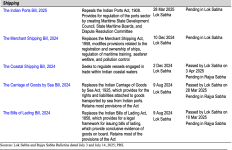
The monsoon session of Parliament, which concluded on August 12, saw the passage of four major legislations — the Merchant Shipping Bill, Coastal Shipping Bill, Carriage of Goods Bill, and Bills of Lading Bill — alongside the Lok Sabha’s clearance of the Indian Ports Bill, replacing the 117-year-old Indian Ports Act, 1908.

The EFC has also endorsed a revamped ‘Ship Building Financial Assistance’ scheme, a credit note mechanism for shipbreaking in Indian yards, the development of shipbuilding clusters, and infrastructure status for large ships, aligning with Budget announcements. Assistance levels are proposed at 15 per cent for standard vessels up to ₹100 crore, 20 per cent for advanced or specialised ships above ₹100 crore, and 25 per cent for green ships. Infrastructure status will apply to vessels costing ₹100 crore and above.
 
Shipping Corporation of India to buy local vessels in $2 billion deal

By Mihir Mishra, Bloomberg
Last Updated: Aug 11, 2025, 02:12:00 PM IST
1755453488496.png

Synopsis
Shipping Corporation of India is planning a big purchase. It will buy twenty-six ships made in India. This is part of a government plan. The goal is to boost India's shipbuilding industry. Other sectors like petroleum and steel will also buy ships. The total value of these orders is very high.

State-owned Shipping Corp. of India, the country’s largest shipping line, is working on a plan to purchase 26 India-made ships for 198.2 billion rupees ($2.3 billion) as part of a government initiative to boost the domestic shipbuilding industry, according to people familiar with the matter.

The ships will have cumulative internal volume of 1.18 million gross tons, and delivery will be staggered over several years as they are completed, said the people, who weren’t authorized to speak publicly.

It comes amid a wave of orders from other buyers in India’s petroleum and natural gas, steel and fertilizer sectors, who along with SCI plan to procure a grand total of 207 ships valued at nearly 1.5 trillion rupees, the people said. This plan is part of an existing initiative to purchase 112 crude carriers through 2040, as the world’s third-biggest importer of oil seeks to build out its tonnage, Bloomberg News reported earlier.

The deal will significantly bolster SCI’s fleet, which currently consists of 55 ships including tankers, bulk carriers, liners and offshore supply ships.

SCI, India’s shipping ministry and the government’s Press Information Bureau did not immediately respond to emails seeking comments.

Prime Minister Narendra Modi’s government earlier this year announced a 250-billion-rupee fund to support the country’s maritime sector, with one of its goals being to eventually reduce reliance on foreign-built vessels and bolster indigenous shipbuilding capacity.

India aims to raise the share of locally built tankers to 7% by 2030 from 5% today, the people familiar said, with an eye toward increasing it to close to 70% by 2047 — the deadline the country has set for graduating to a developed nation.

The government’s effort is designed to spur captive demand for ships, aiding India’s still-nascent shipbuilding industry and attracting investment from global shipbuilders, including those in Japan and South Korea.

(You can now subscribe to our Economic Times WhatsApp channel)

Shipping Corporation of India to buy local vessels in $2 billion deal
 
  • Like
Reactions: Ashwin and Ironhide