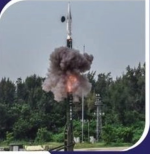

When the test had happen? No NOTAM is announced recently.
Is it a full flight test or just engine test?
When the test had happen? No NOTAM is announced recently.
There are no details mentioned in the Economic Times report. It could be one of those 'trust me bro' sources. I have linked it below:When the test had happen? No NOTAM is announced recently.
Is it a full flight test or just engine test?




Yeh likely first test.Lrashm 100%
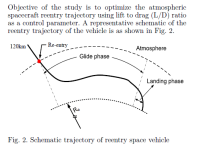
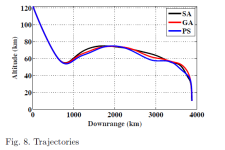
Does shaurya/k15, also glide instead of maintaining relatively constant altitude?All of these weapon systems, Rudrams and this Project-LR LRSOW are fundamentally of similar nature that is solid rocket motor based boost glide variant. Then some are land launched and rudrams are air launched so different priorities are there unrelated to range, one set has clear reentry vehicle while another set is more atmospheric.
Then comes the range factor, where the weapon system is built for various ranges. Now if you are making a solid fuel based rocket motor to propel these weapons, its burn time and rocket motor diameter will vary accordingly. When land launched the weight factor can not be significant, some 11-12 ton article can be used for a distance of 1500km.
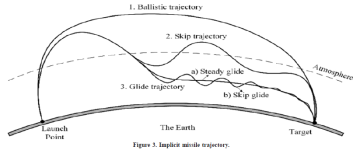
The same is problematic for the Rudrams, due to air launch it can not exceed certain weight margin but also has to deliver significant payload with only positive being able to rely on initial acceleration of the carrying jet and launched at 8-10km altitude. Rudrams are still limited by solid motor burn , only a few seconds and can not sustain like a ramjet. So either we need a top class solid fuel that delivers excellent Isp or have massive long stages, the only way longer range can be extracted from the same rocket motor config is by flying in a glide mode. That is why all along our missiles have ranges quoted in + factor, and almost all our indigenous systems like prithvi, rudrams agnis are technically HGV / (H)BGRV type.
To fly in an altitude of 30 km at a speed of 6.5 mach via continuous propulsion ie the engine being on, you need the fuel to deliver an ISp of about 520-525 sec. There is no solid propellant that can reach such level, solid propellant max out in 280 range. So ramjet/ scramjet with hydrocarbon fuel are your best bet to reach such speed and sustain the powered flight for a longer duration. Same performance is not feasible from a solid rocket motor unless you get a length of like 200-250 meter long motor.
Hence to optimise weight, for tactical weapon at short/medium range a solid fuel based system will have to tradeoff speed for distance covered. Traditionally our military wanted both at the same time hence our scientists preferred using the glide mode trajectory optimisation. The rudrams , new anti ship hgv all follow the same principle. Just via own motor propulsion Rudram 2 range would be less than half. But with optimised trajectory it reaches 300km and beyond. Issue is this being heavy computation dependent, high level programming is involved as well as accurate positioning. Todays missiles are smart, it knows exactly what position it is in and where to go and strike.
Aka we can look forward to making more holes accurately given at least 5-6 air launched programs are at different stages of completion.
It has a sustainer motor to maintain speed at certain altitude and beyond the burnout phase it will be doing partial skip glide. Even the simple cylindrical spinning body with control surface can generate lift enough to sustain some part of its flight in glide mode.Does shaurya/k15, also glide instead of maintaining relatively constant altitude?
Got any theories? Like,So no one asked why the day LR-AShM test article was missing the UHT coating and only had the black blunt nosetip even though the fixed control surface all had the UHT heat shield coating applied ? 2nd test night time it had everything.

Simply cos it was a short duration / short range test where the blunt nosetip is enough with normal LDAM coating to withstand heat load. Only the leading edges likely experience high thermal exposure.Got any theories? Like,
What about night timeSimply cos it was a short duration / short range test where the blunt nosetip is enough with normal LDAM coating to withstand heat load. Only the leading edges likely experience high thermal exposure.
2nd test at night time was full test.What about night time