Agni & Prithvi Ballistic Missiles : News & Discussions

4? Tell me.
Its quite obvious

old A5 from 2012 testing phase that is in production (S1 metallic + S2 composite)
New A5 all composite body with conical rv
Mirv'ed A5 Divyastra (likely to have different combinations)
Glide vehicle kv based A5

Basically rockets are fundamentally simple, booster + payload combo. Now whatever you want to attach as payload.
 
  • Like
Reactions: Rajput Lion
Its quite obvious

old A5 from 2012 testing phase that is in production (S1 metallic + S2 composite)
New A5 all composite body with conical rv
Mirv'ed A5 Divyastra (likely to have different combinations)
Glide vehicle kv based A5

Basically rockets are fundamentally simple, booster + payload combo. Now whatever you want to attach as payload.
A conventional A5 with MIRV warhead for AA/AD role,
Similar like orshenik Will be Apt,


is it evenpossible? Means a modified BM for bunker buster job?

People are just discussing about bunker buster. However, this configuration of high payload short range will allow us to strike enemy installations with something like MOAB which US used against Taliban in first term of Trump. Since we have developed the new high explosive with double the power of any other high explosive, we can strike enemy installations with same effect with 8 ton payload with which US can do with 15 ton of MOAB.
 
Its quite obvious

old A5 from 2012 testing phase that is in production (S1 metallic + S2 composite)
New A5 all composite body with conical rv
Mirv'ed A5 Divyastra (likely to have different combinations)
Glide vehicle kv based A5

Basically rockets are fundamentally simple, booster + payload combo. Now whatever you want to attach as payload.
Bruh, I thought
Varients like bunker buster.
So it's the usual, agni5, lighter agni5, mirv agni5.


Then Dhvani in works.
 
People are just discussing about bunker buster. However, this configuration of high payload short range will allow us to strike enemy installations with something like MOAB which US used against Taliban in first term of Trump. Since we have developed the new high explosive with double the power of any other high explosive, we can strike enemy installations with same effect with 8 ton payload with which US can do with 15 ton of MOAB.
Us bunker buster, The GBU-57 series MOP (Massive Ordnance Penetrator) is a different bomb from The GBU-43/B Massive Ordnance Air Blast (MOAB,colloquially explained as "mother of all bombs").

The US Air Force has said that the GBU-57 can penetrate up to 200 ft (60 m) of unspecified material before exploding.[51] The BBC reports that analysts at Janes say the weapon can penetrate about 200 ft (60 m) of earth or 60 ft (18 m) of concrete.[33] This is consistent with a separate source which suggests penetration of up to 60 ft (18 m) into reinforced concrete.


8 ton bunker buster varient based on agni 5 will be able to penetrate 100+m into earth, more than 60m penetration of GBU-57.
 
And the enemy would not interpret it as a nuke attack ? When a rocket is fired its short time to decide whether nuke or not. Given we have no first use policy.
Many small conventional Mirv warheads inside a heavy payload(~4TONS), the missile doesn't rise more than 100-150km in altitude, with max range of 1000-1500km.
A new big missile( similar size to Agni 5 mirv) designed to be used against airfields/anti-area weapons deep inside enemy territory.

Chinese df15 series part of conventional rocket force, have apogee of 120km.


The DF-21D anti-ship ballistic missile (ASBM) reaches an apogee, or peak altitude, of approximately 400-438 kilometers (248-272 miles) during its flight.


Imo, 100-150km apogee is more than safe.
Plus demostrating it as a new missile not related to Agni family, and demostrating it's test and warhead capability in exercise/testing to the world.

Plus old Agni series which will "open up to conventional role" also leave atmosphere.
The Agni-II missile reaches an apogee, or peak altitude, of 220 kilometers during its flight.
 
Many small conventional Mirv warheads inside a heavy payload(~4TONS), the missile doesn't rise more than 100-150km in altitude, with max range of 1000-1500km.
A new big missile( similar size to Agni 5 mirv) designed to be used against airfields/anti-area weapons deep inside enemy territory.

Chinese df15 series part of conventional rocket force, have apogee of 120km.


The DF-21D anti-ship ballistic missile (ASBM) reaches an apogee, or peak altitude, of approximately 400-438 kilometers (248-272 miles) during its flight.


Imo, 100-150km apogee is more than safe.
Plus demostrating it as a new missile not related to Agni family, and demostrating it's test and warhead capability in exercise/testing to the world.

Plus old Agni series which will "open up to conventional role" also leave atmosphere.
The Agni-II missile reaches an apogee, or peak altitude, of 220 kilometers during its flight.
These are strategic stuff, and reason why Rus barely used any strategic stuff in 3 years, even the one everybody cites is actually a test demo case without warhead thereby not breaking anything officially as they are yet to declare war. There are certain international law etc that generally countries abide by both in conflict and during peacetime and when doing military operation. Iran Pakistani etc do not exactly fall into that category hence do not bother, mullahs will never. So they use whatever best they have without thinking twice. We do not work like that so have many tools to counter.

Normally ballistic missiles greater than 500km range and 500kg warhead are not permitted in small scale conflicts, for bought out weapon systems ie imported.
 
And the enemy would not interpret it as a nuke attack ? When a rocket is fired its short time to decide whether nuke or not. Given we have no first use policy.
For the Chinese theatre, they too have no Nuke first policy,

Maybe creating a new missile for conventional role, separating it form strategic nuclear weapons, like how one of the DF variant is for bunker Buster,
I doubt Pakistan posses the technology to identify the exact type of ballastic missiles,
Their PM given a new statement that they got 35-40 sec to react if the brahmos carrying nuclear warhead or conventional warhead
 
Normally ballistic missiles greater than 500km range and 500kg warhead are not permitted in small scale conflicts, for bought out weapon systems ie imported
I don't think we will be targeting chinese airbases deep inside china in "small scale conflict".
This missile can very well be reserved for a large/full scale conventional war.

A capability to limit chinese air operations from deep within china, is very beneficial, give their Airforce has big edge in air to air warfare compared to ours.

China for example, didn't shy away from creating df21 anti ship MRBM to target US carriers, not afraid of US misunderstanding it as a nuclear armed missile.
 
For the Chinese theatre, they too have no Nuke first policy,

Maybe creating a new missile for conventional role, separating it form strategic nuclear weapons, like how one of the DF variant is for bunker Buster,
I doubt Pakistan posses the technology to identify the exact type of ballastic missiles,
Their PM given a new statement that they got 35-40 sec to react if the brahmos carrying nuclear warhead or conventional warhead
As I said before, earlier the technology pool was much smaller so you can understand why there was reluctance to use ballistic missile stages into conventional roles. You will be giving enemy chance to develop a counter for your strategic systems.

that barrier is now gong away due to tech pool now being more diverse. This is one more reason why more foreign equipment should also b boought , helps with diversification and improving your own system from features you find useful. However it will take time to properly distinguish and separate between strategic systems and conventional systems.
 
People are just discussing about bunker buster. However, this configuration of high payload short range will allow us to strike enemy installations with something like MOAB which US used against Taliban in first term of Trump. Since we have developed the new high explosive with double the power of any other high explosive, we can strike enemy installations with same effect with 8 ton payload with which US can do with 15 ton of MOAB.
AFAIK bunker buster is all about accuracy and the penetration depth, without compromising the integrity of bomb . Explosive power has no role on penetration. You load 100 kg explosive or 1000 tonne explosive, it won't penetrate to deep untill and unless u designed the weapon with proper shape (ie a long pencil) & metallurgy.

Its difficult get a pinpoint accuracy with BM until & unless we had developed some nich technology. And another hurdle is the casing, it has to with stad the impact and the whole jurney from impact point to the maximum penetrating depth. Do we have such mastery on metallurgy to have a 70+ penetration?

The risk of miscalculation by enemy is another thing, you are launching an A5. Enemy won't know its a nuke A5 or not. So retaliation beforehand may happen.
 
Kinetic energy.
8 Ton warhead, designed to for deep penetration coming at mach 8-10 terminal speeds at 60+° angle from horizontal.
100+ meters penetration into earth is more than possible.

As for accuracy, we are developing the base with bm-04, which has stated accuracy of under 30m CEP according to drdo poster.
It would be lot more challenging to make a bigger 8 ton re-entry vehicle achieve that accuracy, but still possible.

Second, we don't need to have 500-1000km apogee like icbm's.
We can make it fly hybrid between marv and hgv, like bm-04 warhead, US dark eagle.


✅ Final Estimate:-

Apogee: ~120–150 km

Horizontal glide range: ~500–800 km

Terminal velocity: Mach 8–10

Terminal angle: ~60–80°.

Booster: modified Agni 5.

Warhead weight: ~8 tons.
 
AFAIK bunker buster is all about accuracy and the penetration depth, without compromising the integrity of bomb . Explosive power has no role on penetration. You load 100 kg explosive or 1000 tonne explosive, it won't penetrate to deep untill and unless u designed the weapon with proper shape (ie a long pencil) & metallurgy.

Its difficult get a pinpoint accuracy with BM until & unless we had developed some nich technology. And another hurdle is the casing, it has to with stad the impact and the whole jurney from impact point to the maximum penetrating depth. Do we have such mastery on metallurgy to have a 70+ penetration?

The risk of miscalculation by enemy is another thing, you are launching an A5. Enemy won't know its a nuke A5 or not. So retaliation beforehand may happen.

Boss, I am talking something else. Please read my post. I am talking about a totally new use/application of high payload, low range missile as something like MOAB of US.
 
Since bid submission date is over now , can be disclosed now if not already heh heh ;);)🚀
Well I believe we already know at least 4 different that exist so do not want to name and game :sneaky:


View attachment 44980

A 5 old version with maraging steel first stage.

A5 mkII Composite stages. Higher ISP solid propellants.

A5 with MIRV

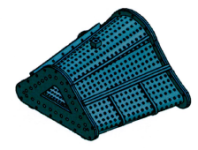
What’s the fourth variant? The one with a wedge shaped RV?
 
What’s the fourth variant? The one with a wedge shaped RV?
I listed above , possibly the Dhvani based version.
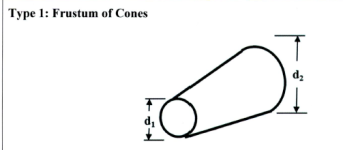
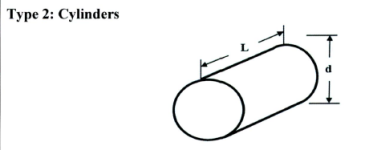
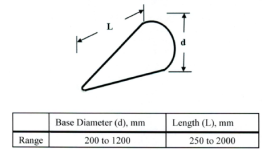
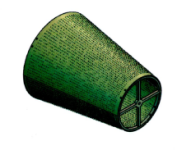
There are certain other stuff too , so they are about to do NDT ultrasonic inspection on certain composite structures mainly like below

1751643698532.png1751643709263.png
1751643754120.png

and these do look like stuff section we have seen before during recent event ;):sneaky:

1751643805702.png1751643860850.png1751643877737.png

so lets see.
 
I listed above , possibly the Dhvani based version.
There are certain other stuff too , so they are about to do NDT ultrasonic inspection on certain composite structures mainly like below

View attachment 44999View attachment 45000
View attachment 45002

and these do look like stuff section we have seen before during recent event ;):sneaky:

View attachment 45003View attachment 45004View attachment 45005

so lets see.

Even when it’s tested, it may not be be publicised.

Lots of tests these days are being kept under wraps.
 
Even when it’s tested, it may not be be publicised.

Lots of tests these days are being kept under wraps.
Actually not like that. As the technology base go, we are in a transition period across multiple technical domain. In electronics package, wiring, pcb, additive mfg of the internal mounting brackets racks, material side, high energy propellant, crmc, al alloys, insulation cover rubber sheet bonding material, ablative coating, material for control surfaces, uhtcc coating for the same, safety arming , fuzing, new gen obc, small thruster, small miniaturised DACS & RCS all are going across different make versions. hence lots of test are actually static and ground level tests. The campaigns 1 2 3 etc most are tested in STF ground level. Actual flight tests are high cost affair so only after satisfying many data point does a project move into flight test phase.
Today critical systems flight test will happen once every 2 years due to so many projects. Earlier in the 1990s it was only A1 A2 and prithvis. Now there are so many strategic systems and comes with all aspect ie canisterisation, health monitoring, high level NDT NDE, heavy vehicle, rail system, support vehicle, deployment on naval side all these things are huge workload.

 
Actually not like that. As the technology base go, we are in a transition period across multiple technical domain. In electronics package, wiring, pcb, additive mfg of the internal mounting brackets racks, material side, high energy propellant, crmc, al alloys, insulation cover rubber sheet bonding material, ablative coating, material for control surfaces, uhtcc coating for the same, safety arming , fuzing, new gen obc, small thruster, small miniaturised DACS & RCS all are going across different make versions. hence lots of test are actually static and ground level tests. The campaigns 1 2 3 etc most are tested in STF ground level. Actual flight tests are high cost affair so only after satisfying many data point does a project move into flight test phase.
Today critical systems flight test will happen once every 2 years due to so many projects. Earlier in the 1990s it was only A1 A2 and prithvis. Now there are so many strategic systems and comes with all aspect ie canisterisation, health monitoring, high level NDT NDE, heavy vehicle, rail system, support vehicle, deployment on naval side all these things are huge workload.
Is the facility expansion to handle all these and hiring of talent pool, not happening at good enough pace?