Japanese Navy (JMSDF) : Updates and Discussions

PLAN will be the fastest disappearing navy ever if it attacks Taiwan. Between this and Dark Eagle/CPS.

The HVGP is a new weapon scheduled to be deployed by the Japan Ground Self-Defense Force (JGSDF) starting in the fiscal year 2026. The hypersonic weapon is being developed for “island defense” roles. After being launched by a booster from a truck-mounted launcher, the warhead separates and glides to attack its target. The estimated range is approximately 900 km.
To achieve early deployment, the HVGP is planned to be developed in incremental capability enhancements. The test conducted this time was for the most basic “Early Deployment Version (Block 1)” test projectile. Furthermore, the development of an “Enhanced Capability Version (Block 2A)” with a significantly extended range capable of attacking targets up to 2,000 km away, and an “Enhanced Capability Version (Block 2B)” with a range of 3,000 km, is scheduled to be completed in the fiscal years 2027 and 2030, respectively.
As previously reported by Naval News, Japan’s HVGP (速滑空弾) could eventually have an anti-ship capability and be used against aircraft carriers. This consideration is part of the research on future enhanced capability versions. In the future, it is possible that the warhead could be equipped with a seeker for use in anti-ship mission.
 
Last edited:
Wright noted, “Japan is developing the HVGP for both anti-ship and land attack missions to intercept and eliminate invading forces against Japan at a distance and at an early stage.”

Block I - ~900km
1720627347123.png

Block III - 3,000km
1720627384122.png
 
  • Like
Reactions: Fatalis

To make matters worse, Japan is introducing all kinds of domestic and foreign Long Range Stand-Off Missiles as part of a recent force buildup, most notably the improved Type 12 SSM with 745 miles (1,200km) of range which is unprecedented for the JSDF. This forced the Japanese Ministry of Defense to rethink how they could create more live firing training (and testing) in the long term.

1724249974414.png


1729264371729.png
1729264387208.png
 

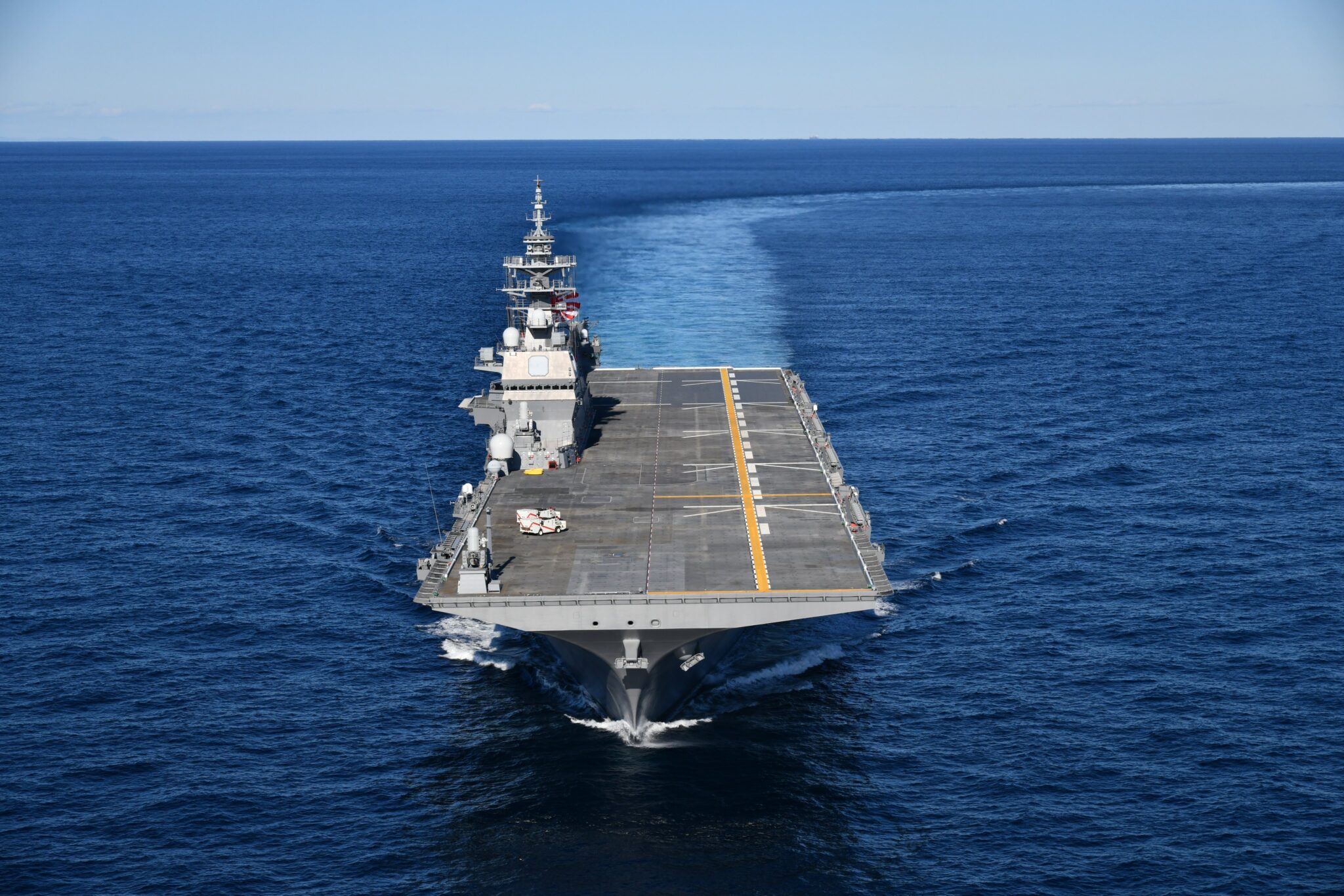
The first Japanese warship destined to receive a Tomahawk cruise missile capability is now sailing to the United States for the required modifications. The Kongo class destroyer Chokai is at the forefront of Japan’s long-standing ambition to receive the long-range land attack cruise missiles, which it initially plans to field on its Aegis warships, although ground and submarine launch platforms could also follow in the future.

The Japan Maritime Self-Defense Force (JMSDF) announced yesterday that the process of reworking Chokai for Tomahawk had begun. On September 26, the warship conducted missile-loading training, involving dummy Tomahawk rounds, supported by U.S. Navy personnel, at Yokosuka Base. The 90 “strike length” Mk 41 vertical launch system (VLS) cells on the Kongo class are already long enough to accommodate the Tomahawk.


1759369894563.png

1759369936679.png
 

Japan continues to work toward enhancing its long-range cruise missile capability, with contracts issued for a new standoff capability for its submarine fleet, as well as improved anti-ship missiles for its destroyers. Contracts have now been issued for the mass production of both those weapons, which come as the country bolsters its abilities to attack both land targets and enemy surface warships, to counter the growing threats from China and North Korea, in particular.

Japan’s Ministry of Defense announced the new contracts for the upgraded ship-launched Type 12 anti-ship missile and the unnamed torpedo-tube-launched cruise missile for submarines on Tuesday. Both contracts were awarded to Mitsubishi Heavy Industries (MHI).
 

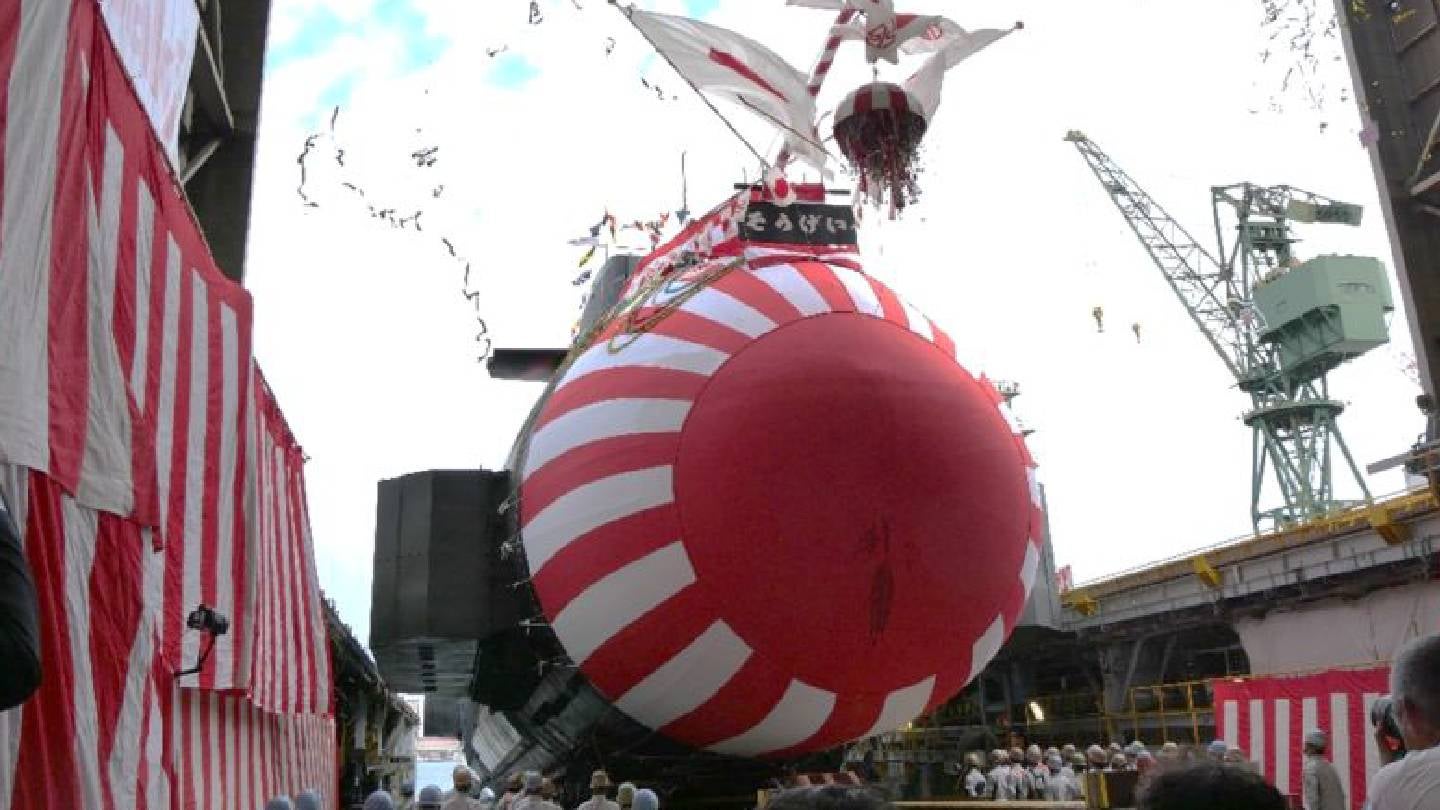
Kawasaki Heavy Industries has launched Sougei, the sixth Taigei-class submarine at its No.1 Building Berth in Kobe Shipyard in Kobe, Japan.

The attack submarine was launched in a ceremony attended by top officials from the Japan Ministry of Defense (MoD).

Submarine Sougei measures 84 metres (m) in length, with a beam of 9.1m and a depth of 10.4m.

Powered by two Kawasaki 12V 25/25 SB-type diesel engines and an electric propulsion motor, the vessel has a displacement of 3,000 tonnes (t). It can accommodate a crew of 70 personnel.

The armament comprises underwater launch tubes and is equipped with a snorkel system, allowing it to draw in fresh air from the surface and expel exhaust gases while remaining submerged.

A notable feature of the Taigei-class submarines is the lithium-ion batteries, which boosts its speed and operational range beyond that of traditional diesel-electric submarines.
 
  • Like
Reactions: babablacksheep

On 2 December 2025, a containerized prototype high-energy laser system was confirmed to be installed on the aft deck of JS Asuka, the test ship operated by the Japan Maritime Self-Defense Force (JMSDF).

Japan’s Ministry of Defense (MoD) has been advancing the development of high-energy laser systems under the leadership of the Acquisition, Technology & Logistics Agency (ATLA) as a low-cost interceptor compared with existing air-defense systems.

The ongoing research and development programs for laser systems are broadly divided into two categories: a vehicle-mounted high-mobility laser system and a larger, high-output laser system.

The vehicle-mounted laser system has been under development from FY2021 to FY2024, integrating all necessary subsystems into a single heavy truck equipped with a 10-kW-class laser primarily intended for counter-small-UAV operations. Mitsubishi Heavy Industries (MHI) secured the manufacturing contract, and the truck-mounted demonstrator was completed and delivered in October 2024. The actual vehicle was unveiled at DSEI Japan in May 2025. Based on the results of this program, efforts are currently underway within the Japan Ground Self-Defense Force (JGSDF) to field an operational laser system.
 
  • Like
Reactions: spice
New vids on the KHI cruise missile and XKJ-301-1 that will go into it. We have an official test launch that shows the terminal phase maneuvering as well. This is the 2000km missile with the interchangeable warheads that will eventually replace the interim Tomahawk purchase.