

Yemen's Houthi Red Sea attack : Discussions
- Thread starter RISING SUN
- Start date
You are using an out of date browser. It may not display this or other websites correctly.
You should upgrade or use an alternative browser.
You should upgrade or use an alternative browser.


The United States and United Kingdom authorities say their warships have shot down 15 attack drones over the Red Sea as Israel’s war on Gaza threatens to spread in the region.
The US Central Command (CENTCOM) on Saturday said its guided-missile destroyer responded to a wave of drones from “Houthi-controlled areas of Yemen” over the Red Sea, downing 14 suspected attack drones.

 www.aljazeera.com
The US Central Command (CENTCOM) on Saturday said its guided-missile destroyer responded to a wave of drones from “Houthi-controlled areas of Yemen” over the Red Sea, downing 14 suspected attack drones.
US, UK say they shot down 15 drones from Yemen’s Houthis over Red Sea
Threat to trade has grown in the region as container ships and oil tankers have been attacked or drawn missile fire.

In the coming days or weeks Yemen is going to be hit hard. Ike Carrier strike group is on its way and Israel told the US to do something about the Houthis or they will. Gaza war or the air strikes part is pretty much over and Israel is preparing for the northern front soon to come so they want the Houthi problem settled before they invade Lebanon.

I wish for IN to take a prominent kinetic action against somali pirates to discourage them from reviving priacy,
LoL! I call BS on that.Israel is preparing for the northern front soon to come so they want the Houthi problem settled before they invade Lebanon.

LoL! I call BS on that.

You can call it bull piss for all I care hezbollah's fate was sealed on Oct 7th. Israel is out for jihadi blood the attack really messed them up. Don't mistake Israel for India Israel is going to remove their border threats and are not going to give a fuq who complains and cries genocide. The war in gaza is winding down there's hardly any air strikes. Hamus is a shadow of its former self very likely staying that way for good.
US will likely take care of the Houthi problem which will take a couple of days of air strikes to wipe out their ability to launch missiles and long range drones. Oh 2024 is going to be thee year of chaos politically and militarily for earth. Fasten your 2024 seatbelts.

LoL! I call BS on that.
The Israelis want to attack Hezbollah, push them back across the Litani River giving the Israelis more breathing space at the border to the east in Golan.

The Israelis are basically using this chance to do a lot of damage. It's 'cause they fear Iran becoming more powerful than them is quickly becoming a reality.
Had John McCain come to power instead of Obama, the US would have taken Iran out. It was the best time 'cause the Iranians were stuck dealing with a two-front situation with US troops in both Af and Iraq. If the US had done that, then along with sanctions on Russia, they would have cut off China's land contact with Europe while controlling the SLOCs.
But the American public are a bunch of morons. When they should vote Democrat they vote Republican, and when they should vote Republican they vote Democrat. The US is the worst kinda democracy possible, they don't know how to use the vote properly. It's no wonder the general public there have to deal with the stupidest things possible, like egging Black and Hispanic boys to leave the school system and encouraging crime, while giving puberty blockers to White boys, and destroying the adults by demolishing the small family unit. Only orthodox non-Americans are functioning there today.
Israel could drag the US into a war with Iran in Syria and Lebanon and that's gonna be a whole thing.
The situation isn't looking good.
Oh 2024 is going to be thee year of chaos politically and militarily for earth. Fasten your 2024 seatbelts.
More like the US is now taking over from Russia.

I wish for IN to take a prominent kinetic action against somali pirates to discourage them from reviving priacy,
Already three guided missile destroyers are moving in.

INS Mormugao, INS Kochi and INS KolkataAlready three guided missile destroyers are moving in.
(reuters)
And I betcha it didn't cost the French millions of $$$ like it does the US when they use missiles.

You've lost! I'm not one of those people who would criticise a shot costing x million dollars against a drone costing 10k dollars.And I betcha it didn't cost the French millions of $$$ like it does the US when they use missiles.
It's the price of the target of the drone(s) that counts: for example, the price of the ship, the price of the crew's lives, the price of the cargo, and the price of the reduction in freedom of navigation in the region.
These are far more important than the cost of one (or more) missile(s).
Note that this time the French frigate used its 76mm cannon against one or more drones. Instead of Aster15 sea-air missiles.
But the fundamental question remains the sustainability of missile defence in the face of swarm/saturation attacks.
Incidentally, I note that the US-UK air campaign has not dampened the Houthis' ardour: they continue to fire and have sunk a ship for the first time.
Drones the ones Houthis are using are no threat to US naval ships. USN ships are well built and can withstand anti-ship missiles like USS Stark taking two Exocet and USS Cole which took 1000lb shape charged bomb. I understand them using multi million dollar missiles at anti-ship missiles but it is unnecessary to waste high value missiles at drones that can be CIWS or taken out like the French naval ship did. And what about EW these destroyers carry..? Are you telling me they can't jam the signal of these propeller drones?You've lost! I'm not one of those people who would criticise a shot costing x million dollars against a drone costing 10k dollars.
It's the price of the target of the drone(s) that counts: for example, the price of the ship, the price of the crew's lives, the price of the cargo, and the price of the reduction in freedom of navigation in the region.
These are far more important than the cost of one (or more) missile(s).
Note that this time the French frigate used its 76mm cannon against one or more drones. Instead of Aster15 sea-air missiles.
But the fundamental question remains the sustainability of missile defence in the face of swarm/saturation attacks.
Incidentally, I note that the US-UK air campaign has not dampened the Houthis' ardour: they continue to fire and have sunk a ship for the first time.
Only theory I can come up with is they are using the SM-2's to get rid of them and replace those missiles with SM-6's. Watch how US ships start using CIWS, 5-inch gun and EW on these drones and no SM-6.
erratum:#Zegermanz (…) « failed » missiles were SM-2
(…) The German Ministry of Defence has since released a statement clarifying the MQ-9 intercept attempt. It confirms the details already reported here on Naval News. The information provided also clarifies that the malfunction experienced by Hessen relates to guidance of the missiles by the frigate. A technical defect of the SM-2 interceptors themselves can therefore be ruled out (…)
About how Hessen had nearly shot down an American MQ-9: The ship had detected the unidentified drone, which reportedly did not use its IFF (identification – friend/foe) and therefore considered it a possibly hostile contact. “Hessen” in response contacted liaison staff with the US-led mission Prosperity Guardian, who confirmed the drone was not theirs, approving an engagement. The frigate then launched two SM-2 missiles…
it was a CIA drone

Nah.(…) Only theory I can come up with is they are using the SM-2's to get rid of them and replace those missiles with SM-6's. (…)
This would mean that all Sachsen-class frigates (equipped with SM-2 IIIAs) would have to undergo modernization of their combat management systems, and possibly hardware upgrades to use the new SM-2 Block IIIC. (No such issue with french Aster15 –> Aster30 upgrade.)
This is not planned by the Kriegsmarine… and SM-2 IIIAs are no longer manufactured. ooops.
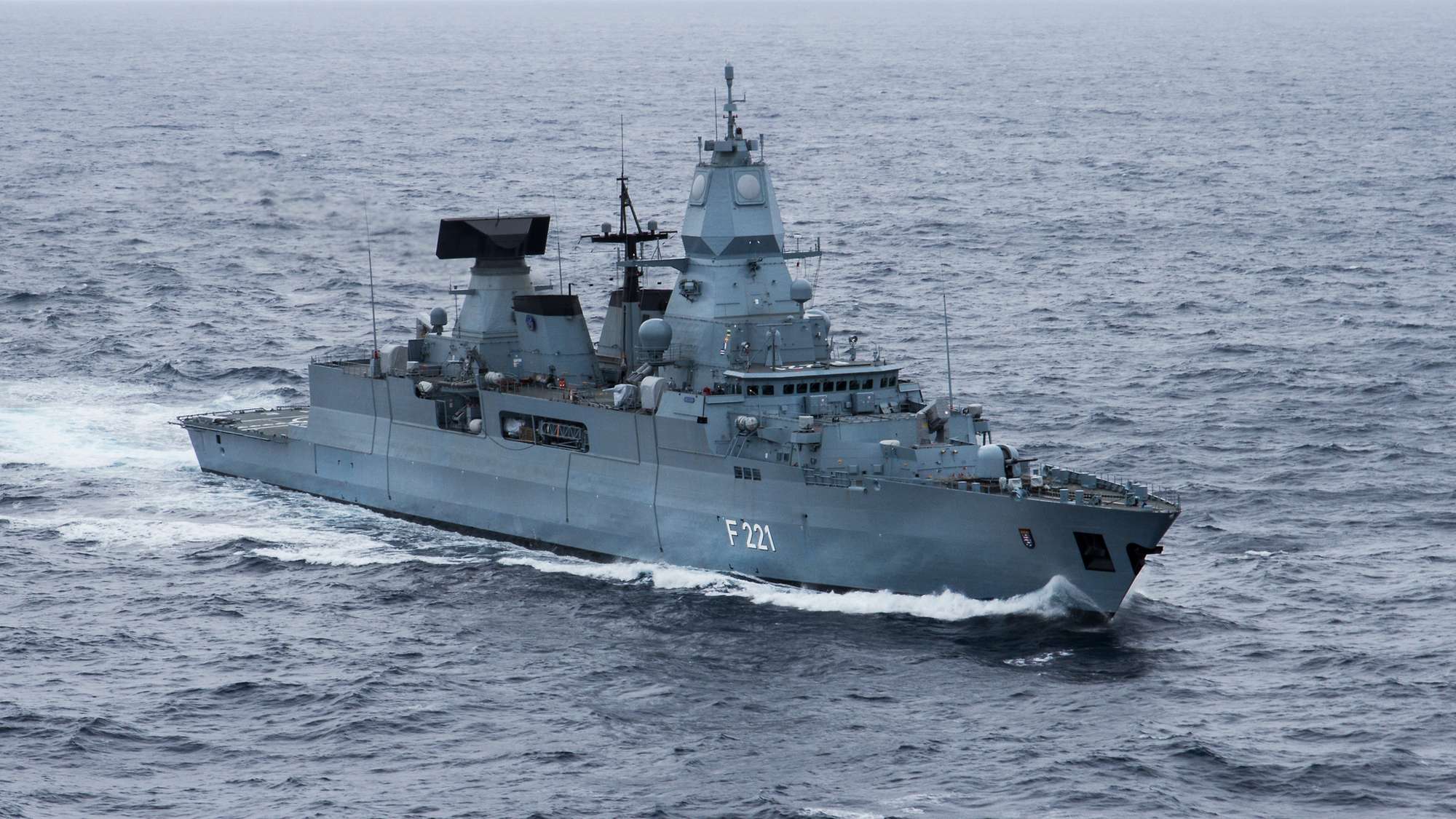
Missile Woes For German Navy
The German Navy faces missile woes impacting the performance and supply for their air defence frigates used in the Red Sea.
 www.navalnews.com
News: Greek frigate Hydra patrolling the gulf of Aden.
It was with great honor that I was accompanied by the Chief of the General Staff General Demetrios Houpis and the Chief of the General Staff Vice Admiral Demetrios Eleftherios Katara PN on board the frigate "Hydra", which patrols the Gulf of Aden, in the framework of the @EUNAVFORASPIDES, protecting our national interests in an area of danger.
i been told this frigate is equipped with a device called "Drone Dome". I don't know if it's a navalized version of the Rafael's system...?
Last edited:

(…) US officials acknowledge that military action alone will not be enough to deter the Houthis , and believe that ultimately Tehran will need to pressure the group to curb its activities.They keep trying to target Houthi weapons, they should just target the Houthi government. They are terrorists after all and not a recognised international government. Drop a few administrative buildings.
US held secret talks with Iran over Red Sea attacks
(FT, 14.03.24)Indirect negotiations in Oman aimed to end strikes against shipping by Tehran-backed Houthis
The US has held secret talks with Iran this year in a bid to convince Tehran to use its influence over Yemen’s Houthi movement to end attacks on ships in the Red Sea, according to US and Iranian officials.
The indirect negotiations, during which Washington also raised concerns about Iran’s expanding nuclear programme, took place in Oman in January and were the first between the foes in 10 months, the officials said.
The US delegation was led by the White House’s Middle East adviser Brett McGurk and its Iran envoy Abram Paley. Iranian deputy foreign minister Ali Bagheri Kani, who is also Tehran’s top nuclear negotiator, represented the Islamic republic.
Omani officials shuttled between the Iranian and American representatives so they did not speak directly, the officials said.
The talks underline how the Biden administration is using diplomatic channels with its foe, alongside military deterrents, in a bid to de-escalate a wave of regional hostilities involving Iranian-backed militant groups that was triggered by the Israel-Hamas war.
US officials see an indirect channel with Iran as “a method for raising the full range of threats emanating from Iran”, a person familiar with the matter said. That included conveying “what they need to do in order to prevent a wider conflict, as they claim to want”.
A second round of negotiations involving McGurk was scheduled for February, but was postponed when he became tied up with US efforts to broker an agreement between Israel and Hamas to halt the war in Gaza and secure the release of Israeli hostages held in the strip, the US officials added.
“We have many channels for passing messages to Iran,” a US state department spokesperson said. They declined to provide details “other than to say that, since October 7, all of them have been focused on raising the full range of threats emanating from Iran, and the need for Iran to cease its across-the-board escalation”.
The last known talks between US and Iran were also so-called proximity talks last May.
Since Hamas’s October 7 attack on Israel triggered the war, Iran-backed Hizbollah, the Lebanese militant movement, has traded daily cross-border fire with Israel; the Houthis have attacked dozens of ships, including merchant shipping and US naval vessels; and Iranian-aligned Iraqi militias have launched scores of missiles and drones against American forces in Iraq and Syria.
US officials have repeatedly accused Tehran of supplying the Houthis with drones, missiles and intelligence to conduct their attacks on shipping.
Iran acknowledges its political support for the Houthis, who control northern Yemen and have justified their attacks as support for the Palestinians. However, Tehran insists the rebels act independently.
“Iran has repeatedly said it only has a form of spiritual influence [over the rebels]. They can’t dictate to the Houthis, but they can negotiate and talk,” an Iranian official said.
There have, however, been signs that Tehran has sought to ease tensions with Washington since a drone attack on a US military base on the Jordanian-Syrian border killed three American troops.
After US President Joe Biden vowed to hold accountable those behind the attack, Iran withdrew senior commanders of its elite Revolutionary Guards from Syria.
Days later, on February 2, American forces carried out a wave of attacks against Iranian-affiliated forces in Syria and Iraq.
No attacks have been launched against American bases in Iraq and Syria since February 4, with US officials saying there have been indications that Tehran has worked to rein in the Iraqi militias.
The Iranian official said that when Brigadier-General Esmail Ghaani, commander of the Qods force, the wing of the guards responsible for overseas operations, visited Baghdad last month he told the Iraqi militias to “manage their behaviour in a way that will not allow America to engage Iran”.
While Iran’s ultimate goal is to drive American forces out of Iraq and Syria, Tehran has made clear it wants to avoid a direct conflict with the US or Israel, and to avoid a full-blown regional war.
The Houthis, however, have continued to attack shipping, despite multiple strikes by the US and the UK against their military facilities. The group has launched 99 attacks in the Red Sea and surrounding waters — affecting 15 commercial ships, including four American vessels — since October.
US officials acknowledge that military action alone will not be enough to deter the Houthis, and believe that ultimately Tehran will need to pressure the group to curb its activities.
Although the Houthis are less ideologically close to Tehran than other militant groups, the relationship has deepened as the movement has become an increasingly important member of the “axis of resistance” backed by Iran.
Western powers are also concerned about Iran’s nuclear programme as Tehran continues to enrich uranium at levels close to weapons grade.
That had been a focus of the Biden administration before October 7 as it sought to contain the crisis triggered by former president Donald Trump’s unilateral withdrawal from the 2015 nuclear deal that Iran signed with world powers.
In September, Tehran and Washington agreed to a prisoner swap, and the US unfroze $6bn of Iran’s oil money, which had been stuck in South Korea. The funds were transferred to an account in Qatar, where their use would be monitored.
Alongside that deal, the Biden administration was seeking to agree unwritten de-escalation measures with Tehran, including a cap on its uranium enrichment.
But the outbreak of the Israel-Hamas war dashed hopes of progress, and Iran has not been able to access the $6bn transferred to Qatar. The US has not frozen the funds, but the process of identifying which foreign companies are cleared to trade humanitarian goods with the republic using the money has stalled, frustrating Tehran, which is facing mounting economic pressures.
After the FT broke the news of the talks, Iran’s IRNA state news agency quoted an “informed source” as saying the discussions were limited to the lifting of US sanctions on Tehran.
“The removal of oppressive sanctions has always been on the priority agenda of the Iranian side,” the agency quoted the person as saying. “The Islamic republic of Iran has continued in this field.” /end
EUNAVFOR ASPIDES
Interception of 3 ballistic missiles from Yemen targeting the position of the frigate and the container ship it was accompanying.
From Suez to Hormuz, our commitment to freedom of navigation and maritime safety continues.
(nice pic, if true)
Interception of 3 ballistic missiles from Yemen targeting the position of the frigate and the container ship it was accompanying.
From Suez to Hormuz, our commitment to freedom of navigation and maritime safety continues.
(nice pic, if true)