Asking Parsis to Have More Kids, in the Most Regressive and Patriarchal Way
The number of Parsis is dwindling, which needs solutions like adoption and changing old fashioned notions of racial purity.
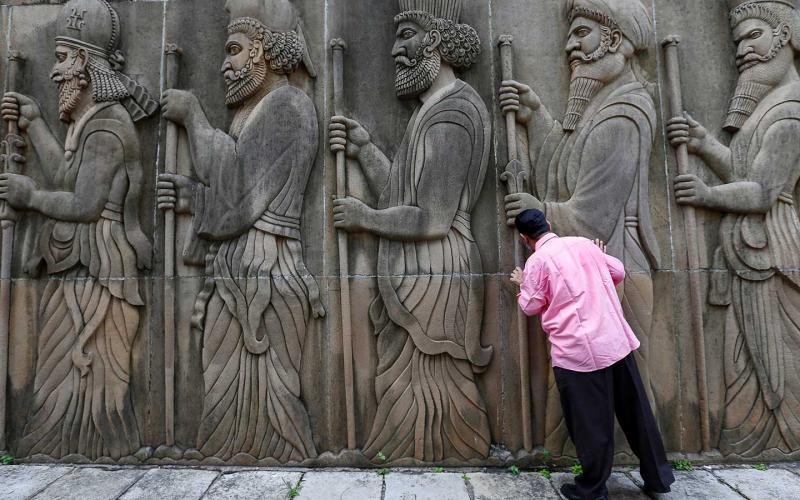
A Parsi man touches the walls of a Parsi fire temple in Mumbai. Credit: PTI
Anahita Mukherji
CommunitiesFeatured7 months ago
Imagine a khap panchayat in rural Haryana – a kangaroo court of village elders – launching a slick ad campaign encouraging members of their caste to marry (each other) and rapidly multiply to increase their dwindling numbers. Imagine that many members of this caste are zamindars with large plots of land. And now, if you can stretch your imagination just a tad further, imagine this ad campaign calling out to middle-aged, unmarried, childless zamindars, warning of the perils of staying single, as this would mean their cattle and farmland would be inherited by some low-caste, petty farm labourer.
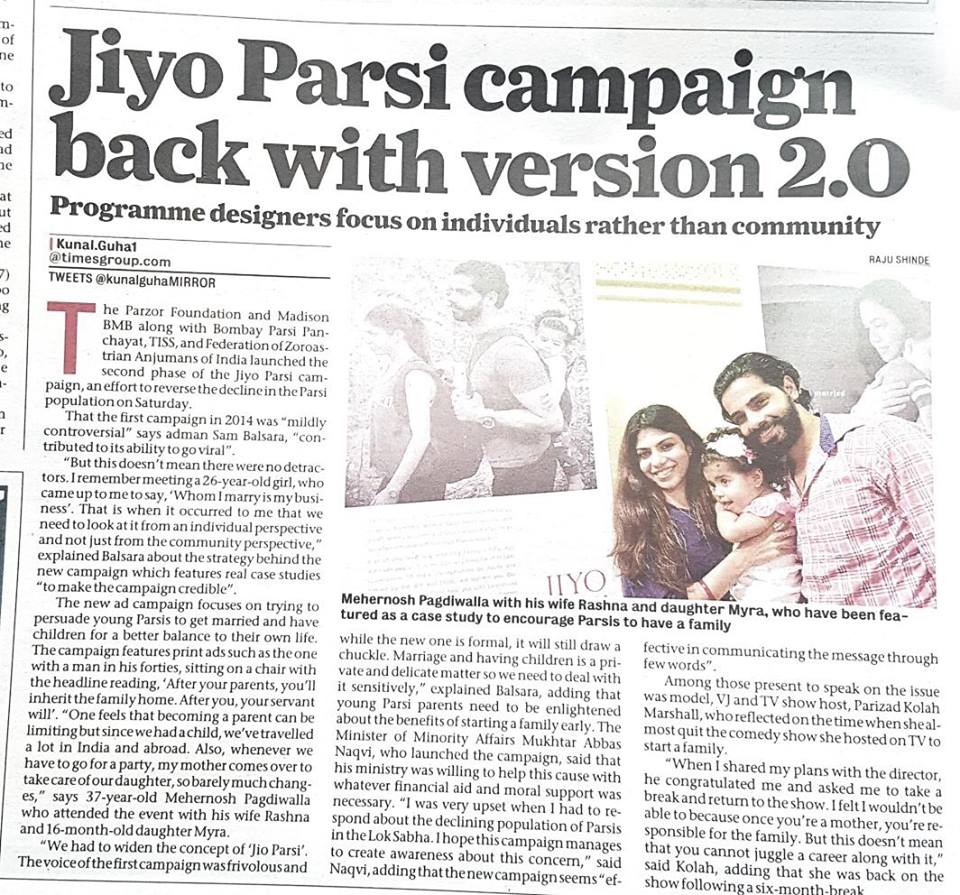
I’m guessing that such campaign would not have met with quite the tenderness and enthusiasm in the mainstream media that the recently-launched second phase of the ‘Jiyo Parsi’ campaign has received. The campaign is aimed at getting Parsi men and women to rapidly marry and procreate in significant numbers.
Of the many ads, possibly the most obnoxious one has a regal, sombre middle-aged man sitting on a very well-upholstered chair, staring vacantly into space. The caption reads: “After your parents, you’ll inherit the family home. After you, your servant will.”
What an exquisite display of racism, elitism and classism. I doubt whether anyone else could pull off such a campaign. I’m guessing this may have to do with the fact that Parsis live in posh South Mumbai homes and not far-flung North Indian villages.

A ‘Jiyo Parsi’ ad.
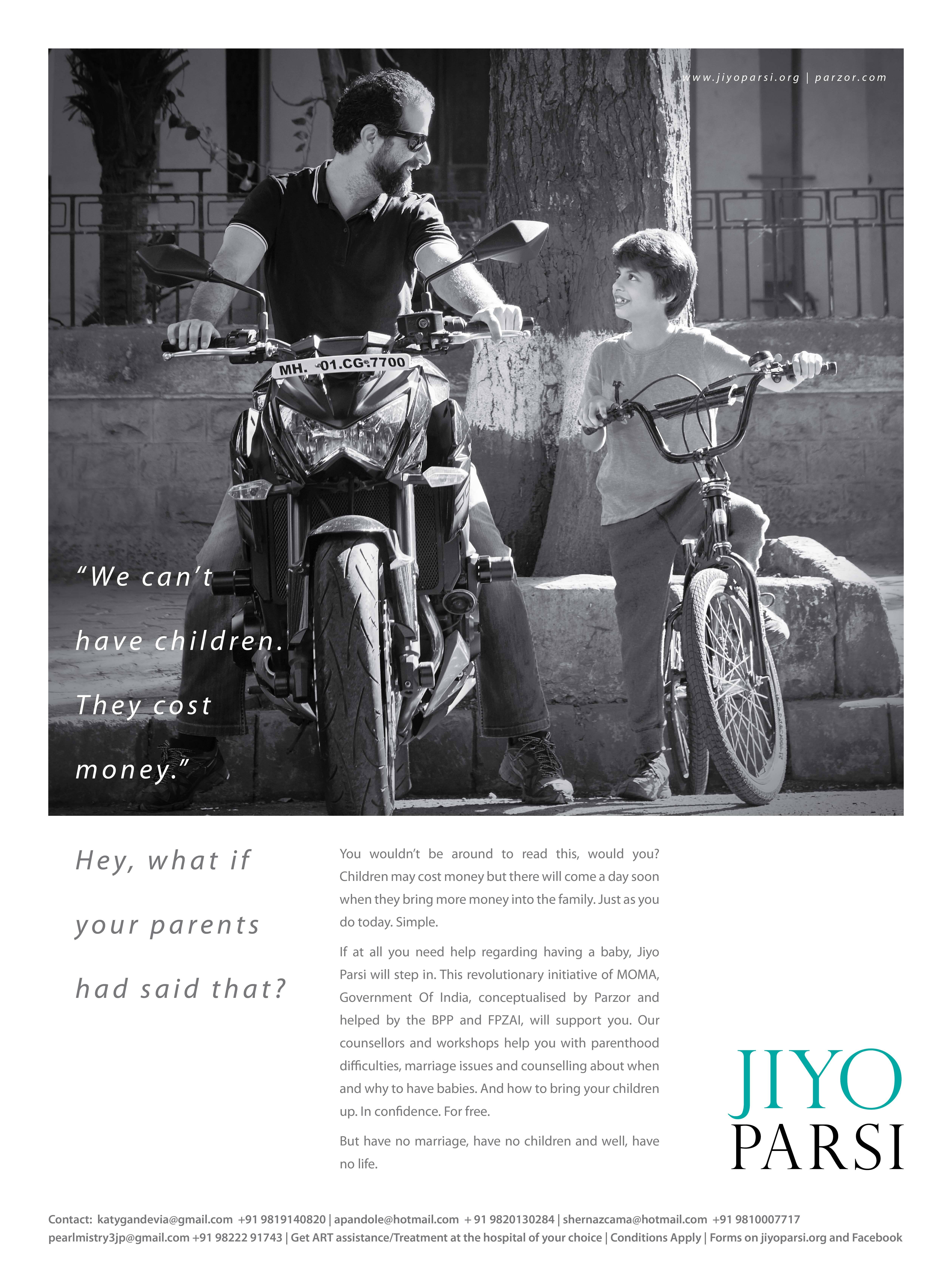
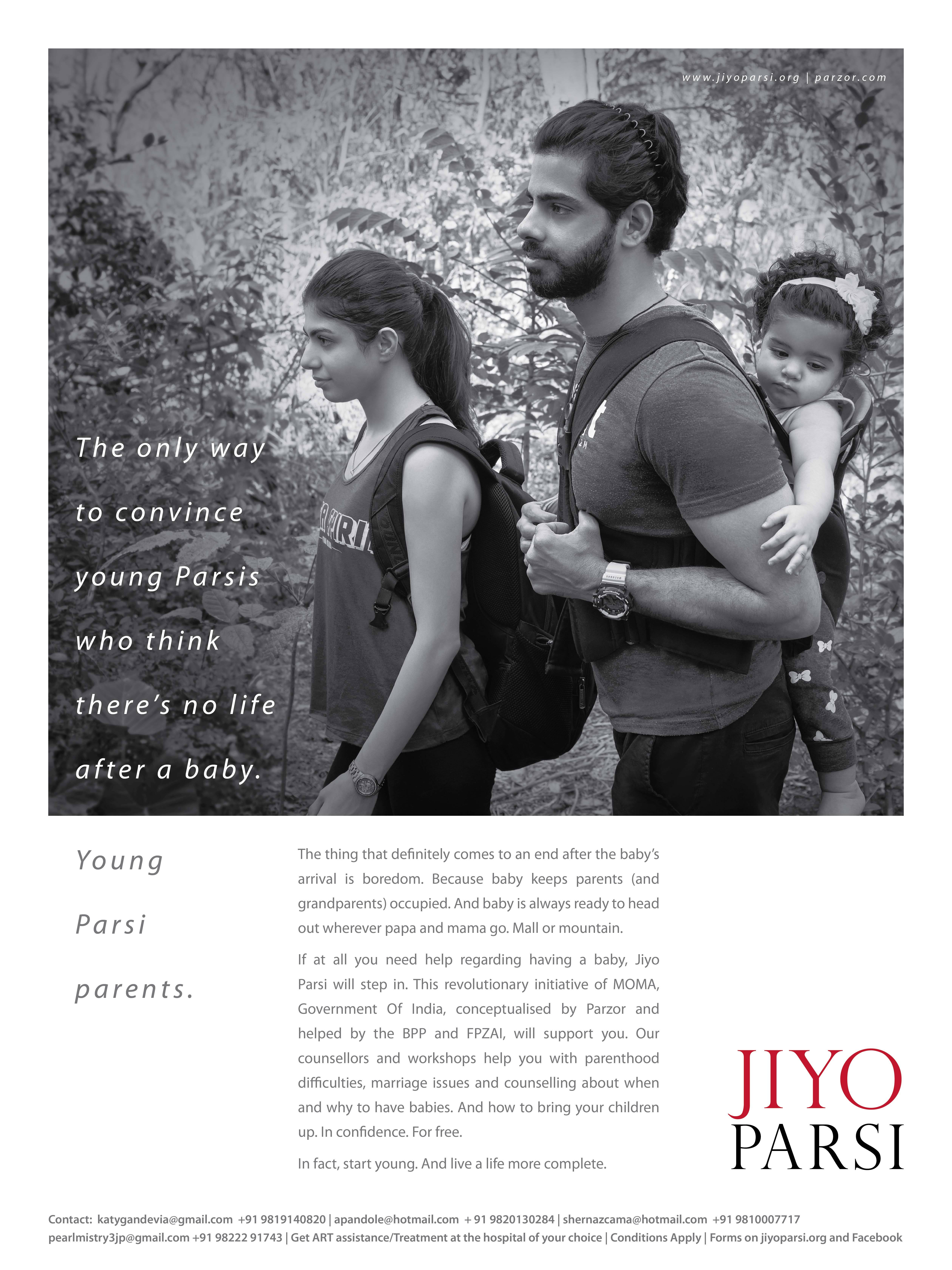
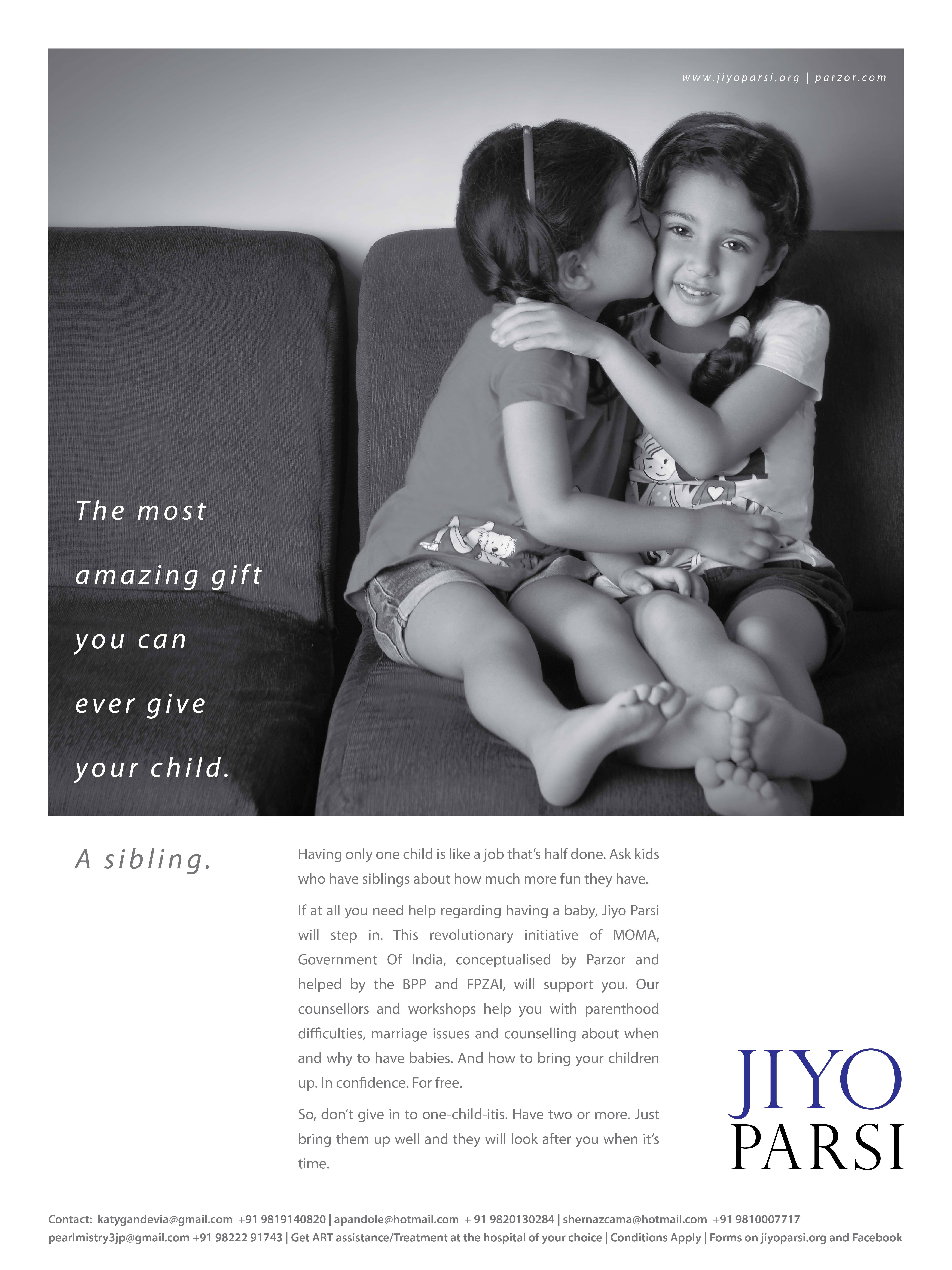
The campaign shames single folk as well as couples who don’t have at least two children. “The most amazing gift you can ever give your child. A sibling. Having only one child is like a job that’s half done,” says one of the ads. Jiyo Parsi Phase II talks of what a lousy, rotten life unmarried people lead, and how one’s life is incomplete without two children. For a community believed to be progressive, this is truly despicable.
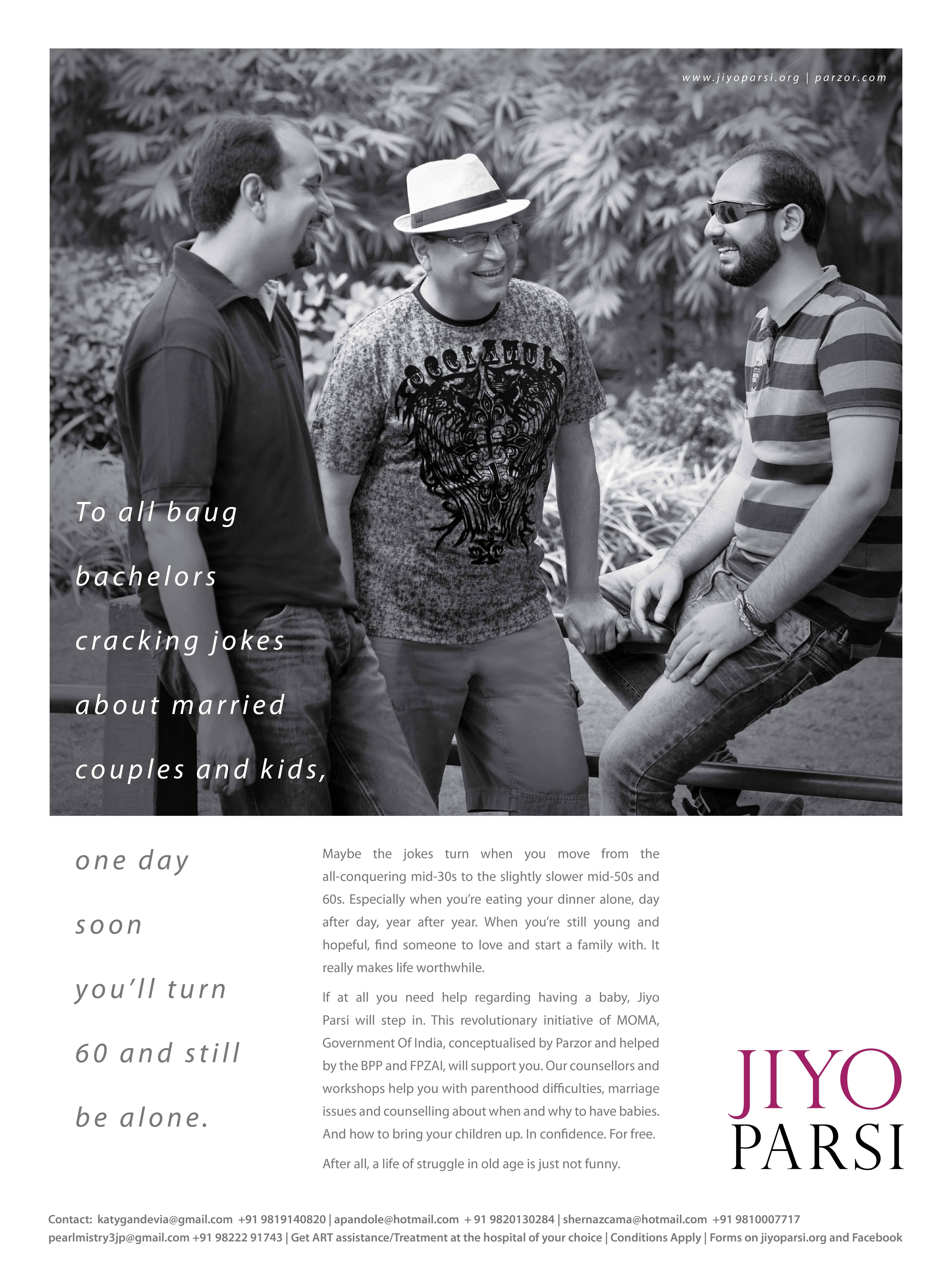
There’s even an ad about the peculiarities of Baug culture – the rather unique life that Parsis lead in community housing complexes, with clusters of young folk hanging out together. One of the ads shows a bunch of middle-aged men gossiping in a Baug, alluding to the fact that they’ve been doing little else since their youth. “To all Baug bachelors cracking jokes about married couples and kids, one day soon you’ll turn 60 and still be alone,” warns the ad.
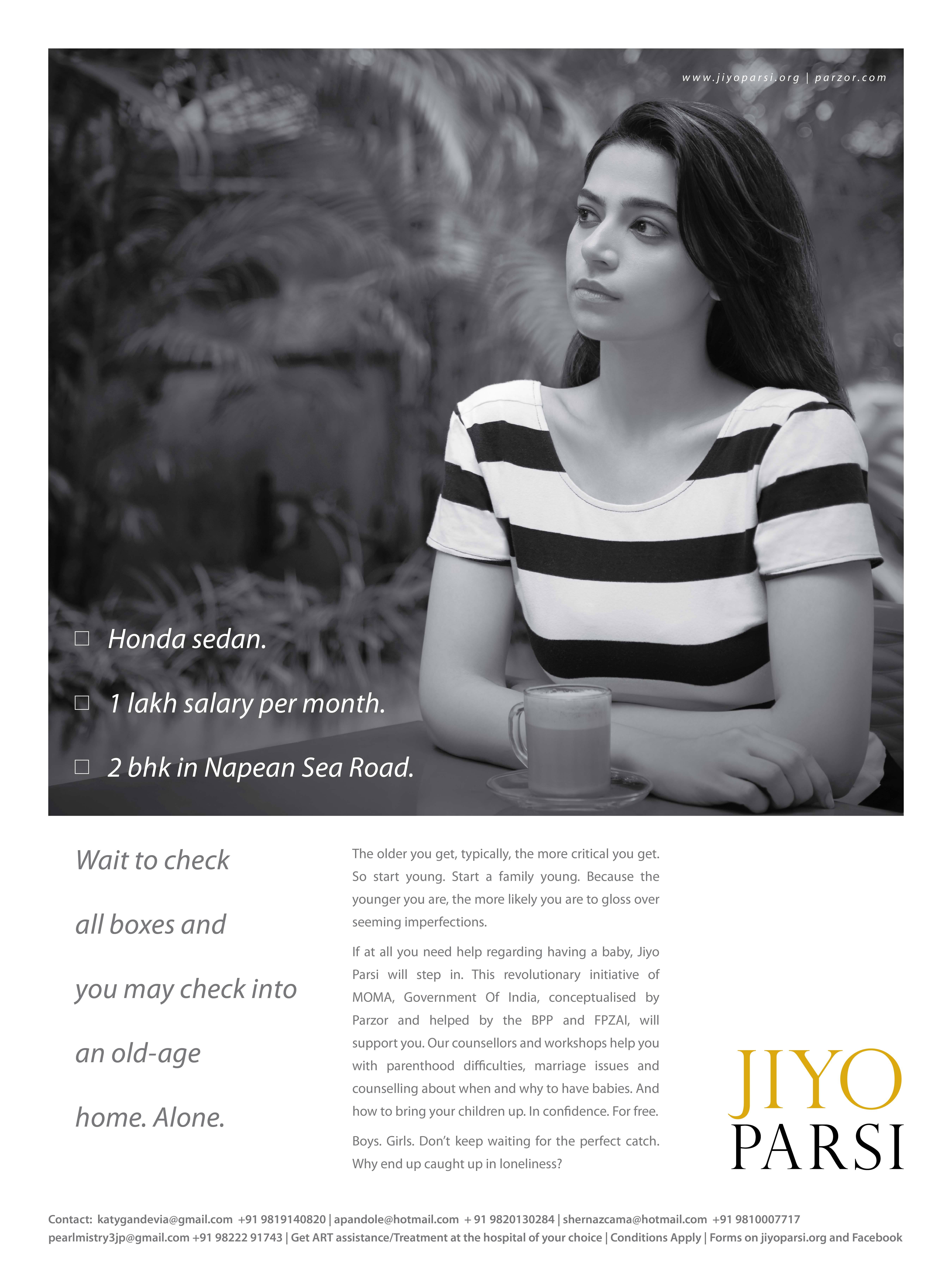
Unmarried, middle-aged folk in the ads look sad and lonely, with wistful expressions, contemplating joyless lives. While the elderly man depicted in the ad campaign is about to lose his property (to his ‘servant’), the single woman has no one to backslap while watching Parsi plays. The hint of a sad smile plays on her thin, pursed lips, as she sits on a chair by herself, a vacant look in her eyes. For what else do single men and women do, besides sitting on very well-polished chairs and brooding silently by themselves.
I find the Jiyo Parsi ad campaign regressive and distasteful on many counts, but more so since I come from a family of Zoroastrian scholars. My grandmother’s sister, Piloo Jungalwalla, received a Padmashri, India’s fourth highest civilian honour, for her work on Zoroastrianism, one of the world’s oldest religions, to which India’s Parsi population belongs. My grandmother, Pareen Lalkaka, wrote a book on the prophet Zarathushtra, as well as an English translation of Avestan prayers. I have grown up reading about the Zoroastrian faith, and how persecuted Zoroastrians fled Iran in the 8th century and landed on Indian shores. Instead of preserving the Zoroastrian faith and culture, the Jiyo Parsi campaign aims at preserving an ethnic community, one that believes that it is a separate blue-blooded race, whose racial purity will be lost if Parsis marry outside the community.
While children born to Parsi fathers and non-Parsi mothers are accepted within the community, those with Parsi mothers and non-Parsi fathers are not; a delicious cocktail of patriarchy, conservatism and bigotry. Children of the former, and not the latter, are allowed to have a Navjot ceremony, which is an initiation into the faith. (Disclaimer: I had my Navjot when I was nine, despite having a Hindu father.) Meanwhile, I’m still awaiting sound genetic evidence for how a Parsi father is better equipped than a Parsi mother to preserve racial purity.
I do hope the community realises that arguments for racial purity were the underlying principles of Nazi Germany and apartheid South Africa. Of course, in the the case of the Parsis, with only 57,000 odd members left in India, the community isn’t a threat to any other race. It’s virtually driving itself to extinction. And the fact that 104 children born with medical help from the first Jiyo Parsi campaign over the last three years, really isn’t going to save the community. At present, Parsis need to be rescued from themselves.
The Jiyo Parsi website talks of how Parsis belong to a Bronze Age community that still survives. At some point, I do hope they exit the Bronze Age and enter the 21st century.
For long, there has been a tussle between the moderate and conservative factions of the community over whether a closed community should open its doors to all those who are interested in the faith. Ironically, both sides are given equal legitimacy in the mainstream media. I’m not sure how racism, elitism, patriarchy and the absence of logic are given the same respect as an opposition to these vices. It’s time the rest of India stopped viewing Parsis as a rare and exotic bird species and subjected them to the very same scrutiny that other communities are subjected to.

A ‘Jiyo Parsi’ ad.
The government of India backs the Rs 10 crore-Jiyo Parsi campaign. In other words, a poor and overpopulated country is spending one hundred million rupees on helping an affluent and well-educated community procreate. The money would have been better spent on preserving dying Adivasi cultures across rural India. The campaign clearly states that Parsis must strive to have two or more children. So it’s ‘Hum Do Humare Do’ for the rest of India and ‘Two Or More’ for Parsis.
Instead of providing fertility treatment to a community with a large ageing population, how about promoting adoption instead? Or does passing on the Zoroastrian faith to non-blue blooded children who don’t belong to the Persian race, not qualify as protecting a community?
Adoption may be a good idea for another reason too. Parsis have long intermarried within the community, with first and second cousins marrying each other, resulting in diseased children. I know of Parsi couples who have chosen not to have children after medical advice on the high risk of their children having a disease. A large proportion of the 57,264 Parsis left in India are ageing. Of the small proportion that are of marriageable age, many will be first and second cousins.
If you eliminate these, every young man and woman in the community is left with a very small pool of potential mates to choose from. What if they aren’t in love with any of the miniscule fraction of eligible Parsis they know? The second phase of the Jiyo Parsi campaign has just the solution. It brushes aside all talk of love and intellectual companionship. Instead it talks of how the older one grows, the more critical one becomes. So start a family early. The younger you are, the more likely you are to “gloss over seeming imperfections.” As the Nike ad puts it, Just Do It.
Not once does the campaign talk of fluffy ideas such as romance and compatibility as reasons for marriage. Instead, the focus is on not letting your ‘servants’ grab your property, having companionship at the theatre and producing children who will go on to look after you in your old age. There’s even one about how people who don’t get married will eventually have to check in to an old age home alone. Now that’s the very best incentive for marriage that I’ve heard of so far.
I have spent most of my life in Mumbai, a city with the largest population of Parsis anywhere in the world. And it is in this city, that I have met scores of single men and women of all ages who lead incredibly fulfilling, meaningful, happy and fun lives. I’d love to introduce them to the Bronze Age folks behind the Jiyo Parsi campaign.
Anahita Mukherji is a US-based journalist who has a quarter-Parsi son with a full-Parsi name.
My personal opinion - whoever created the ads has absolutely no idea what it means to be a Zarthosti. Cringeworthy and disgusting. Especially the one which said something to the effect of the Parsi Colony one day being renamed Hindu Colony.
I do not know if it is this that has caused the upsurge of hate against the Parsis in India from certain quarters. Or whether it was already there, simering under the surgface, given fuel by the campaign.
Want to know the thoughts of fellow Indians here. Right, left and center.
Cheers, Doc
The number of Parsis is dwindling, which needs solutions like adoption and changing old fashioned notions of racial purity.
A Parsi man touches the walls of a Parsi fire temple in Mumbai. Credit: PTI
Anahita Mukherji
CommunitiesFeatured7 months ago
Imagine a khap panchayat in rural Haryana – a kangaroo court of village elders – launching a slick ad campaign encouraging members of their caste to marry (each other) and rapidly multiply to increase their dwindling numbers. Imagine that many members of this caste are zamindars with large plots of land. And now, if you can stretch your imagination just a tad further, imagine this ad campaign calling out to middle-aged, unmarried, childless zamindars, warning of the perils of staying single, as this would mean their cattle and farmland would be inherited by some low-caste, petty farm labourer.
I’m guessing that such campaign would not have met with quite the tenderness and enthusiasm in the mainstream media that the recently-launched second phase of the ‘Jiyo Parsi’ campaign has received. The campaign is aimed at getting Parsi men and women to rapidly marry and procreate in significant numbers.
Of the many ads, possibly the most obnoxious one has a regal, sombre middle-aged man sitting on a very well-upholstered chair, staring vacantly into space. The caption reads: “After your parents, you’ll inherit the family home. After you, your servant will.”
What an exquisite display of racism, elitism and classism. I doubt whether anyone else could pull off such a campaign. I’m guessing this may have to do with the fact that Parsis live in posh South Mumbai homes and not far-flung North Indian villages.

A ‘Jiyo Parsi’ ad.
The campaign shames single folk as well as couples who don’t have at least two children. “The most amazing gift you can ever give your child. A sibling. Having only one child is like a job that’s half done,” says one of the ads. Jiyo Parsi Phase II talks of what a lousy, rotten life unmarried people lead, and how one’s life is incomplete without two children. For a community believed to be progressive, this is truly despicable.
There’s even an ad about the peculiarities of Baug culture – the rather unique life that Parsis lead in community housing complexes, with clusters of young folk hanging out together. One of the ads shows a bunch of middle-aged men gossiping in a Baug, alluding to the fact that they’ve been doing little else since their youth. “To all Baug bachelors cracking jokes about married couples and kids, one day soon you’ll turn 60 and still be alone,” warns the ad.
Unmarried, middle-aged folk in the ads look sad and lonely, with wistful expressions, contemplating joyless lives. While the elderly man depicted in the ad campaign is about to lose his property (to his ‘servant’), the single woman has no one to backslap while watching Parsi plays. The hint of a sad smile plays on her thin, pursed lips, as she sits on a chair by herself, a vacant look in her eyes. For what else do single men and women do, besides sitting on very well-polished chairs and brooding silently by themselves.
I find the Jiyo Parsi ad campaign regressive and distasteful on many counts, but more so since I come from a family of Zoroastrian scholars. My grandmother’s sister, Piloo Jungalwalla, received a Padmashri, India’s fourth highest civilian honour, for her work on Zoroastrianism, one of the world’s oldest religions, to which India’s Parsi population belongs. My grandmother, Pareen Lalkaka, wrote a book on the prophet Zarathushtra, as well as an English translation of Avestan prayers. I have grown up reading about the Zoroastrian faith, and how persecuted Zoroastrians fled Iran in the 8th century and landed on Indian shores. Instead of preserving the Zoroastrian faith and culture, the Jiyo Parsi campaign aims at preserving an ethnic community, one that believes that it is a separate blue-blooded race, whose racial purity will be lost if Parsis marry outside the community.
While children born to Parsi fathers and non-Parsi mothers are accepted within the community, those with Parsi mothers and non-Parsi fathers are not; a delicious cocktail of patriarchy, conservatism and bigotry. Children of the former, and not the latter, are allowed to have a Navjot ceremony, which is an initiation into the faith. (Disclaimer: I had my Navjot when I was nine, despite having a Hindu father.) Meanwhile, I’m still awaiting sound genetic evidence for how a Parsi father is better equipped than a Parsi mother to preserve racial purity.
I do hope the community realises that arguments for racial purity were the underlying principles of Nazi Germany and apartheid South Africa. Of course, in the the case of the Parsis, with only 57,000 odd members left in India, the community isn’t a threat to any other race. It’s virtually driving itself to extinction. And the fact that 104 children born with medical help from the first Jiyo Parsi campaign over the last three years, really isn’t going to save the community. At present, Parsis need to be rescued from themselves.
The Jiyo Parsi website talks of how Parsis belong to a Bronze Age community that still survives. At some point, I do hope they exit the Bronze Age and enter the 21st century.
For long, there has been a tussle between the moderate and conservative factions of the community over whether a closed community should open its doors to all those who are interested in the faith. Ironically, both sides are given equal legitimacy in the mainstream media. I’m not sure how racism, elitism, patriarchy and the absence of logic are given the same respect as an opposition to these vices. It’s time the rest of India stopped viewing Parsis as a rare and exotic bird species and subjected them to the very same scrutiny that other communities are subjected to.

A ‘Jiyo Parsi’ ad.
The government of India backs the Rs 10 crore-Jiyo Parsi campaign. In other words, a poor and overpopulated country is spending one hundred million rupees on helping an affluent and well-educated community procreate. The money would have been better spent on preserving dying Adivasi cultures across rural India. The campaign clearly states that Parsis must strive to have two or more children. So it’s ‘Hum Do Humare Do’ for the rest of India and ‘Two Or More’ for Parsis.
Instead of providing fertility treatment to a community with a large ageing population, how about promoting adoption instead? Or does passing on the Zoroastrian faith to non-blue blooded children who don’t belong to the Persian race, not qualify as protecting a community?
Adoption may be a good idea for another reason too. Parsis have long intermarried within the community, with first and second cousins marrying each other, resulting in diseased children. I know of Parsi couples who have chosen not to have children after medical advice on the high risk of their children having a disease. A large proportion of the 57,264 Parsis left in India are ageing. Of the small proportion that are of marriageable age, many will be first and second cousins.
If you eliminate these, every young man and woman in the community is left with a very small pool of potential mates to choose from. What if they aren’t in love with any of the miniscule fraction of eligible Parsis they know? The second phase of the Jiyo Parsi campaign has just the solution. It brushes aside all talk of love and intellectual companionship. Instead it talks of how the older one grows, the more critical one becomes. So start a family early. The younger you are, the more likely you are to “gloss over seeming imperfections.” As the Nike ad puts it, Just Do It.
Not once does the campaign talk of fluffy ideas such as romance and compatibility as reasons for marriage. Instead, the focus is on not letting your ‘servants’ grab your property, having companionship at the theatre and producing children who will go on to look after you in your old age. There’s even one about how people who don’t get married will eventually have to check in to an old age home alone. Now that’s the very best incentive for marriage that I’ve heard of so far.
I have spent most of my life in Mumbai, a city with the largest population of Parsis anywhere in the world. And it is in this city, that I have met scores of single men and women of all ages who lead incredibly fulfilling, meaningful, happy and fun lives. I’d love to introduce them to the Bronze Age folks behind the Jiyo Parsi campaign.
Anahita Mukherji is a US-based journalist who has a quarter-Parsi son with a full-Parsi name.
My personal opinion - whoever created the ads has absolutely no idea what it means to be a Zarthosti. Cringeworthy and disgusting. Especially the one which said something to the effect of the Parsi Colony one day being renamed Hindu Colony.
I do not know if it is this that has caused the upsurge of hate against the Parsis in India from certain quarters. Or whether it was already there, simering under the surgface, given fuel by the campaign.
Want to know the thoughts of fellow Indians here. Right, left and center.
Cheers, Doc