

I am beyond 50 years old now.
I do regular exercise, but my heart rate is worrying me .
My resting heart rate is 57 on average.
But after a few minutes of intense exercise, specially running, it shoots up to my maximum heart rate of 170.
I do 5k running on a treadmill in 40 minutes.
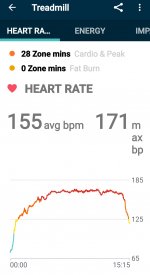
My heart rate stays above 150 for at least 30 of those 40 minutes. Mostly staying in the high 160s and on occasions going beyond 170.
Anyone knows if such high sustained heart rate can damage me?
After finishing exercise, when I am resting, it comes down to around 80 in the first 5 minutes, then gradually gets down to my normal resting heart rate.
This is from Fitbit app.
I do regular exercise, but my heart rate is worrying me .
My resting heart rate is 57 on average.
But after a few minutes of intense exercise, specially running, it shoots up to my maximum heart rate of 170.
I do 5k running on a treadmill in 40 minutes.
My heart rate stays above 150 for at least 30 of those 40 minutes. Mostly staying in the high 160s and on occasions going beyond 170.
Anyone knows if such high sustained heart rate can damage me?
After finishing exercise, when I am resting, it comes down to around 80 in the first 5 minutes, then gradually gets down to my normal resting heart rate.
This is from Fitbit app.
Last edited:
