

Indo-Pacific : News & Discussion
- Thread starter dray
- Start date
You are using an out of date browser. It may not display this or other websites correctly.
You should upgrade or use an alternative browser.
You should upgrade or use an alternative browser.

After AUKUS: How Could France Reboot Its Indo-Pacific Strategy?
The September 15 earthquake is still producing aftershocks. The battle of "narratives" is raging. The French ambassador to Australia has not returned to Canberra.Nothing will ever be the same again. President Macron said that the affair "does not change France's Indo-Pacific strategy in any way". This may be true in principle, but the magnitude of the shock means that France may indeed need to revise its posture, at least as far as defense and security are concerned. To this end, there are two prerequisites:
- France must bid adieu to its hopes of being in the "Anglosphere", just as at the end of the 2000s it was unable to secure a place in the temple of intelligence cooperation, the "Five Eyes" (made up of Australia, Canada, New Zealand, United Kingdom, United States). It would be unreasonable, if at all desirable, to apply for membership into AUKUS - or to expect to be asked to do so.
- Still, it seems worthwhile to tone down its rhetoric about the actions of its partners. It should avoid accusing them of fomenting an anti-China alliance that could unduly raise tensions with Beijing. First, because - let's face it, Australia has a point - China is no longer what it was ten years ago, when Canberra sought proposals for its submarine program. Secondly, because France should in fact be stirred by AUKUS’ promise of increased exchanges and cooperation in defense and security technologies - the "forest" hidden by the "tree" of the promise of US nuclear submarines. Finally, because it would be best for France not to embarrass India and Japan, who have watched the verbal exchanges of recent weeks with consternation.
What France must not do:
- Consider a "pivot in reverse". The 21st century will be maritime and Asian, whether we like it or not. The French and European influence must be strengthened, through participation in the defense of common standards (freedom of navigation) and common goods (maritime security, biodiversity, etc.), and by ensuring that it contributes to the "connectivity" of the region..
- Rely entirely on the European Union. During its presidency of the Council of the EU (2022), France will of course try to operationalize the Union's new Indo-Pacific strategy. But as the world's second largest maritime power in terms of the size of its exclusive economic zone (93% in the Indopacific), as a nuclear-weapons State and as a permanent member of the Security Council, France cannot rely entirely on the Union. All the more so since it will be necessary, at the appropriate time, to renew ties with London, which has ambitions for a much greater presence in the region.
- Stake everything on major contracts. France’s defense industry, pulled upwards by nuclear deterrence, knows how to present very high-level offers, which are often attractive alternatives to the "all-American" approach. Its logic of "strategic partnerships", by which it accompanies (almost) every major defense contract with dialogue and a relationship of trust, is the right one. But France is not always the best when it comes to grasping the strategic fabric of its customers in greater depth.
What strategic choices does France have?
France can take four (non-mutually exclusive) paths:- Fully bank on India, which, as the US-China competition stiffens, does not want to be dragged into a real military alliance by Washington.
- Make Japan the "second leg" of its strategy in the region, with India remaining the first. The timing for that is ripe: Tokyo is eager for a more substantial Franco-Japanese relationship.
- Propose an "enlarged Quad" (the expression "Quad plus" refers to ad hoc meetings of the Quad with ASEAN partners) bringing together all the major democratic maritime powers. This would also include the United Kingdom and perhaps even Germany - who together with France make up the EU three - but on condition that Berlin be prepared to make a quantitative leap in its Indo-Pacific investment.
- Diversify its portfolio of large strategic partnerships, strengthening its ties with Singapore, Indonesia, Vietnam, and establishing them with Malaysia and South Korea.
Naturally, in view of the American-British precedent, France should no longer have any reservations about supplying nuclear submarines to interested clients. Its choice of fuel (low-enriched uranium, which requires the core to be reloaded during its lifetime) would logically steer it towards states that already have a civilian nuclear complex, such as India, Japan or South Korea.
Now is also the time for France to increase the frequency and intensity of its "Track 1.5" dialogues (involving officials and experts), as part of a greater expansion of its soft power in the region. The experience of a multi-level strategic dialogue with Australia, which began in 2010, has shown that this formula can contribute to the development of mutual understanding and trust, indispensable foundations for major concrete cooperation in the field of defense and security. But that alone is not enough: more intense and sustained support - political, diplomatic, parliamentary, cultural, etc. - is needed.
In the longer term, it is difficult to see how Paris could do without increasing its maritime and air presence in the region, particularly with regard to the "sovereignty forces" designed to protect French territories. The next military programming law (set to be voted in 2025 or earlier) will define France’s room for maneuver for the entire first half of the century.
Now is also the time for France to increase the frequency and intensity of its "Track 1.5" dialogues.
Two parameters remain, calling for vigilance from Paris:
One is of course the great unknown of the result of the third and "final'' referendum on the independence of New Caledonia, currently scheduled for December 12. This will be an important step in the reconstruction of the French strategy in the region. Most experts on the subject believe that in the case of a "yes" vote, it should still be possible for Paris to count on the "Pebble" (as it is known in France), that was so important to America in the 1940s, and that is now coveted by Beijing.Then, the big question remains how France will position itself in what some call the "new Cold War" that is taking off between China and the West. In the Indo-Pacific, being the bearer of a "third way" or "détente" solution will bring France few friends and clients, even if we must be attentive to developments in the ASEAN countries, most of which do not want to be forced to choose between Beijing and Washington. This is a key lesson of AUKUS. However, the People's Liberation Army is not "two segments of the Tour de France away" from French borders, as was the Soviet army. France must therefore coordinate with its allies and with America for its Indo-Pacific strategy - which justifies, among other things, an association with the Quad - while maintaining a "European signature". This is the major question on which France and the US must reach an agreement on.

After AUKUS: How Could France Reboot Its Indo-Pacific Strategy?
Analysis by Michel Duclos, special advisor for geopolitics and Bruno Tertrais, Senior Fellow at Institut Montaigne.
Professor Gordon Flake Interviews Admiral Harry Harris
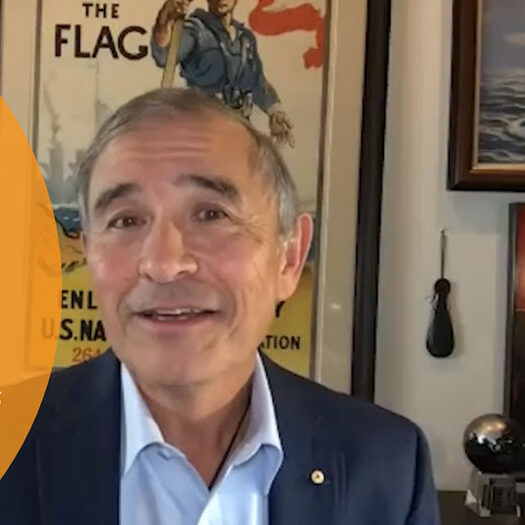
Professor Gordon Flake Interviews Admiral Harry Harris - Perth USAsia Centre
Professor Gordon Flake Interviews Admiral Harry Harris Professor Gordon Flake interviews Admiral Harry Harris, discussing his leadership and career in the United States Navy and as Ambassador to the Republic of Korea.
 perthusasia.edu.au

France declines to back AUKUS deal, wary of Indo-Pacific tensions
France will not support a new trilateral security partnership between Australia, Britain and the United States, known as AUKUS, said the country's envoy for the Indo-Pacific, voicing concern it could escalate tensions in the region at a time of fraught China-U.S. relations.
India and the IOR: Policy Convergence in a Multilateral Arena
To restore the Asian power balance in the Indian Ocean, a new reality needs to emerge among the Indian Ocean rim states by rethinking their Ocean Policy. An Ocean Policy is a code of behaviour formed for a nation’s strategy, course, development plans and external relations concerning the seas. A region’s security and well-being could be ensured only by incorporating vital foreign policy strategies such as the Ocean Policy.Bordering the Indian peninsula, the Indian Ocean is a strategically important and resource rich oceanic space connecting the world’s diverse regions which acted as a platform for exchanging knowledge, culture, technology and goods and services benefiting the numerous regions that border this ocean. The Indian Ocean once again stands at the point of change in the 21st Century and for good reason.
The world’s fastest-growing economies are concentrated in Asia with a substantial proportion of global trade moving through the Indian Ocean. With vital sea lanes that help feed some of Asia’s largest economies and as the third-largest body of water in the world, the significance of the Indian Ocean has long been clear. The Indian Ocean is rich in natural resources and the Indian Ocean basin is where forty per cent of the world’s offshore oil production takes place.
The Indian Ocean is a good model of where normative frameworks such as the UN Convention on the Law of the Sea (UNCLOS) apply in principle. The emergence of regional organisations such as ASEAN (Association of North East Nations), SAARC (South Asian Association for regional cooperation) and others has unfolded a new era of security through regionalism. With the concept of peace and stability, SAARC was the primary regional organisation that was established in the South Asian region. Though at a slower pace, compared to other regional organisations, SAARC has demonstrated its will to realise regional collaboration in the South Asian region.
India's IOR Strategy
For India: the littoral’s most populous nation, the Indian Ocean holds specific importance. Undeniably, India’s leadership role will be significant in defining the strategic future of the rest of the Indian Ocean’s littoral states including those outside the region. Bridging the Indian Ocean to the Pacific in the East and the Mediterranean in the West, this region is of strategic importance: In addition, by connecting the states that produce natural resources with other consumer states, this region has emerged as a vital intersection of maritime trade.
The strategic geographical positioning and physical magnitude of India, provides the country with excessive political, economic and strategic influence over its immediate neighbouring states thereby naturally upsetting the balance of power in the region in favour of India. With the newly developing threats in the global arena, it is now important for India to take the needed steps with the backing of Indian Ocean rim states to preserve its security in the international order. By incorporating its foreign policies such as Neighbourhood First policy, Link West Policy, Act East Policy, Indo Pacific and Focus Africa Plan into the platform of Indian Ocean Rim states, India can become politically, economically and diplomatically strong.
With its strong position in the Indian Ocean Rim Association (IORA), India can advance its emergence as the world’s third largest economy and subsequently improve intrastate dynamics and economic performance of the other states in South Asia. The gradual transformation of South Asia from a realist region to a neo realist region took place with the conceptualization of regional organisations such as SAARC, IORA and ASEAN. Indian diplomacy in the last two years has concentrated on the regional and continental approach towards foreign policy such as the Neighbourhood First policy, Act East, Focus Africa Plan, Link West and Indo-Pacific.
Indo-Pacific
Rich in resources and connecting the contiguous waters of the Indian Ocean with the Western Pacific, the Indo-Pacific biogeographic region has gained traction in the last number of years with the shifting global center of gravity that has been propelling towards this region in both geo-political and geoeconomic terms. The Indo Pacific region, as a geostrategic construct goes further than a geographical demarcation.
Both, the US and India collaborate on a broad range of diplomatic and security matters in this region such as defense, nonproliferation and regional cooperation. India remains crucial for the US’s strategy in the region since the two nations share a common strategic vision for a free and open Indo-Pacific region. The Indo-Pacific is a brandnew area in India’s foreign policy engagement, describing a modification in India’s strategic setting expanding its perils entirely from its continental borders to its maritime area.
Small Island States
Diplomacy of Small Island States, specifically in the Indian Ocean sphere, has been identified as being integral to the geopolitical interests of these states. Similar to other states in the sphere, for Small Island States such as Sri Lanka, diplomacy forms a vital part of the international and regional order that operates in the political and economic environment of the Indian Ocean sphere.
Notably, these Small Island States often pursue comparable foreign policy objectives related to economics, diplomacy, prosperity and the overall wellbeing of their population. Given these dynamics, Sri Lanka, as a small island state, has recognised the great need to interact, influence and benefit from its diplomacy with other such states in the Eastern and Western Indian Ocean Region. At the bilateral level, the ties between Sri Lanka and other Small Island States have been influential in shaping the foreign policy dynamics of these states. Over the years, Sri Lanka’s strategic relations with other states have been progressively getting stronger.
Cooperation patterns
This new pattern of cooperation by establishing collective associations of security and regional arrangements can be the beginning of a new era in India’s foreign and defense policies. This has been accomplished through policy scrutiny, regional ties and the role of foreign nations in regional partnerships. The maritime doctrine of India focuses on the country’s maritime security with its neighbours. India’s security necessitates reinforcing its diplomatic and defense cooperation specifically in the Indian Ocean. Hence, India should foster regional collaboration within the Indian Ocean rim states to offset future security threats.
About the Author Dr. Srimal Fernando received his PhD in the area of International Affairs. He was the recipient of the prestigious O. P Jindal Doctoral Fellowship and SAU Scholarship under the SAARC umbrella. He is also an Advisor/Global Editor of Diplomatic Society for South Africa in partnership with Diplomatic World Institute (Brussels). He has received accolades such as 2018/2019 ‘Best Journalist of the Year’ in South Africa, (GCA) Media Award for 2016 and the Indian Council of World Affairs (ICWA) accolade. He is the author of ‘Politics, Economics and Connectivity: In Search of South Asian Union
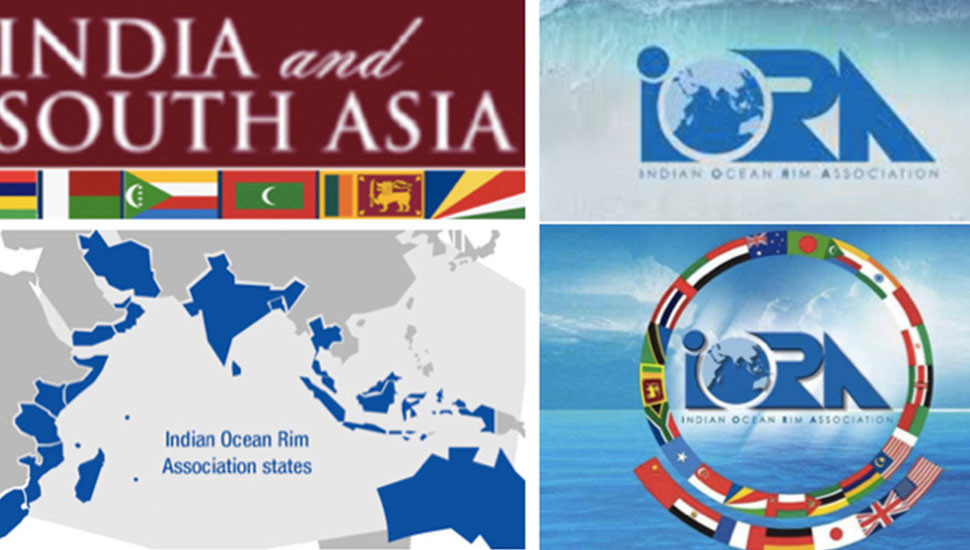
India and the IOR: Policy Convergence in a Multilateral Arena
To restore the Asian power balance in the Indian Ocean, a new reality needs to emerge among the Indian Ocean rim states by rethinking their Ocean Policy.
After AUKUS: How Could France Reboot Its Indo-Pacific Strategy?
The September 15 earthquake is still producing aftershocks. The battle of "narratives" is raging. The French ambassador to Australia has not returned to Canberra.
Nothing will ever be the same again. President Macron said that the affair "does not change France's Indo-Pacific strategy in any way". This may be true in principle, but the magnitude of the shock means that France may indeed need to revise its posture, at least as far as defense and security are concerned. To this end, there are two prerequisites:
- France must bid adieu to its hopes of being in the "Anglosphere", just as at the end of the 2000s it was unable to secure a place in the temple of intelligence cooperation, the "Five Eyes" (made up of Australia, Canada, New Zealand, United Kingdom, United States). It would be unreasonable, if at all desirable, to apply for membership into AUKUS - or to expect to be asked to do so.
- Still, it seems worthwhile to tone down its rhetoric about the actions of its partners. It should avoid accusing them of fomenting an anti-China alliance that could unduly raise tensions with Beijing. First, because - let's face it, Australia has a point - China is no longer what it was ten years ago, when Canberra sought proposals for its submarine program. Secondly, because France should in fact be stirred by AUKUS’ promise of increased exchanges and cooperation in defense and security technologies - the "forest" hidden by the "tree" of the promise of US nuclear submarines. Finally, because it would be best for France not to embarrass India and Japan, who have watched the verbal exchanges of recent weeks with consternation.
What France must not do:
- Consider a "pivot in reverse". The 21st century will be maritime and Asian, whether we like it or not. The French and European influence must be strengthened, through participation in the defense of common standards (freedom of navigation) and common goods (maritime security, biodiversity, etc.), and by ensuring that it contributes to the "connectivity" of the region..
- Rely entirely on the European Union. During its presidency of the Council of the EU (2022), France will of course try to operationalize the Union's new Indo-Pacific strategy. But as the world's second largest maritime power in terms of the size of its exclusive economic zone (93% in the Indopacific), as a nuclear-weapons State and as a permanent member of the Security Council, France cannot rely entirely on the Union. All the more so since it will be necessary, at the appropriate time, to renew ties with London, which has ambitions for a much greater presence in the region.
- Stake everything on major contracts. France’s defense industry, pulled upwards by nuclear deterrence, knows how to present very high-level offers, which are often attractive alternatives to the "all-American" approach. Its logic of "strategic partnerships", by which it accompanies (almost) every major defense contract with dialogue and a relationship of trust, is the right one. But France is not always the best when it comes to grasping the strategic fabric of its customers in greater depth.
What strategic choices does France have?
France can take four (non-mutually exclusive) paths:
France should no longer have any reservations about supplying nuclear submarines to interested clients.
- Fully bank on India, which, as the US-China competition stiffens, does not want to be dragged into a real military alliance by Washington.
- Make Japan the "second leg" of its strategy in the region, with India remaining the first. The timing for that is ripe: Tokyo is eager for a more substantial Franco-Japanese relationship.
- Propose an "enlarged Quad" (the expression "Quad plus" refers to ad hoc meetings of the Quad with ASEAN partners) bringing together all the major democratic maritime powers. This would also include the United Kingdom and perhaps even Germany - who together with France make up the EU three - but on condition that Berlin be prepared to make a quantitative leap in its Indo-Pacific investment.
- Diversify its portfolio of large strategic partnerships, strengthening its ties with Singapore, Indonesia, Vietnam, and establishing them with Malaysia and South Korea.
Naturally, in view of the American-British precedent, France should no longer have any reservations about supplying nuclear submarines to interested clients. Its choice of fuel (low-enriched uranium, which requires the core to be reloaded during its lifetime) would logically steer it towards states that already have a civilian nuclear complex, such as India, Japan or South Korea.
Now is also the time for France to increase the frequency and intensity of its "Track 1.5" dialogues (involving officials and experts), as part of a greater expansion of its soft power in the region. The experience of a multi-level strategic dialogue with Australia, which began in 2010, has shown that this formula can contribute to the development of mutual understanding and trust, indispensable foundations for major concrete cooperation in the field of defense and security. But that alone is not enough: more intense and sustained support - political, diplomatic, parliamentary, cultural, etc. - is needed.
In the longer term, it is difficult to see how Paris could do without increasing its maritime and air presence in the region, particularly with regard to the "sovereignty forces" designed to protect French territories. The next military programming law (set to be voted in 2025 or earlier) will define France’s room for maneuver for the entire first half of the century.
Now is also the time for France to increase the frequency and intensity of its "Track 1.5" dialogues.
Two parameters remain, calling for vigilance from Paris:
One is of course the great unknown of the result of the third and "final'' referendum on the independence of New Caledonia, currently scheduled for December 12. This will be an important step in the reconstruction of the French strategy in the region. Most experts on the subject believe that in the case of a "yes" vote, it should still be possible for Paris to count on the "Pebble" (as it is known in France), that was so important to America in the 1940s, and that is now coveted by Beijing.
Then, the big question remains how France will position itself in what some call the "new Cold War" that is taking off between China and the West. In the Indo-Pacific, being the bearer of a "third way" or "détente" solution will bring France few friends and clients, even if we must be attentive to developments in the ASEAN countries, most of which do not want to be forced to choose between Beijing and Washington. This is a key lesson of AUKUS. However, the People's Liberation Army is not "two segments of the Tour de France away" from French borders, as was the Soviet army. France must therefore coordinate with its allies and with America for its Indo-Pacific strategy - which justifies, among other things, an association with the Quad - while maintaining a "European signature". This is the major question on which France and the US must reach an agreement on.
After AUKUS: How Could France Reboot Its Indo-Pacific Strategy?
Analysis by Michel Duclos, special advisor for geopolitics and Bruno Tertrais, Senior Fellow at Institut Montaigne.www.institutmontaigne.org
France taps India and Indonesia for ‘true’ partnerships after Aukus debacle
Emmanuel Macron on Saturday sought to strengthen ties with India and Indonesia, France’s presidency said, after Paris was locked out of a defence pact between the US, UK and Australia.Since losing a major submarine deal with Canberra, which joined the so-called Aukus alliance to better counter China, France has sought solace in leading Asian nations for deeper strategic ties in the Pacific region.
On the sidelines of the G20 summit in Rome, Macron first met his Indonesian counterpart, Joko Widodo, followed by Indian Prime Minister Narendra Modi, focusing on the growing economic clout of the region and the rivalry between the United States and China.
“There was a common willingness to go further with the Indo-Pacific strategy,” the French side said after talks with Modi. A follow-up meeting would take place next week to flesh out a joint agenda.
France and India, which first defined an Indo-Pacific strategy in 2018, found “a great convergence … on the guiding principles of our actions in the Indo-Pacific: trust, independence and unity”, the presidency said.
Macron bumps elbows with Indonesia’s President Joko Widodo at the G20 gathering on Friday. Photo: Indonesian Presidential Palace via AP
Macron also met South Korean President Moon Jae-in in Rome and they “agreed to work together to make the Indo-Pacific an area of stability and prosperity”.
France considers itself a power in the Pacific thanks to overseas possession such as New Caledonia and French Polynesia, and is pursuing ambitions to wield greater influence on the region, particularly through Southeast Asia.
Macron and Widodo spoke for half an hour and “decided to work on a true strategic partnership in the Indo-Pacific”, said France’s Élysée Palace.
It would notably “cover the question of the ecological transition, of support for employment and growth in Indonesia and the post-Covid revival”, the French presidency added.
The talks came ahead of a Jakarta visit by French Foreign Minister Jean-Yves Le Drian, with Indonesia due to take over the rotating G20 presidency after Italy.
Widodo and his French counterpart also reviewed coordination at Asean, Southeast Asia’s regional bloc, where Indonesia, with a population of more than 270 million, plays a pivotal role.
France assumes the rotating EU presidency in 2022.

France taps India, Indonesia for ‘true’ partnerships after Aukus debacle
France will work on a strategic partnership with Indonesia, while it found ‘a great convergence’ on Indo-Pacific principles with India, its government said.
 www.scmp.com
China's Xi warns against 'Cold War' in Indo-Pacific
Chinese President Xi Jinping warned Thursday, November 11, 2021, against letting tensions in the Indo-Pacific cause a relapse into a Cold War mentality.His remarks on the sidelines of the annual summit of the Asia-Pacific Economic Cooperation forum came weeks after the US, Britain and Australia announced a new security alliance in the region which would see Australia build nuclear submarines. China has harshly criticised the deal.
Mr. Xi spoke in a pre-recorded video to a CEO Summit at APEC, which is being hosted by New Zealand in a virtual format. Xi is scheduled to participate in an online meeting with other Pacific Rim leaders including US President Joe Biden on Saturday.
In his speech, Mr. Xi said attempts to draw boundaries in the region along ideological or geopolitical lines would fail.
"The Asia-Pacific region cannot and should not relapse into the confrontation and division of the Cold War era," Mr. Xi said.
Mr. Xi also said the region should make sure to keep supply lines functioning and to continue liberalising trade and investment.
"China will remain firm in advancing reform and opening up so as to add impetus to economic development," he said.
The most pressing task in the region is to make an all-out effort to fight the pandemic and to emerge from its shadow as soon as possible, he said.
In all, APEC members account for nearly 3 billion people and about 60 per cent of the world's GDP. But deep tensions run through the unlikely group of 21 nations and territories that include the US, China, Taiwan, Russia and Australia.
China claims vast parts of the South China Sea and other areas and has moved to establish a military presence, building islands in some disputed areas as it asserts its historic claims.
Both Taiwan and China have applied to join a Pacific Rim trade pact, the Comprehensive and Progressive Agreement for Trans-Pacific Partnership, with Beijing saying it will block Taiwan's bid on the basis that the democratically governed island refuses to accept that it's part of communist-ruled China.
And it remains unclear whether all APEC members will support a bid by the US to host the 2023 round of APEC meetings.
New Zealand's Foreign Minister Nanaia Mahuta said Wednesday that APEC was founded on consensus and that there was not yet a confirmed host for 2023.
Officials say they have made significant progress during some 340 preliminary meetings leading up to this week's leaders' meeting. APEC members have agreed to reduce or eliminate many tariffs and border holdups on vaccines, masks and other medical products important for fighting the pandemic.
China's Xi warns against 'Cold War' in Indo-Pacific
His remarks on the sidelines of the annual summit of the Asia-Pacific Economic Cooperation forum came weeks after the US, Britain and Australia announced a new security alliance in the region
Canada, South Asian bloc to begin free-trade talks in effort to diversify from China
OTTAWA - Canada is launching free-trade talks with a major group of southeast Asian countries as it seeks to diversify from China and find new ways of coping with a snarled global supply chain.
International Trade Minister Mary Ng announced the opening of formal trade talks late Tuesday with the Association of South East Asian Nations — known as ASEAN — after meeting with representatives of that 10-country bloc.
Ng heralded the opening of the talks as a significant milestone in deepening Canada’s economic relations with the Indo-Pacific region and driving economic growth as the world copes with supply-chain bottlenecks that have plagued global trade during the COVID-19 pandemic.
Three weeks ago, Prime Minister Justin Trudeau told a business forum that pursuing a trade deal with ASEAN countries would be a “win-win” that would be key to driving Canada’s growth as it emerges from the pandemic.
“Our government is committed to opening up and diversifying more markets for Canadian exporters and businesses to grow,” Ng said in an interview.
Ng met virtually Tuesday with ASEAN ministers and representatives of the Canada-ASEAN Business Council. The ministers agreed to a joint statement highlighting the potential for a free-trade agreement to help diversify supply chains, increase trade and investment, and reinforce Canada and ASEAN’s shared commitment to open markets and rules-based trade.
Canada already has preferred access to four of ASEAN’s 10 countries — Brunei, Malaysia, Singapore and Vietnam — through the 11-country Pacific Rim trade group known as the Comprehensive and Progressive Agreement for Trans-Pacific Partnership (CPTPP).
“We already have the CPTPP in the Asia-Pacific region. And this adds another 600 million new consumers,” said Ng.
She said the region is the third-largest consumer market in the world with a $5 trillion economy.
A deal with ASEAN would open up access to three other large markets — Indonesia, the Philippines and Thailand. The pursuit of a trade deal with ASEAN has been long sought by the government, and the global pandemic has only heightened the need to forge deeper into Asian markets.
An analysis by ASEAN and the federal government estimates that a free-trade deal between them could increase Canadian exports of goods and services to the region by 13.3 per cent.
The early months of the pandemic exposed the overreliance on trade with China as Canada encountered problems gaining access to personal protective equipment and vaccines.
In 2018, Canada launched public consultations that generated submissions from more than four dozen interested parties and individuals.
“Overall, stakeholders expressed support for FTA exploratory discussions with ASEAN and highlighted the significant opportunities for Canadians and Canadian businesses in the ASEAN market — notably with non-CPTPP economies (Indonesia, Philippines and Thailand) — across a broad range of sectors, including agriculture, manufacturing and services, among others,” said the report, by Global Affairs Canada.
The agriculture sector provided the majority of input with 20 of the 49 submissions on the consultations, and their advice carried a familiar warning about an obstacle that has plagued past Canadian trade negotiations.
“A small number of stakeholders, especially from the supply-managed agriculture sectors, are skeptical of the benefits of a possible ASEAN-Canada FTA. Contributors indicated that support for an agreement would depend on outcomes that provide a carve-out for supply-managed goods,” said the report.
Canada’s supply-managed dairy, poultry and egg markets have proven to be major bones of contention during trade talks on the CPTPP, with the European Union and in the renegotiation of the North American Free Trade Agreement, where it sparked the wrath of former U.S. president Donald Trump.
Canada’s agriculture sector suffered when China imposed restrictions on Canadian canola, pork and beef imports during the dispute involving Chinese high-tech executive Meng Wanzhou, and Canadians Michael Kovrig and Michael Spavor. The men who became known as the two Michaels spent almost three years in Chinese prisons in apparent retaliation for Canada’s arrest of Meng on a U.S. extradition warrant, while the punitive Chinese trade measures cost Canadian canola companies about $2 billion.
“We’ve been clear as a government that we will protect supply-managed sectors, and we intend to fulfil that,” said Ng.
“But we’re also looking at opportunities to look at market access in other sectors. We’re looking at growth in the digital economy. We’re looking at greater access to (financial) services.”
In the recent federal election, the Liberals pledged a new Asia-Pacific strategy to deepen trade ties, including new trade deals.
This report by The Canadian Press was first published Nov. 16, 2021.

 www.thestar.com
OTTAWA - Canada is launching free-trade talks with a major group of southeast Asian countries as it seeks to diversify from China and find new ways of coping with a snarled global supply chain.
International Trade Minister Mary Ng announced the opening of formal trade talks late Tuesday with the Association of South East Asian Nations — known as ASEAN — after meeting with representatives of that 10-country bloc.
Ng heralded the opening of the talks as a significant milestone in deepening Canada’s economic relations with the Indo-Pacific region and driving economic growth as the world copes with supply-chain bottlenecks that have plagued global trade during the COVID-19 pandemic.
Three weeks ago, Prime Minister Justin Trudeau told a business forum that pursuing a trade deal with ASEAN countries would be a “win-win” that would be key to driving Canada’s growth as it emerges from the pandemic.
“Our government is committed to opening up and diversifying more markets for Canadian exporters and businesses to grow,” Ng said in an interview.
Ng met virtually Tuesday with ASEAN ministers and representatives of the Canada-ASEAN Business Council. The ministers agreed to a joint statement highlighting the potential for a free-trade agreement to help diversify supply chains, increase trade and investment, and reinforce Canada and ASEAN’s shared commitment to open markets and rules-based trade.
Canada already has preferred access to four of ASEAN’s 10 countries — Brunei, Malaysia, Singapore and Vietnam — through the 11-country Pacific Rim trade group known as the Comprehensive and Progressive Agreement for Trans-Pacific Partnership (CPTPP).
“We already have the CPTPP in the Asia-Pacific region. And this adds another 600 million new consumers,” said Ng.
She said the region is the third-largest consumer market in the world with a $5 trillion economy.
A deal with ASEAN would open up access to three other large markets — Indonesia, the Philippines and Thailand. The pursuit of a trade deal with ASEAN has been long sought by the government, and the global pandemic has only heightened the need to forge deeper into Asian markets.
An analysis by ASEAN and the federal government estimates that a free-trade deal between them could increase Canadian exports of goods and services to the region by 13.3 per cent.
The early months of the pandemic exposed the overreliance on trade with China as Canada encountered problems gaining access to personal protective equipment and vaccines.
In 2018, Canada launched public consultations that generated submissions from more than four dozen interested parties and individuals.
“Overall, stakeholders expressed support for FTA exploratory discussions with ASEAN and highlighted the significant opportunities for Canadians and Canadian businesses in the ASEAN market — notably with non-CPTPP economies (Indonesia, Philippines and Thailand) — across a broad range of sectors, including agriculture, manufacturing and services, among others,” said the report, by Global Affairs Canada.
The agriculture sector provided the majority of input with 20 of the 49 submissions on the consultations, and their advice carried a familiar warning about an obstacle that has plagued past Canadian trade negotiations.
“A small number of stakeholders, especially from the supply-managed agriculture sectors, are skeptical of the benefits of a possible ASEAN-Canada FTA. Contributors indicated that support for an agreement would depend on outcomes that provide a carve-out for supply-managed goods,” said the report.
Canada’s supply-managed dairy, poultry and egg markets have proven to be major bones of contention during trade talks on the CPTPP, with the European Union and in the renegotiation of the North American Free Trade Agreement, where it sparked the wrath of former U.S. president Donald Trump.
Canada’s agriculture sector suffered when China imposed restrictions on Canadian canola, pork and beef imports during the dispute involving Chinese high-tech executive Meng Wanzhou, and Canadians Michael Kovrig and Michael Spavor. The men who became known as the two Michaels spent almost three years in Chinese prisons in apparent retaliation for Canada’s arrest of Meng on a U.S. extradition warrant, while the punitive Chinese trade measures cost Canadian canola companies about $2 billion.
“We’ve been clear as a government that we will protect supply-managed sectors, and we intend to fulfil that,” said Ng.
“But we’re also looking at opportunities to look at market access in other sectors. We’re looking at growth in the digital economy. We’re looking at greater access to (financial) services.”
In the recent federal election, the Liberals pledged a new Asia-Pacific strategy to deepen trade ties, including new trade deals.
This report by The Canadian Press was first published Nov. 16, 2021.
Canada, South Asian bloc to begin free-trade talks in effort to diversify from China
OTTAWA - Canada is launching free-trade talks with a major group of southeast Asian countries as it seeks to diversify from China and find new ways of coping with a snarled global supply chain.
Foreign Minister Nanaia Mahuta warns of 'rising nationalism' during trip to Indonesia
Foreign Minister Nanaia Mahuta, visiting Indonesia, has warned of “rising nationalism” in the Indo-Pacific, in a speech condemning military rule in Myanmar and China’s claim over the South China Sea.In the speech, given to a foreign policy organisation in Indonesia on Tuesday evening (NZ time), Mahuta said New Zealand needed “trusted friends” in the region, which was becoming “increasingly contested”.
“We have seen rising nationalism, the undermining of democratic norms, and deepening inequalities. Global competition is intensifying at a time when the need for co-ordinated action has never been greater.”
Mahuta has in recent days been in Indonesia to meet with President Joko Widodo and Foreign Minister Retno Marsudi, in the third stop of her first trip outside New Zealand as foreign minister. She will soon travel to Dubai, to visit New Zealand’s Expo 2021 event, before visiting Qatar, the United States and Canada.

./Stuff
Foreign Minister Nanaia Mahuta meets Indonesia’s Foreign Minister, Retno Marsudi. Mahuta has been on her first foreign trip as minister, meeting counterparts in Australia, Singapore and Indonesia. She will soon travel onwards to Dubai.
Mahuta’s speech was directed at Asean, a union of 10 Southeast Asian countries that aims to build co-operation on economic, political, military and security issues. Asean members include Indonesia, Philippines, Thailand, Vietnam, Malaysia and Myanmar.
Mahuta, who met Asean secretary-general Lim Jock Hoi on Tuesday, repeatedly emphasised the “centrality”, or importance, of Asean in the increasingly contested Indo-Pacific.
The Indo-Pacific is a term for the Asia-Pacific which includes India but is generally used to exclude China due to its growing influence in the region. The United States, United Kingdom and European Union are among powers who have renewed their interest in the region due to China's rise, heightening competition.
https://www.stuff.co.nz/authors/thomas-manch
“We have entered an era of formidable environmental, health and geopolitical difficulties, with fewer certainties and greater risks,” Mahuta said.
“We need trusted friends and partners who share our commitment to multilateralism, and understand the importance of working together to address shared challenges.
“We need regional architecture which promotes a rules based approach to protect human rights and which emphasises open markets and safeguards the sovereignty of all states, regardless of the size.”
Asean has continued to grapple with political instability and violence in Myanmar, where the military – called the Tatmadaw – seized power in February and jailed members of the democratically elected National League for Democracy, including its Nobel Peace Prize-winning leader Aung San Suu Kyi.
In April, Asean agreed to a “Five-Point Consensus” with Myanmar that called for an immediate end to violence in the country, and for an Asean special envoy to visit the country. The military junta has denied the envoy any opportunity to meet with Suu Kyi.

Aung Shine Oo/AP
Myanmar’s democratically elected leader Aung San Suu Kyi has been detained by a military junta, the Tatmadaw, since February.
“We have condemned at the highest levels the military coup in Myanmar. We continue to call for the immediate cessation of violence, the release of all those arbitrarily detained since the coup, and the return to civilian government,” Mahuta said.
“We strongly support Asean's efforts to restore democracy in Myanmar and urge the Tatmadaw to take action towards the full and prompt implementation of the five-point consensus, including by granting the Asean special envoy full access to all parties concerned.”
Mahuta also directly echoed Prime Minister Jacinda Ardern, who gave a speech on the Indo-Pacific in July in which she detailed New Zealand’s “serious concerns” over China’s claim to the South China Sea.
Mahuta said New Zealand was concerned about “artificial island building, continued militarisation and actions which pose risks to freedom of navigation”.
“We call for a peaceful resolution and for international law to be upheld.”
China has been challenging countries, including the Philippines and Vietnam, over the contested body of water and building military installations on artificial islands.
Foreign Minister Nanaia Mahuta warns of 'rising nationalism' during trip to Indonesia
Foreign Minister Nanaia Mahuta, during a visit to Indonesia, said New Zealand needed “trusted friends” in the region which was beset by geopolitical competition.
 www.stuff.co.nz
This video session is well worth the time spent watching it and quite much informative as well if anybody is interested.