
South Korea Moves Toward Medium-Sized Aircraft Carriers: Why?
South Korea Moves Toward Medium-Sized Aircraft Carriers: Why?
What’s driving Seoul to include carriers in its naval expansion plans?

By Robert Farley
July 26, 2019
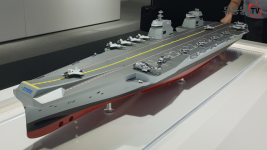
Earlier this week, South Korea announced its intention to include a medium-sized aircraft carrier in its naval expansion plans. The decision to construct the ships comes at a time of high tension with Japan, and takes place more generally in context of accelerated Japanese and Chinese aircraft carrier construction. Reportedly, the ship will displace 30,000 tons, making it somewhat larger than the Japanese Izumos. Designing the ship from the keel up to operate the F-35B may also remedy the need for the compromises that required extensive refitting in the Japanese ships.
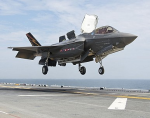
Such a vessel would lock South Korea into the acquisition of the F-35B, except in the unlikely event that South Korea developed its own advanced STOVL fighter aircraft. The ROK has already agreed to acquire the F-35A, although it has also pursued a related project for a fifth-generation fighter. There is no indication that the KFX fighter would have STOVL capabilities, however. Presumably, the construction of this carrier would put to bed rumors about refitting the Dokdo-class to operate the F-35B, a plan that would have seriously strained the smaller vessels.
Although South Korea has never constructed a military vessel of this size, the shipbuilding industry is sufficiently sophisticated that upsizing from the Dokdos should not present any serious challenges. It is fair to say that Japan is unlikely to share the design characteristics of the Izumos. However, the Spanish Juan Carlosand the Italian Cavour and Trieste could provide ready models if South Korean shipbuilders sought the advice of their European counterparts.
Enjoying this article? Click here to subscribe for full access. Just $5 a month.
Indeed, this new ship will join a growing family of vessels, including the Juan Carlos, the Izumo, the Cavour, and the Trieste, intended to operate the F-35B as their primary combat capability. The Turkish Anadolu (based on the Juan Carlos) was intended for the same purpose, but Turkey has been excluded from the F-35B project. The large American amphibious warships of the Wasp and America classes also operate the F-35B, as do the British Queen Elizabeth class aircraft carriers. The South Korean decision may provide additional ammunition to advocates of refitting the Canberra class amphibs (yet again based on the Spanish Juan Carlos) to carry the Joint Strike Fighter.
The timing of the announcement of the decision to build this vessel resonates uncomfortably with the renewal of tensions with Japan over World War II history, but competition with Tokyo probably remains mostly in the arena of prestige. This decision may also reflect increasing confidence that South Korea’s primary security problems do not involve North Korea. Fighters launched from carriers aren’t intrinsically worth more than fighters launched from land bases, although the presence of a carrier would complicate North Korean targeting problems. More likely, however, South Korea envisions using the ship in a blue water role, contributing to multi-national military and humanitarian operations, and safeguarding ROK interests in the distant abroad.
Whether this spurs additional construction on the part of Japan is an open, interesting question. Notwithstanding the diplomatic irritation that has resurfaced over the past months, Japan does not seem to regard South Korea as a meaningful security threat, or as a competitor for prestige. If happier relations return, the two navies could share lessons learned, and perhaps even act in concert to manage regional security affairs.
South Korea Moves Toward Medium-Sized Aircraft Carriers: Why?
What’s driving Seoul to include carriers in its naval expansion plans?
By Robert Farley
July 26, 2019
Earlier this week, South Korea announced its intention to include a medium-sized aircraft carrier in its naval expansion plans. The decision to construct the ships comes at a time of high tension with Japan, and takes place more generally in context of accelerated Japanese and Chinese aircraft carrier construction. Reportedly, the ship will displace 30,000 tons, making it somewhat larger than the Japanese Izumos. Designing the ship from the keel up to operate the F-35B may also remedy the need for the compromises that required extensive refitting in the Japanese ships.
Such a vessel would lock South Korea into the acquisition of the F-35B, except in the unlikely event that South Korea developed its own advanced STOVL fighter aircraft. The ROK has already agreed to acquire the F-35A, although it has also pursued a related project for a fifth-generation fighter. There is no indication that the KFX fighter would have STOVL capabilities, however. Presumably, the construction of this carrier would put to bed rumors about refitting the Dokdo-class to operate the F-35B, a plan that would have seriously strained the smaller vessels.
Although South Korea has never constructed a military vessel of this size, the shipbuilding industry is sufficiently sophisticated that upsizing from the Dokdos should not present any serious challenges. It is fair to say that Japan is unlikely to share the design characteristics of the Izumos. However, the Spanish Juan Carlosand the Italian Cavour and Trieste could provide ready models if South Korean shipbuilders sought the advice of their European counterparts.
Enjoying this article? Click here to subscribe for full access. Just $5 a month.
Indeed, this new ship will join a growing family of vessels, including the Juan Carlos, the Izumo, the Cavour, and the Trieste, intended to operate the F-35B as their primary combat capability. The Turkish Anadolu (based on the Juan Carlos) was intended for the same purpose, but Turkey has been excluded from the F-35B project. The large American amphibious warships of the Wasp and America classes also operate the F-35B, as do the British Queen Elizabeth class aircraft carriers. The South Korean decision may provide additional ammunition to advocates of refitting the Canberra class amphibs (yet again based on the Spanish Juan Carlos) to carry the Joint Strike Fighter.
The timing of the announcement of the decision to build this vessel resonates uncomfortably with the renewal of tensions with Japan over World War II history, but competition with Tokyo probably remains mostly in the arena of prestige. This decision may also reflect increasing confidence that South Korea’s primary security problems do not involve North Korea. Fighters launched from carriers aren’t intrinsically worth more than fighters launched from land bases, although the presence of a carrier would complicate North Korean targeting problems. More likely, however, South Korea envisions using the ship in a blue water role, contributing to multi-national military and humanitarian operations, and safeguarding ROK interests in the distant abroad.
Whether this spurs additional construction on the part of Japan is an open, interesting question. Notwithstanding the diplomatic irritation that has resurfaced over the past months, Japan does not seem to regard South Korea as a meaningful security threat, or as a competitor for prestige. If happier relations return, the two navies could share lessons learned, and perhaps even act in concert to manage regional security affairs.