News Reliance plans its own cryptocurrency JioCoin, Akash Ambani leading project

Shashank

Well-Known member
Dec 4, 2017
856
954
Ban galore
After disrupting the telecom sector with its free offers and hyper-competitive tariffs, Reliance Jio Infocomm Ltd plans to create its own cyptocurrency, JioCoin.
With Mukesh Ambani’s elder son Akash Ambani leading the JioCoin project, Reliance Jio plans to build a 50-member team of young professionals to work on blockchain technology, which can also be used to develop applications such as smart contracts and supply chain management logistics.
“The company plans to hire 50 young professionals with average age of 25 years for Akash Ambani to lead. There are multiple applications of blockchain (for the company). The team would work on various blockchain products,” a person familiar with the development said on condition of anonymity.
Blockchain is a digital ledger for storing data including, but not limited to, financial transactions. In simple terms, blockchain decentralizes information without it being copied. The information is held on blockchain through a shared database which can be accessed on a real-time basis. This database is not stored on physical servers but on the cloud, which makes it easy to store unlimited data.
The most popular application of the technology has undoubtedly been cryptocurrency, and Reliance Jio also plans to create its own version called JioCoin.
“One (application) is cryptocurrency. We can deploy smart contracts. It can be used in supply chain management logistics. Loyalty points could altogether be based on JioCoin,” the person cited above said, adding that all of this was “in proposal stage”.
An email sent to Reliance Jio seeking a response remained unanswered till press time.
“Reliance Jio also aspires to get into Internet of Things (IoT). Blockchain technology would come in handy there,” the person said.
IoT is a network of devices such as smartphones, wearable devices, home appliances and vehicles, connected to the internet, which enables these objects to connect and exchange data. Experts have also pointed out that blockchain could potentially address security risks to IoT as it provides a shield against data tampering by labelling each block of data.
Significantly, the Indian government has cautioned against cryptocurrencies, stating that virtual currencies were not backed by assets and posed risks such as money laundering. On 2 January, finance minister Arun Jaitley told the Rajya Sabha that the government was still studying the issue.
“A committee under the chairmanship of secretary, department of economic affairs, is deliberating over all issues related to cryptocurrencies to propose specific actions to be taken,” Jaitley said, adding that the government does not consider cryptocurrencies to be legal tender.
Bitcoin and other cryptocurrencies have come under the scanner of governments across the world as their soaring prices attracted speculators and unsophisticated retail investors in droves. On Thursday, Bitcoin dropped as much as 12% to $12,801, its lowest since Christmas day, as South Korea’s justice minister reiterated his proposal to ban local cryptocurrency exchanges, Bloomberg reported.

More at : Reliance plans its own cryptocurrency JioCoin, Akash Ambani leading project
 
  • Like
Reactions: Aashish
It's not just crypto but use if block hain technology for data processing that's his main target. Cryptos are here to stay but will be regulated by governments.

Its fearful to think about it. U have a currency backed by nothing but a value on computer. Today South Korea has banned it. Cryptos if unregulated completely will challenge regular currencies. Currently I believe top currencies are backed by US and hence it is silent. But when US companies face competition from say, CHinese or Russian ones, they will regulate it to prrotect the dollar advantage.
 
It's not just crypto but use if block hain technology for data processing that's his main target. Cryptos are here to stay but will be regulated by governments.

Today say Bitcoin is $12,000. I was reading about it in 2009 when it was $0.06. I never understood what it was then and still don't understand it now, as to why someone would be paying 12,000 for some encrypted trash in 2009 when it was valued at $0.06? Who is generating it? Who is Satoshi Nakamoto? No one knows if it is a person or an entity. So, why are the people who are behind bitcoin hiding themselves? And they say it is distributed, there is no central controlling authority and it is all in the cloud, as your personal computer is also an extension of the cloud.

If it is so, can I also mine and generate Bitcoins? I have a few terabytes of data in my HDD. I also have encryption mechanism to create blocks. How do I plug them into the chain of Bitcoins? For now, till I do not understand it, it sounds more like a Ponzi scheme to me.

Any one in the knowledge these questions?
 
Today say Bitcoin is $12,000. I was reading about it in 2009 when it was $0.06. I never understood what it was then and still don't understand it now, as to why someone would be paying 12,000 for some encrypted trash in 2009 when it was valued at $0.06? Who is generating it? Who is Satoshi Nakamoto? No one knows if it is a person or an entity. So, why are the people who are behind bitcoin hiding themselves? And they say it is distributed, there is no central controlling authority and it is all in the cloud, as your personal computer is also an extension of the cloud.

If it is so, can I also mine and generate Bitcoins? I have a few terabytes of data in my HDD. I also have encryption mechanism to create blocks. How do I plug them into the chain of Bitcoins? For now, till I do not understand it, it sounds more like a Ponzi scheme to me.

Any one in the knowledge these questions?

I got into bitcoins/ cryptos when it was valued about 800 $ per unit and at that time people used to say its not very profitable to mine bitcoins as lots of investments needed in terms of buying graphics cards or dedicated mining machines which were energy hungry.
logic behind these cryptos is that individual or group of machines work together to discover a block/ unit of it. WIth each block being discovered next lvl gets progressively tougher to solve and more processing power is needed.
initially when bitcoins were launched people were able to solve blocks using low lvl graphics card and gradually people needed high ended graphics cards and eventually now we at the stage where multiple powerful machines pool in their resources to mine them and still find it tough.
Many companies are offering high end datacenter machines specially designed for mining and I know many who are using them .
for Now its impossible for you to mine bitcoins on your home machine. i had a high end graphics card on my home machine and still best i could do is to mine few litecoins and feathercoins. I still have some 21 feathercoin in my wallet which are lying there for 4-5 years.
reasons behind rise in price of bitcoins is that its transaction is untraceable and its not stored in centralized server. so many people use it in dark virtual world. As we have more people looking for bitcoins and very less supply its price shot up. I guess you can relate it to ponzi scheme or stock market where demand and supply control the price. But still bitcoins reaching 20 k $ is like crazy to me. I wish I had coined few when it was 700- 800 $ :(.

No one actually know who Satoshi Nakamoto is . many beleive it was an alias . There was a news sometime back about one of guy who discovered bitcoins was caught running silk route. Silk route was dark web site which was running hidden for years and people used to buy drugs, weapons and what not using bitcoins .
 
Last edited:
not very profitable to mine bitcoins as lots of investments needed

So, what doe it mean technically as in software and data wise when you say to "mine bitcoins"?

logic behind these cryptos is that individual or group of machines work together to discover a block/ unit of it

And what does it mean when you say "discover a block/ unit"?

WIth each block being discovered next lvl gets progressively tougher to solve

And what is "next lvl"?

initially when bitcoins were launched people were able to solve blocks using low lvl graphics card

And "solve blocks" - what does it mean?
 
So, what doe it mean technically as in software and data wise when you say to "mine bitcoins"?


And what does it mean when you say "discover a block/ unit"?


And what is "next lvl"?


And "solve blocks" - what does it mean?


In layman terms its more like solving a puzzle. machines connect to the bitcoin network and solve the puzzle either alone or together. once a puzzle or algorithm is solved one unit of bitcoin is generated and is delivered to the machine which solved it. its delivered in form of certain values which will be stored only on the machine which solved it. no one elase will have any idea about where it is and who owns it. Say tomorrow your machine crashes and there is no backup whatever is stored on your machine is gone forever.
once a puzzule/ block is solved difficulty of next puzzle will be more tougher and it goes on so each puzzle takes more time to solve than the previous one and some point absolutely insane amount of computing needed to solve a block or puzzle.

solving block or bitcoining mining are terms we use for discovery of bitcoins .

You can check this URL below to understand its basics.

What you need to know about cryptocurrency mining | PC Gamer
 
They have one already under Anil Ambani


Nucleus Vision
Nucleus Vision | Bridging Gaps Between Offline Retailers And Customers

Video


This is RCAP investment
1515827480196.png

Partners

1515827507669.png

+++

Nucleus Vision is an interesting concept and can tap into retail stores easily..


How

1. JIO COIN - for Reliance Jio user

2. Jio coin and Nuclues vision token - same wallet and interchangeability easily

3. AJIO Store APP and chain of stores using Nuclues vision tech

both these two tokens are complimentary.. Anil and Mukesh had made a right choice to move ahead.. Future is teh block chain...


Nucleus vision is very high in hype and demand seems to be sky high.. its going to be a successful ICO for sure.. next would be roadmap delivery.. and potential usage of this token and technology is limitless..

Just think - you guys use say AJIO app, Myntra, jabong, etc and based on your preference of browsing and interest when you walk into a store, you get custom choices of clothing line which is best suited for you...

Very good concept and smart thinking..
 
  • Like
Reactions: Shashank
First, thanks for answering some basic questions. However the little I learn, the more mysterious it gets.

In layman terms its more like solving a puzzle.
Does it mean that there is a group which is offering "puzzles" on bitcoin network from various domains - say cloning, DNA, space exploration, astronomy, Nuclear science, Intelligence gathering, Spying, etc?

machines connect to the bitcoin network and solve the puzzle either alone or together. once a puzzle or algorithm is solved one unit of bitcoin is generated and is delivered to the machine which solved it.
And machines per se, cannot solve a puzzle by themselves. So, people behind the machines first need to understand the problem statement and then design solutions/offer algorithms for the problem/puzzle.

once a puzzule/ block is solved difficulty of next puzzle will be more tougher and it goes on so each puzzle takes more time to solve than the previous one and some point absolutely insane amount of computing needed to solve a block or puzzle.
How does the Bitcoin network offering a puzzle know the complexity of solving a puzzle vs. another; I mean a real life problem? I am guessing it is simply not just going from 2D to 3D to nD.
 
Does it mean that there is a group which is offering "puzzles" on bitcoin network from various domains - say cloning, DNA, space exploration, astronomy, Nuclear science, Intelligence gathering, Spying, etc?
Technically its doable and this tech can be used as cloud where distributed machines can pool in resources to solve a puzzle. What I know as of now there is nothing like this is being offered on bitcoin network.
what JIO is planning is something similar to what you are suggesting where data will be stored digitally on distributed machines through blockchain technology. JIO concept is less about generating virtual currency and more about using same tech to process and store data efficiently.

And machines per se, cannot solve a puzzle by themselves. So, people behind the machines first need to understand the problem statement and then design solutions/offer algorithms for the problem/puzzle.
this is all discussed between a bitcoin node and a machine having bitcoin mining software. I am afraid I am not technically qualified enough to answer details of how it works but its all dealt within machine and Bitcoin nodes in digital format.

How does the Bitcoin network offering a puzzle know the complexity of solving a puzzle vs. another; I mean a real life problem? I am guessing it is simply not just going from 2D to 3D to nD.
This is again something which I cannot answer as I dont know it in that detail. Its just that with each block being solved next block will be more complicated, whats the formula behind it I doubt if anyone would know.

I have 2 more articles for you to read. I tried to find which uses simple language .
How does Bitcoin work? - Bitcoin
How bitcoin mining works - CoinDesk
 
  • Like
Reactions: Golden_Rule
Blockchain can improve India's trade finance system: Report

NEW DELHI: Blockchain along with other digital technologies including artificial intelligence (AI), machine learning and robotic process automation could resolve inefficiencies in the country's current trade finance system and make the process efficient, a recent study said.

Titled "Role of trade finance for inclusive growth", the joint study by Assocham and professional services firm Deloitte said here on Thursday: "Blockchain's application for identity management and 'know your customer' (KYC) looks quite promising."

Banks in India should start conducting proof of concept with blockchain technology to get a deeper understanding of its likely implication in trade finance if implemented in the overall system, the study noted.
However before a widespread adoption, blockchain must address certain implementation challenges - onboarding users, regulatory acceptance, changing role of banks, infrastructural issues and firms and businesses operating on a small scale, it said.

It added that innovation in AI is also moving very fast and it too has enormous application to solve real problems. It could be used to detect transactions quality, or opportunity to market cross channels, to ensure banks are utilising their r ..

However before a widespread adoption, blockchain must address certain implementation challenges - onboarding users, regulatory acceptance, changing role of banks, infrastructural issues and firms and businesses operating on a small scale, it said.

It added that innovation in AI is also moving very fast and it too has enormous application to solve real problems. It could be used to detect transactions quality, or opportunity to market cross channels, to ensure banks are utilising their r ..

On the state of the country's trade, the study said, while 2017 saw global trade expansion as a consequence of acceleration in trade growth in the first six months of the year, India's slow growth of trade has been a concern.

"Many are attributing this short term down turn as a negative fallout from the reforms - demonetisation and goods and service tax (GST)," it said.

The report however said that fine-tuning GST data that feeds information technology platforms will have a significant impact on trade finance.
 

India needs to initially go for basic model for CBDC, says RBI report​

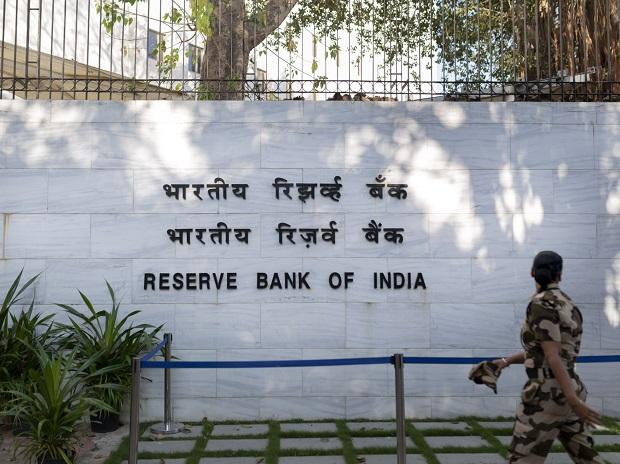
India needs to initially go in for the basic model of central bank digital currency (CBDC) and use the payment system architecture as a backbone to make a state-of-the-art CBDC, the Reserve Bank said on Tuesday.

In its basic form, a CBDC provides a safe, robust, and convenient alternative to physical cash. Depending on various design choices, it can also assume the complex form of a financial instrument.

"Given its dynamic impact on macroeconomic policy making, it is necessary to adopt basic models initially, and test comprehensively so that they have minimal impact on monetary policy and the banking system.

"India's progress in payment systems will provide a useful backbone to make a state-of-the-art CBDC available to its citizens and financial institutions," the RBI said in its report on 'Trend and Progress of Banking in India 2020-21'.

In comparison with existing forms of money, the CBDC can offer benefits to users in terms of liquidity, scalability, acceptance, ease of transactions with anonymity and faster settlement, it said, adding the central banks across the globe are deliberating on how to implement CBDCs.

The RBI has been examining use cases and working out a phased implementation strategy for the introduction of CBDC with little or no disruption.

Central banks across the globe are deliberating on how to implement CBDCs, moving ahead from their initial exploratory forays.

Earlier this month, the Central Board of the RBI had discussed various aspects relating to CBDC and private cryptocurrencies.

Parliament was recently informed that the government had received a proposal from the RBI in October 2021 for the amendment to the
Reserve Bank of India Act 1934 to enhance the scope of the definition of 'bank note' to include currency in digital form.
 

CBDCs can replace cash transactions to some extent in India, says RBI Deputy Governor​

Central bank digital currency (CBDC) can replace cash-based transactions to some extent in India, Reserve Bank of India Deputy Governor T. Rabi Shankar said in an ICRIER webinar on ‘Getting Central Bank Digital Currency Right for India: Lessons from G20 and the Rest of the World’ on April 7.

Over the last five years, while digital payments have risen at an average annual growth rate of about 50% roughly in India, the supply of currency has also almost nearly doubled, Shankar said. The currency in circulation before demonetisation in 2016 was roughly about Rs 17 trillion and presently it is at about Rs 30 trillion.


Shankar cited a 2018-2019 RBI survey that showed that cash accounts for roughly 50% of all transactions in India and for transactions below Rs 500, the percentage goes up to 70%. Thus, CBDCs have a scope to replace cash to some extent, Shankar said.

The central bank deputy governor further said that 87 countries globally, accounting for 90% of world GDP, are in some way or the other, looking actively at CBDCs. These nations are either researching, publicly discussing, or launching pilots and some have even gone live with such assets.

This was not the case since the beginning, he said. Critics questioned the use of CBDCs saying it cannot serve more unique purposes than a normal digital payments system can. However, with the introduction of stable coins, central banks have started to give the application of these assets serious thought.
https://www.moneycontrol.com/news/b...de-in-red-tether-bucks-the-trend-8337591.html
“Now with the advent of stable coins, the issue of volatility went out, and then central banks sat up and said there is a clear threat from private currencies and even worse if multiple private currencies were to replace the official or fiat currency, I think that is what led to the flurry of activity across central banks,” Shankar noted.

Immense public participation in the crypto world may also have made governments change their stance around CBDCs to some extent. “Now, it is a question of when rather than if for most of the currencies,” Shankar said referring to the implementation of CBDCs.

Further, ease in cross-border transactions, settlements, cost efficiency, and financial inclusion are some of the other benefits of using CBDCs, Shankar said. However, in order to avail these benefits, all countries must adopt CBDCs, he opined.

Lastly, issues such as CBDCs' impact on monetary policy effectiveness, the transmission of rates, currency leakage, and privacy and data protection are some of the challenges that need to be dealt with while dealing with CBDCs and thus the RBI is cautiously moving ahead with the implementation of the project, Shankar said.
 

India is ready with consultation paper on cryptocurrencies​

Inflation in India should moderate in coming months and the government is ready with its consultation paper on cryptocurrencies, economic affairs secretary Ajay Seth told reporters on the sidelines of an event on Monday.


Seth said there needed to be a global consensus reached on cryptocurrencies and India would look at regulations enforced in other countries before deciding how it would regulate.


In the annual budget this year the government said it would tax gains made through cryptocurrency investments at 30% but the country has still not given the measure legal status.
 

India's Own Digital Currency to be Introduced in Phased Manner, RBI Forms Innovation Hub​

The Reserve Bank of India in its annual report released on Friday, may 27, said it was going to take the path of a “graded approach" towards the introduction of the Central Bank Digital Currency. It said that the design of the central digital coin needed to be in line with the objectives of its monetary policy, financial stability and efficient operations of currency and payment systems. The RBI’s statement comes months after the time when it said it was in a position to start off with testing and running pilot projects of the CBDC.

“The Reserve Bank is engaged in the introduction of a central bank digital currency (CBDC) in India. The design of CBDC needs to be in conformity with the stated objectives of monetary policy, financial stability and efficient operations of currency and payment systems," said the Annual Report on the Working of the Reserve Bank of India 2022.

“The Reserve Bank proposes to adopt a graded approach to introduction of CBDC, going step by step through stages of Proof of Concept, pilots and the launch," The RBI added in its annual report. A proof of concept is an exercise in which work is focused on determining whether an idea can be turned into a reality or to verify, if the idea will function as envisioned.

The Reserve Bank has been exploring the pros and cons of introduction of CBDC in India, the central bank said. “Accordingly, the appropriate design elements of CBDCs that could be implemented with little, or no disruption are under examination," it said.

“The introduction of CBDC has been announced in the Union Budget 2022-23 and an appropriate amendment to the RBI Act, 1934 has been included in the Finance Bill, 2022. The Finance Bill, 2022 has been enacted, providing a legal framework for the launch of CBDC," the RBI said in its annual report.

A CBDC is the legal tender issued by a central bank in a digital form. It is the same as a fiat currency and is exchangeable one-to-one with the fiat currency. Only its form is different. “CBDC is a digital or virtual currency but it is not comparable to the private virtual currencies that have mushroomed over the last decade," the RBI said in its definition of CBDC last year.

RBI Sets up Innovation Hub
“To foster innovation in a sustainable manner and through an institutional set-up, the Reserve Bank Innovation Hub (RBIH) was set-up as a wholly owned subsidiary of the Reserve Bank," it said. The RBI Innovation Hub has an independent Board with eminent members from industry and academia and has its headquarters in Bengaluru.

The RBI hub will collaborate with financial sector institutions, technology, industry and academic institutions and will coordinate efforts for exchange of ideas and development of prototypes related to financial innovations for creating an eco-system that would focus on promoting access to financial services and products and would further financial inclusion. It would also develop the required internal infrastructure to promote FinTech research and facilitate engagement with innovators and start-ups.