
Massive Make in India success! India becomes world’s second largest mobile phone producer in three years
- Thread starter dray
- Start date
You are using an out of date browser. It may not display this or other websites correctly.
You should upgrade or use an alternative browser.
You should upgrade or use an alternative browser.


Those who are saying it is only assembling job, guys assembling job is the most labour intensive in mobile manufacturing, and most of these jobs are low-skilled jobs, something India needs desperately for its massive low-skilled workforce. Besides, a part of the total manufacturing cost stays within the country in terms of salaries and taxes, that's another good thing.
Every manufacturing hub starts with assembling and then move up the manufacturing value chain, the same has happened with China, the same can happen with India too if we get our acts right. But it doesn't happen overnight, somewhere we need to start, and I would say it's a good start. Besides, we also have clauses to gradually increase local sourcing in mobile phone manufacturing to address the assembling job issue. The local industrial ecology gets created as the number of manufacturers increases.
Remember, it is predicted that electronics import bill can topple gold to become the second highest contributor (after oil) to India's current account deficit by 2020. We are already very late in the game, and need to explore all available option instead of being choosy about the quality of job.
Every manufacturing hub starts with assembling and then move up the manufacturing value chain, the same has happened with China, the same can happen with India too if we get our acts right. But it doesn't happen overnight, somewhere we need to start, and I would say it's a good start. Besides, we also have clauses to gradually increase local sourcing in mobile phone manufacturing to address the assembling job issue. The local industrial ecology gets created as the number of manufacturers increases.
Remember, it is predicted that electronics import bill can topple gold to become the second highest contributor (after oil) to India's current account deficit by 2020. We are already very late in the game, and need to explore all available option instead of being choosy about the quality of job.

37 mobile manufacturing units generated 1.65 lakh jobs in India in 1 year: Ravi Shankar Prasad
Business PTI Aug 29, 2016 08:43:51 IST
New Delhi: India has attracted investment from 37 mobile manufacturing companies in last one year that have generated 40,000 direct jobs and 1.25 lakh indirect employment, IT Minister Ravi Shankar Prasad said.
“We decided to make India a big hub of electronics manufacturing. In the last one year, 37 new mobile manufacturing units have come,” Prasad said after inaugurating government-funded ‘Electropreneur Park’.
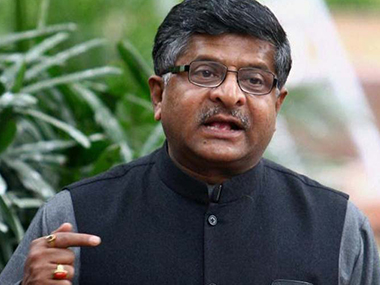
Ravi Shankar Prasad, Union Minister holding Law and Justice and Ministry of Information Technology - PTI
He said that 11 crore mobile phones have been made in the country in last one year compared to 6 crore earlier.
“We have given jobs to forty-thousand people and 1.25 lakh indirect jobs,” Prasad said.
Chinese companies like Gionee and Xiaomi are making their handsets at Foxconn plant in Andhra Pradesh. Domestic companies such as Karbonn, Lava, Micromax, Intex, Jivi, iTel, and MTech too have set up their manufacturing plants in the country.
As per industry sources, Chinese company LeEco will start mobile manufacturing unit on Tuesday.
Prasad said that besides manufacturing electronics product in India, product designing is also important.
He said that government has provided Rs 10,000 crore under Electronics Development Fund to support new entrepreneurs in the field of electronics.
The Electropreneur Park (EP), which was innaugurated today in South Campus of Delhi University, is an incubation centre set up with government funds of around Rs 21 crore to support incubation of up to 50 companies.
Set-up in collaboration with academia and industry represented by Indian Electronics and Semiconductor Association, the Park will focus on creation of intellectual property rights and product development to increase domestic manufacturing of electronics items.
“India imports electronic goods of over Rs 3 lakh crore. By 2020 government aims to bring down import to zero. The Electropreneur Park started on Saturday is a step in that direction,” Minister of State for IT and Law P P Choudhary said.
Ministry of Electronics and IT has selected six start-up firms that will develop products at this incubation centre.
“Six out of 176 start-ups have been selected which means they have capability of developing good quality products and selection of six more are in pipeline,” MEITY Additional Secretary Ajay Kumar said.
Published Date: Aug 29, 2016 08:22 AM | Updated Date: Aug 29, 2016 08:43 AM
37 mobile manufacturing units generated 1.65 lakh jobs in India in 1 year: Ravi Shankar Prasad - Firstpost
Business PTI Aug 29, 2016 08:43:51 IST
New Delhi: India has attracted investment from 37 mobile manufacturing companies in last one year that have generated 40,000 direct jobs and 1.25 lakh indirect employment, IT Minister Ravi Shankar Prasad said.
“We decided to make India a big hub of electronics manufacturing. In the last one year, 37 new mobile manufacturing units have come,” Prasad said after inaugurating government-funded ‘Electropreneur Park’.
Ravi Shankar Prasad, Union Minister holding Law and Justice and Ministry of Information Technology - PTI
He said that 11 crore mobile phones have been made in the country in last one year compared to 6 crore earlier.
“We have given jobs to forty-thousand people and 1.25 lakh indirect jobs,” Prasad said.
Chinese companies like Gionee and Xiaomi are making their handsets at Foxconn plant in Andhra Pradesh. Domestic companies such as Karbonn, Lava, Micromax, Intex, Jivi, iTel, and MTech too have set up their manufacturing plants in the country.
As per industry sources, Chinese company LeEco will start mobile manufacturing unit on Tuesday.
Prasad said that besides manufacturing electronics product in India, product designing is also important.
He said that government has provided Rs 10,000 crore under Electronics Development Fund to support new entrepreneurs in the field of electronics.
The Electropreneur Park (EP), which was innaugurated today in South Campus of Delhi University, is an incubation centre set up with government funds of around Rs 21 crore to support incubation of up to 50 companies.
Set-up in collaboration with academia and industry represented by Indian Electronics and Semiconductor Association, the Park will focus on creation of intellectual property rights and product development to increase domestic manufacturing of electronics items.
“India imports electronic goods of over Rs 3 lakh crore. By 2020 government aims to bring down import to zero. The Electropreneur Park started on Saturday is a step in that direction,” Minister of State for IT and Law P P Choudhary said.
Ministry of Electronics and IT has selected six start-up firms that will develop products at this incubation centre.
“Six out of 176 start-ups have been selected which means they have capability of developing good quality products and selection of six more are in pipeline,” MEITY Additional Secretary Ajay Kumar said.
Published Date: Aug 29, 2016 08:22 AM | Updated Date: Aug 29, 2016 08:43 AM
37 mobile manufacturing units generated 1.65 lakh jobs in India in 1 year: Ravi Shankar Prasad - Firstpost

True. But whom to blame? These greedy Indian companies are always looking for quick bucks with zero risk !! Designing mobile phones is no big deal these days. All building blocks are readily available including OS. The effort goes into OS customization and sw-hw integration for better performance. Indian companies are not willing to do even this much!!
Blame indian companies ?! They first need reasonable market share to spend money on R&D. Or else what is the point of research (future) if present is not secure. For that, you need favorable tax structure and in-house ecosystem so that you can compete outside companies.That is a failure of Indian companies!! They are too greedy to invest in R&D.
You can't blame companies if the policy is not favorable to them. UPA should have taken the policy tweaks a decade ago which this govt is taking now.

We are still in the assemble phase. You need to reach next steps to do any meaningful R&D.
No it's not. What we are doing now is high-level assembly. Importing already finished parts (chip,PCB etc) and assembling them. Most labour intensive is low-level assembly. We have to increase duties bit-by-bit and move up the value chain.Those who are saying it is only assembling job, guys assembling job is the most labour intensive in mobile manufacturing,
India's electronics ministry moots duties on key smartphone...India’s Ministry of Electronics and Information Technology has mooted a proposal to levy a 10 percent duty on the import of populated printed circuit boards (PCBs), two government officials told Reuters this week, declining to be named as the matter is not public.
A PCB is a bed for key components such as processors, memory and wireless chip sets that are the heart of an electronic device. Once populated with components, PCBs account for about half the cost of a smartphone. Currently, most manufacturers of smartphones import PCBs which are already loaded with components to India and then assemble them locally.
Indirect job numbers are shot in the dark. Just like the total unemployment numbers floating for a while now.“We have given jobs to forty-thousand people and 1.25 lakh indirect jobs,” Prasad said.

The recent imposition of 10% duty on PCBs and some other items is part of the goverment's Phased Manufacturing Plan(PMP) to boost component production in the country
Phased Manufacturing Programme: How it can make India a mobile superpower
Phased Manufacturing Programme: How it can make India a mobile superpower
Just few years back Micromax had highest market share in India, even more than Samsung. Nobody heard about Oppo or Vivo then. That kind of market share is more than enough to put money in R&D.Blame indian companies ?! They first need reasonable market share to spend money on R&D. Or else what is the point of research (future) if present is not secure. For that, you need favorable tax structure and in-house ecosystem so that you can compete outside companies.
You can't blame companies if the policy is not favorable to them. UPA should have taken the policy tweaks a decade ago which this govt is taking now.
View attachment 2269
We are still in the assemble phase. You need to reach next steps to do any meaningful R&D.
I agree with you that UPA government did nothing to promote electronics manufacturing. Rather the tax dispute closed the Nokia plant in Tamilnadu!! But that does not excuse the pathetic attitude of Indian companies when it comes to R&D.
Blame indian companies ?! They first need reasonable market share to spend money on R&D. Or else what is the point of research (future) if present is not secure. For that, you need favorable tax structure and in-house ecosystem so that you can compete outside companies.
You can't blame companies if the policy is not favorable to them. UPA should have taken the policy tweaks a decade ago which this govt is taking now.
View attachment 2269
We are still in the assemble phase. You need to reach next steps to do any meaningful R&D.
Wasn't it good enough ?? These guys just became complacent and lost market share. Indian IT companies have been enjoying tax breaks since decades. What kind of products they have developed so far?? We need to come out of that hand holding attitude.
Micromax is now No 1 smartphone company in India, Samsung loses crown
As i said there were no favorable policy or manufacturing ecosystem to start with. They simply cant match Samsung or Mi without these two.Just few years back Micromax had highest market share in India, even more than Samsung. Nobody heard about Oppo or Vivo then. That kind of market share is more than enough to put money in R&D.
I agree with you that UPA government did nothing to promote electronics manufacturing. Rather the tax dispute closed the Nokia plant in Tamilnadu!! But that does not excuse the pathetic attitude of Indian companies when it comes to R&D.
Micromax was essentially importing fully made stuff and rebranding. They gained share because of the low-cost segment which won't give you margin. They lost it when outsiders with mature products in that segment entered the market.

At max they had 22% share.
And 22% market share in a country like India is not good enough?? What was Oppo and Vivo's share then? One can always find thousand excuses not to do something!!As i said there were no favorable policy or manufacturing ecosystem to start with. They simply cant match Samsung or Mi without these two.
Micromax was essentially importing fully made stuff and rebranding. They gained share because of the low-cost segment which won't give you margin. They lost it when outsiders with mature products in that segment entered the market.
At max they had 22% share.
As a chip design professional, I can tell you how intensely Chinese companies involve with us to sort out issues and each one of them have their own labs inside our Company. They are extremely demanding when it comes to power consumption and other performance issues. I don't see any such communication from their Indian counterparts though. Trust me, it does not cost much to send your engineers to US and engage with the chip vendors. All it takes is the hunger to improve quality and beat the best in the market. Unfortunately Indian comps never had that.

Being from the HVAC industry , I can understand what you're hinting at . Most of the Air Conditioners out here are imported from China ( indoor units of Split AC's ) . The first company to set up manufacturing out here for such units was a Chinese CO - Midia in collaboration with Career. Most of the central air conditioning plants are imported or if they're assembled here , the compressors , controls and PCB's come from China or Taiwan . None of the Indian major companies dedicate a sizeable chunk for R&D . On the contrary , in order to claim tax breaks from the GoI , they inflate the no of employees on their payroll under the R&D head . With such an approach is it any wonder that foreign companies are ruling the roost in the Consumer Durable & the HVAC sector in India .And 22% market share in a country like India is not good enough?? What was Oppo and Vivo's share then? One can always find thousand excuses not to do something!!
As a chip design professional, I can tell you how intensely Chinese companies involve with us to sort out issues and each one of them have their own labs inside our Company. They are extremely demanding when it comes to power consumption and other performance issues. I don't see any such communication from their Indian counterparts though. Trust me, it does not cost much to send your engineers to US and engage with the chip vendors. All it takes is the hunger to improve quality and beat the best in the market. Unfortunately Indian comps never had that.

Being from the HVAC industry , I can understand what you're hinting at . Most of the Air Conditioners out here are imported from China ( indoor units of Split AC's ) . The first company to set up manufacturing out here for such units was a Chinese CO - Midia in collaboration with Career. Most of the central air conditioning plants are imported or if they're assembled here , the compressors , controls and PCB's come from China or Taiwan . None of the Indian major companies dedicate a sizeable chunk for R&D . On the contrary , in order to claim tax breaks from the GoI , they inflate the no of employees on their payroll under the R&D head . With such an approach is it any wonder that foreign companies are ruling the roost in the Consumer Durable & the HVAC sector in India .
Bro , I went through all trouble to get a good long lasting AC two years back.
And found the much hyped indegenous Blue star have the indoor unit imported from PRC. Even the shop keeper didn't know what's made in India Himachal Pradesh .
Finally went for made in Thailand AC , and fully realised Indian companies think only to the level of trade and their margins.
Recently I heard ONIDA is doing good , is it fully Indian ?
For so, I would like to test it out .
Most of the window air conditioners are manufactured in India - a dying business as margins are dwindling . Very soon as is visible in the west and other nations , most companies will cease manufacturing Window ac's altogether . Which brings up another irony . Window ac's consume lesser power as split ac's , are easier to maintain and enjoy longevity .Bro , I went through all trouble to get a good long lasting AC two years back.
And found the much hyped indegenous Blue star have the indoor unit imported from PRC. Even the shop keeper didn't know what's made in India Himachal Pradesh .
Finally went for made in Thailand AC , and fully realised Indian companies think only to the level of trade and their margins.
Recently I heard ONIDA is doing good , is it fully Indian ?
For so, I would like to test it out .
Some players are opting for indoor units manufactured by Midia in India ( they also serve as contract manufacturers for OEM's - itself a misnomer while the outdoor units are assembled in India )
Onida , BS , VOLTAS , Godrej , Videocon and it's various brands like Kenstar are Indian brands .Barring VOLTAS Ltd & BS , the others are fringe players . Videocon is in the dumps . In fact all the major Indian players in the CG segment like BPL , Onida , Videocon , etc have either shut shop , are marginal players or in deep trouble . That's the tragedy of our consumer electronics story whereas China , which I doubt even manufactured a compressor 40 years ago are leading the roost not so much in India except for cellphones but across the globe . Haier , Midea , etc are well respected global brands today . Don't be surprised if in a decade or two , they become major players in India too and dethrone the Japanese & Korean brands currently ruling, in India and the world

Those who are saying it is only assembling job, guys assembling job is the most labour intensive in mobile manufacturing, and most of these jobs are low-skilled jobs, something India needs desperately for its massive low-skilled workforce. Besides, a part of the total manufacturing cost stays within the country in terms of salaries and taxes, that's another good thing.
Every manufacturing hub starts with assembling and then move up the manufacturing value chain, the same has happened with China, the same can happen with India too if we get our acts right. But it doesn't happen overnight, somewhere we need to start, and I would say it's a good start. Besides, we also have clauses to gradually increase local sourcing in mobile phone manufacturing to address the assembling job issue. The local industrial ecology gets created as the number of manufacturers increases.
Remember, it is predicted that electronics import bill can topple gold to become the second highest contributor (after oil) to India's current account deficit by 2020. We are already very late in the game, and need to explore all available option instead of being choosy about the quality of job.
Indeed. Another example is solar, right now 5 billion OEM import from largely China is sustaining around 20 - 30 billion of MVA (Assembly etc) and services further downstream. This is why we have to be very careful about when tariffs are brought in (with intent of enough buffer/shield/window for dedicated capex etc) etc and what the strategy is to move into the OEM bit without upsetting that has been set up already in the bulk MVA+services.
It is only really when the OEM is tackled that India merchandise export sector will really take a leap, but this leap should not be the first and main goal (esp for pure verbatim increase for sake of increase/feelz).....given we still have good consumption inertia driving (and any current account surplus will generate capital account deficit pressure). Everything must be balanced, India has to experiment and optimise for itself than seeking to copy economic strategies of others willy nilly.
Next big wave will be batteries. In spite of it's Giga factory, Tesla is not able to produce enough batteries. Electric cars can completely transform India's transport sector. Oil imports will go down and so is pollution. Cars can be charged using solar panels at parking area and need not draw power from grid. That will massively cut down emission of green house gases.Indeed. Another example is solar, right now 5 billion OEM import from largely China is sustaining around 20 - 30 billion of MVA (Assembly etc) and services further downstream. This is why we have to be very careful about when tariffs are brought in (with intent of enough buffer/shield/window for dedicated capex etc) etc and what the strategy is to move into the OEM bit without upsetting that has been set up already in the bulk MVA+services.
It is only really when the OEM is tackled that India merchandise export sector will really take a leap, but this leap should not be the first and main goal (esp for pure verbatim increase for sake of increase/feelz).....given we still have good consumption inertia driving (and any current account surplus will generate capital account deficit pressure). Everything must be balanced, India has to experiment and optimise for itself than seeking to copy economic strategies of others willy nilly.
Flip side is all those IC engine mechanics will loose their jobs. Electric cars require very little maintenance.

Lava, Intex, Micromax, Karbonn, others cut sales hands to save costs
Lava, Intex, Micromax, Karbonn, others cut sales hands to save costs
By
Gulveen Aulakh
ET Bureau|
Updated: Apr 20, 2018, 08.41 AM IST

The development comes at a time of the year when demand is typically low, experts said.
Several mobile handset makers have laid off thousands of in-shop promoters, or sales people, in multi-brand shops and slashed salaries of many others to cut costs in a bitterly competitive market, industry insiders said.
Many notable brands including Lava, Intex, Micromax, Karbonn and even Chinese brands Oppo and Vivo NSE 0.00 % have reduced the number of in-shop promoters — in some cases to nearly a third — over the last couple of months, they said.
“A lot of brands have been doing away with large number of promoters, because most don't have the money to sustain this,” said a senior executive at a Bengaluru-based mobile phone retail chain. “However, this trend is visible mostly in multi-brand outlets,” the person told ET.
The development comes at a time of the year when demand is typically low, experts said.
A Delhi-based senior executive of a handset maker said that in one shop the number of promoters has come down to five from 14.
In some cases, salaries of these promoters, which used to be at around Rs 18,000 a month, now stand reduced at around Rs 14,000, the person said. “Some of these salespeople have left the industry altogether.”
While experts said the development has come at a time of the year when demand is typically low, some also pointed to increasing competition and pressure on margins.
“Competition has definitely impacted the Indian companies most in the past year or so, which is why they have been cutting their indirect workforce,” said Navkendar Singh, associate research director at International Data Corporation (IDC) India. “But a few China-based companies also spread themselves too thin by going into the small towns and multiple retail counters on each street, which they're scaling back now,” he said.
Singh said Oppo and Vivo had in-shop promoters in almost every outlet, but now in the face of immense competition in offline space from Xiaomi and Samsung “it is logical to do some correction and focus on a few high volume counters”.
Xiaomi and Samsung have emerged as the clear top two smartphone makers over the last couple of quarters, with the Chinese company outdoing the Korean major in the October-December quarter, leaving rivals such as Vivo, Oppo and the Indian brands behind.
Hari Om Rai, chairman at Lava International, blamed the direct and indirect discounting by some ecommerce players for leading to the closure of several retail shops, which has affected jobs. The company has let go some 4,000 out of 11,000 employees for underperformance.
“Some of the online players are circumventing FDI rules by holding inventories and influencing the prices of electronic goods directly and indirectly, through various sub-companies,” Rai alleged. “An immediate and stringent action to curb such economic terrorism is required, which can help save jobs and build a strong Indian economy and nation.”
Nidhi Markanday, director at Intex Technologies, also confirmed the developments. “In the face of changing market scenario, Intex has been working on on-ground restructuring strategies,” she said.
Markanday said the development is temporary and is optimistic that in the coming quarters the market scenario will turn around for the better.
A Micromax spokesperson said the number of in-shop promoters was directly proportional to his or her productivity and the volume of business, but not related to cost cutting or competition in the market. “Since promoters are not the employees of the company, the churn rates are much higher across the industry,” the person said.
A Vivo India spokesman, too, said attrition is normal. “We are strengthening our retail presence to cater to the growing demand for Vivo products in the market,” he said.
Oppo didn’t respond to ET’s queries as of press time Thursday.
\A Karbonn spokesperson said, “Restructuring and realignment comes as a part of strategic decision in any dynamic business and not just our industry. Hence, it is very difficult to comment on a single facet of the entire scenario.”

#sab paisa hazam ho jayega I bet!!Either acedemic institutions should receive grants and increase the size of R&D
Or the industry should be offered some perks for having R&D
Electric cars can completely transform India's transport sector. Oil imports will go down and so is pollution.
electric cars or bio fuel?

These mobile makers must diversify into TV sets, Defense and lap tops if they need to keep the edge. We need to completely replace china in these fields.

And 22% market share in a country like India is not good enough?? What was Oppo and Vivo's share then? One can always find thousand excuses not to do something!!
As a chip design professional, I can tell you how intensely Chinese companies involve with us to sort out issues and each one of them have their own labs inside our Company. They are extremely demanding when it comes to power consumption and other performance issues. I don't see any such communication from their Indian counterparts though. Trust me, it does not cost much to send your engineers to US and engage with the chip vendors. All it takes is the hunger to improve quality and beat the best in the market. Unfortunately Indian comps never had that.
Very true. Same is the case in the ITES where giants like Infosys, TCS, Wiprol et al are simply SLAVE labor suppliers with extreme CORRUPT acts. There is Zero Intellect and Risk involvement by these exploiters. They are the Shame champions of India.

India is threatening the made-in-China industry
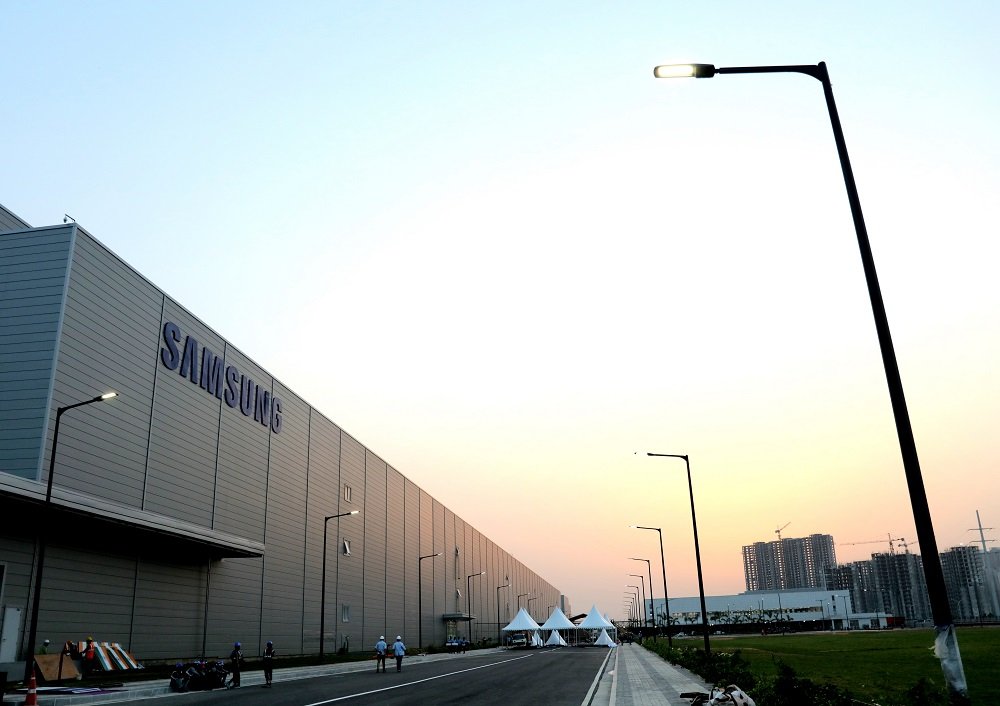
Samsung’s new plant in India is the largest smartphone factory in the world.
The signs of a shift are everywhere. China, the world’s mobile phone manufacturing hub, is swiftly losing ground to India.
Consider: Not long ago, Samsung built a new mobile phone manufacturing plant in Noida, India. It’s Samsung’s second factory in the country, and is slated to become the world’s largest such plant, producing a whopping 120 million mobile phones per year.
Prior to that, Samsung had invested quite a bit in the Chinese manufacturing market. But as domestic economic growth slows, Samsung’s strategic vision has pivoted toward India.
Apple, Foxconn, and a host of other domestic mobile phone manufacturers have also invested in India-based manufacturing over the past couple of years. For example, last year, Apple began manufacturing some iPhones in India, and approached the Indian government about tax breaks to facilitate its suppliers manufacturing phones there.
And the list goes on. Acer’s spin-off manufacturing arm Wistron and Foxconn have both announced agreements with Indian government officials to rent land for local manufacturing purposes.
It’s not just the global players that are moving away. Virtually all of China’s phone manufacturers have established manufacturing in India. Vivo, Oppo, Xiaomi, and more all have factories there. Xiaomi, in fact, already has two, and earlier this year announced plans to open a third.

Vivo’s new 30,000 square meter manufacturing plant in India is its largest outside of China.
Even component makers like chipmaker Mediatek have announced plans to slow manufacturing programs in China as they shift toward India and other Southeast Asian locales.
One of the reasons for this is simple saturation; manufacturing growth and smartphone sales in China are slowing, while the comparatively unsaturated Indian market is heating up. With smartphone penetration in India is still only 30 percent, some phone manufacturers see the soon-to-be massive market as crucial to their future success and want to set up there before their competitors do.
Another reason: India’s government has incentivized local production through a variety of policies, including raising import duties on critical parts to make direct investment in India more financially compelling to manufacturers.
The biggest reason, of course, is money. Rent, equipment, and labor costs are all typically lower in India than China, meaning that manufacturers can produce phones more affordably there. And with costs in China being driven continuously upward by rising living standards even as local demand for smartphones slows, Chinese phone makers are finding themselves in a position where they need to make phones more cheaply even as all of their costs are rising.
The movement toward India, with its lower costs and far less saturated market, could thus prove very difficult to reverse.
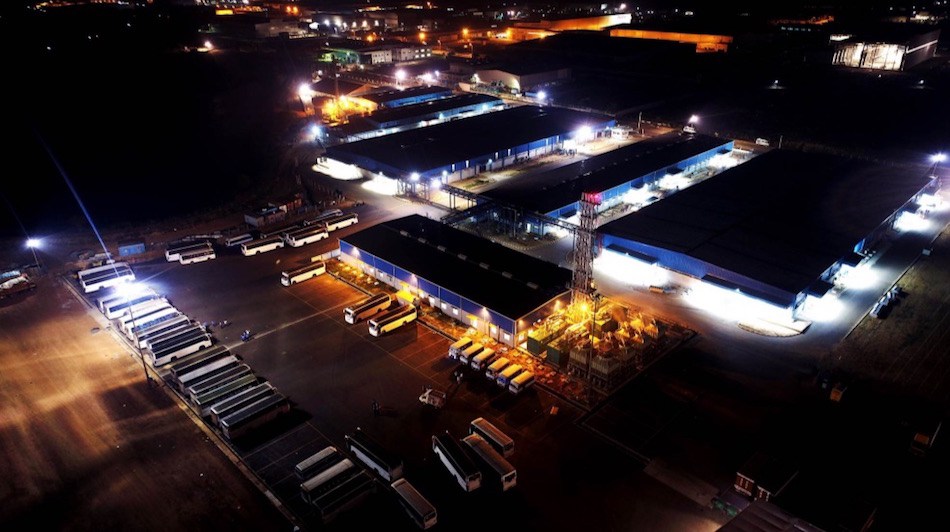
Xiaomi’s manufacturing plants in Vizag, India.
China’s manufacturing industry worries
A mobile phone manufacturing shift away from China could cause serious problems. China’s manufacturing industry is an important part of the country’s economic power. And like India, China is a populous country. Without the stability provided by the manufacturing industry, China’s economy could experience a massive capital outflow.
India does have a comparative shortage of skilled laborers, but the movement of Chinese phone manufacturers to India will provide an opportunity for the country to both attract and train more skilled workers, speeding the development of the entire Indian mobile phone industry, including related sectors like R&D.
We have seen this effect before in China. When Foxconn established a massive presence in Zhengzhou, an entire vertical mobile phone supply chain took shape in the region. As mobile phone manufacturing becomes more established in India, the country will have a chance to become a more influential player in the global mobile phone industry as related businesses spring up around manufacturing hubs.
The current global climate, with America shouting about the return of domestic manufacturing and firms like Foxconn, Apple, and Samsung moving manufacturing to India, is a serious warning to the “made in China” industry.
Growing problems for China, with no obvious solutions
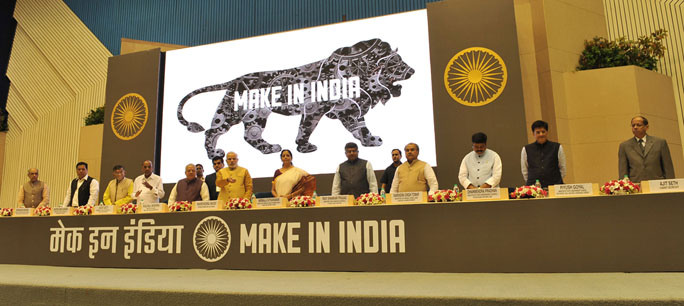
Narendra Modi launches Make in India campaign (Photo credit: Wikimedia Commons)
India’s Modi government has been touting the “make in India” plan since 2014, with the ultimate goal of making India the center of the global manufacturing industry. That strategy appears to be gradually coming to fruition.
India’s smartphone market is dominated by low-cost Android phones from domestic players like Lava, Intex, and Micromax, as well as Chinese firms like Xiaomi, Oppo, Lenovo, and Vivo. In the past, the Indian firms had trouble competing with Chinese companies on quality because they lacked access to a strong local supply chain, and many local factories like Micromax’s depended on Shenzhen subcontractors to meet their numbers. But as India’s domestic manufacturing industry grows, that’s becoming less true.
As far as the giants Apple and Samsung go, the Chinese consumer market remains crucially important. But their changes in supply chain strategy pose a definite risk to the Chinese manufacturing industry.
Finding a solution may be difficult. While America’s manufacturing industry dropped off naturally along with a corresponding boom in technology, research, and R&D, China’s manufacturing industry may not be as easily replaced, as the economic sectors needed to replace it are still developing.
And the mobile phone industry is but one signal of the broader trend that is Chinese manufacturing moving abroad. Electronics makers like Samsung, Toshiba, Panasonic, and Sony, are all considering cutting investments in Chinese manufacturing, setting their sights on countries like India. Even domestic manufacturers are moving more of their operations abroad in a bid to become more globally relevant and competitive.
At the same time, the “made in America” movement isn’t just a political slogan – data from the last few years shows that some manufacturing has indeed moved back to US shores.
The movement of low-cost manufacturing is probably an unstoppable trend. But at the same time, China’s technological development and local talent pool is not yet sufficient to support a large enough high-end manufacturing industry to replace all the departing low-cost players. So what’s good news for the development of manufacturing in Southeast Asian countries like India has all the makings of an impending concern, or perhaps even a crisis, for China.
Tech in Asia - Connecting Asia's startup ecosystem
Samsung’s new plant in India is the largest smartphone factory in the world.
The signs of a shift are everywhere. China, the world’s mobile phone manufacturing hub, is swiftly losing ground to India.
Consider: Not long ago, Samsung built a new mobile phone manufacturing plant in Noida, India. It’s Samsung’s second factory in the country, and is slated to become the world’s largest such plant, producing a whopping 120 million mobile phones per year.
Prior to that, Samsung had invested quite a bit in the Chinese manufacturing market. But as domestic economic growth slows, Samsung’s strategic vision has pivoted toward India.
Apple, Foxconn, and a host of other domestic mobile phone manufacturers have also invested in India-based manufacturing over the past couple of years. For example, last year, Apple began manufacturing some iPhones in India, and approached the Indian government about tax breaks to facilitate its suppliers manufacturing phones there.
And the list goes on. Acer’s spin-off manufacturing arm Wistron and Foxconn have both announced agreements with Indian government officials to rent land for local manufacturing purposes.
It’s not just the global players that are moving away. Virtually all of China’s phone manufacturers have established manufacturing in India. Vivo, Oppo, Xiaomi, and more all have factories there. Xiaomi, in fact, already has two, and earlier this year announced plans to open a third.
Vivo’s new 30,000 square meter manufacturing plant in India is its largest outside of China.
Even component makers like chipmaker Mediatek have announced plans to slow manufacturing programs in China as they shift toward India and other Southeast Asian locales.
One of the reasons for this is simple saturation; manufacturing growth and smartphone sales in China are slowing, while the comparatively unsaturated Indian market is heating up. With smartphone penetration in India is still only 30 percent, some phone manufacturers see the soon-to-be massive market as crucial to their future success and want to set up there before their competitors do.
Another reason: India’s government has incentivized local production through a variety of policies, including raising import duties on critical parts to make direct investment in India more financially compelling to manufacturers.
The biggest reason, of course, is money. Rent, equipment, and labor costs are all typically lower in India than China, meaning that manufacturers can produce phones more affordably there. And with costs in China being driven continuously upward by rising living standards even as local demand for smartphones slows, Chinese phone makers are finding themselves in a position where they need to make phones more cheaply even as all of their costs are rising.
The movement toward India, with its lower costs and far less saturated market, could thus prove very difficult to reverse.
Xiaomi’s manufacturing plants in Vizag, India.
China’s manufacturing industry worries
A mobile phone manufacturing shift away from China could cause serious problems. China’s manufacturing industry is an important part of the country’s economic power. And like India, China is a populous country. Without the stability provided by the manufacturing industry, China’s economy could experience a massive capital outflow.
India does have a comparative shortage of skilled laborers, but the movement of Chinese phone manufacturers to India will provide an opportunity for the country to both attract and train more skilled workers, speeding the development of the entire Indian mobile phone industry, including related sectors like R&D.
We have seen this effect before in China. When Foxconn established a massive presence in Zhengzhou, an entire vertical mobile phone supply chain took shape in the region. As mobile phone manufacturing becomes more established in India, the country will have a chance to become a more influential player in the global mobile phone industry as related businesses spring up around manufacturing hubs.
The current global climate, with America shouting about the return of domestic manufacturing and firms like Foxconn, Apple, and Samsung moving manufacturing to India, is a serious warning to the “made in China” industry.
Growing problems for China, with no obvious solutions
Narendra Modi launches Make in India campaign (Photo credit: Wikimedia Commons)
India’s Modi government has been touting the “make in India” plan since 2014, with the ultimate goal of making India the center of the global manufacturing industry. That strategy appears to be gradually coming to fruition.
India’s smartphone market is dominated by low-cost Android phones from domestic players like Lava, Intex, and Micromax, as well as Chinese firms like Xiaomi, Oppo, Lenovo, and Vivo. In the past, the Indian firms had trouble competing with Chinese companies on quality because they lacked access to a strong local supply chain, and many local factories like Micromax’s depended on Shenzhen subcontractors to meet their numbers. But as India’s domestic manufacturing industry grows, that’s becoming less true.
As far as the giants Apple and Samsung go, the Chinese consumer market remains crucially important. But their changes in supply chain strategy pose a definite risk to the Chinese manufacturing industry.
Finding a solution may be difficult. While America’s manufacturing industry dropped off naturally along with a corresponding boom in technology, research, and R&D, China’s manufacturing industry may not be as easily replaced, as the economic sectors needed to replace it are still developing.
And the mobile phone industry is but one signal of the broader trend that is Chinese manufacturing moving abroad. Electronics makers like Samsung, Toshiba, Panasonic, and Sony, are all considering cutting investments in Chinese manufacturing, setting their sights on countries like India. Even domestic manufacturers are moving more of their operations abroad in a bid to become more globally relevant and competitive.
At the same time, the “made in America” movement isn’t just a political slogan – data from the last few years shows that some manufacturing has indeed moved back to US shores.
The movement of low-cost manufacturing is probably an unstoppable trend. But at the same time, China’s technological development and local talent pool is not yet sufficient to support a large enough high-end manufacturing industry to replace all the departing low-cost players. So what’s good news for the development of manufacturing in Southeast Asian countries like India has all the makings of an impending concern, or perhaps even a crisis, for China.
Tech in Asia - Connecting Asia's startup ecosystem