
ISRO & Indian Space Program: News & Discussions
- Thread starter Tarun
- Start date
-
- Tags
- isro
You are using an out of date browser. It may not display this or other websites correctly.
You should upgrade or use an alternative browser.
You should upgrade or use an alternative browser.


PARLIAMENT QUESTION: EXPANDING SATELLITE LAUNCH SERVICES
Post reforms in Space sector during June 2020, M/s. NewSpace India Limited (NSIL), a CPSE under Dept of Space, has taken several steps across the space value chain to involve private industry and space startups in the country to increase India’s contribution to the global space economy.Salient activities are highlighted here under:
- NSIL, with technical support from ISRO, has taken initiative to build 5 Nos. of PSLV-XL through HAL- L&T consortium.
- NSIL has engaged several Indian industries/ startups to build micro–Earth Observation satellites under the technical supervision of ISRO.
- NSIL has engaged several Indian Industry to establish Ground Station/ Gateways on a Turn-key basis for multiple applications.
- NSIL, through ISRO and IN-SPACe, has signed 100 Technology Transfer Agreements till date to transfer technologies developed at ISRO/ Department of Space to Non-Government Entities/ Private Industries. This would enable them to assimilate the technology, develop commercial product/ provide services and market it domestically as well as in international market. Two major technologies that have been transferred to Indian Industry includes IMS-1 Satellite Bus and Small Satellite Launch Vehicle
- NSIL has enabled Indian industry to assimilate ISRO’s Mobile Satellite Service (MSS) technology and scale up production to install S band terminals on 1 lakh marine fishing vessels to establish PAN India Vessel Communication & Support System for Monitoring, Control and Surveillance.
- NSIL has undertaken commercial communication satellite missions on a demand driven mode to meet the customers’ requirements. Till date, NSIL has already deployed two commercial communication satellites viz. GSAT-N1 and GSAT-N2 to cater to Direct-to-Home [DTH] and broadband needs of Indian customers respectively and in the process of realising GSAT-N3. These missions would in turn demand for large number of user terminals that would be realised through Indian Industry.
- NSIL’s efforts to provide launch services to International Customers onboard ISRO’s / NSIL’s launch vehicles (PSLV, SSLV and LVM3) will further increase India’s contribution to global space economy.
Indian National Space Promotion and Authorisation Centre (IN-SPACe) has also worked out the strategy to expand the India’s global share in satellite launch market. As per this, it is expected to achieve 3.5 billion US$ contribution from launch segment in overall 44 billion US$ Indian space economy by 2033.
This information was given by the Minister of State for Personnel, Public Grievances & Pensions and Prime Minister’s Office Dr. Jitendra Singh in a written reply in the Rajya Sabha today.

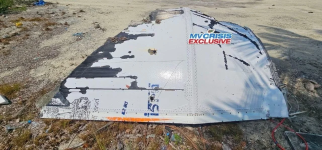
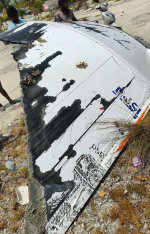
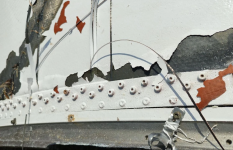
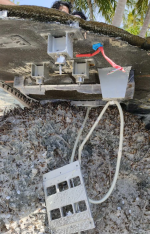
Another payload fairing of the LVM3 recovered. This time by local fishermen in Maldives:

Over a year on, Isro says panel traces NVS-02 failure to pyro valve signal loss
Science News: BENGALURU: More than a year after the setback to its navigation satellite programme, Isro on Wednesday released the findings of an apex committee that.
 timesofindia.indiatimes.com
More than a year after the setback to its navigation satellite programme, Isro on Wednesday released the findings of an apex committee that investigated why the NVS-02 spacecraft failed to reach its intended orbit on Jan 29, 2025.The committee, it said, traced the anomaly to a failure in the spacecraft’s pyro system.
According to the findings, the drive signal did not reach the pyro valve in the oxidiser line of the engine meant for orbit-raising manoeuvres. As a result, the engine could not be fired to shift the satellite from its transfer orbit into its final circular orbit.The panel concluded that the most likely cause was the disengagement of at least one contact in each of the main and redundant connector paths.
Despite redundancy built into the system, the electrical command required to trigger the pyro valve did not get through.NVS-02 was launched on Jan 29, 2025, aboard GSLV-F15 and was injected into an elliptical transfer orbit with an apogee of 37,785 km and a perigee of 170 km, at an inclination of 20.8°.
After the spacecraft separated from the launch vehicle, the satellite carried out a sequence of autonomous operations, including deployment of its solar panels and stabilisation of its orientation to ensure power generation.
However, the planned orbit-raising operations from the elliptical transfer orbit to the designated circular orbit could not be executed. Following the anomaly, Isro constituted an apex committee to review telemetry data and conduct detailed simulation studies.The Wednesday statement by Isro marks the first comprehensive public account of what went wrong.Isro said the committee has recommended a set of corrective measures to enhance redundancy and improve the reliability of pyro system operations in future missions.
These recommendations have already been implemented.The updated systems were flown on the CMS-03 mission, launched on Nov 2, 2025, aboard LVM-3 M5. The pyro systems performed as intended, and the satellite was placed in its designated orbit,” Isro said. It added that the recommendations will be followed for all future missions, as applicable, to prevent recurrence of similar failures
Meanwhile, more than a month after its PSLV-C62 failed on Jan 12 this year, Isro has constituted a Failure Analysis Committee (FAC) chaired by former Principal Scientific Advisor (PSA) Prof K VijayRaghavan and co-chaired by former Isro chairman S Somanath.
TOI had reported earlier this month that Isro was yet to set up the FAC and that the initial analysis was being done by an expert committee that was called the “data analysis committee” or DAC internally. The FAC was constituted after the DAC submitted its report, details of which have not been made public yet.




Perhaps the most technologically advanced artifact in that islandAnother payload fairing of the LVM3 recovered. This time by local fishermen in Maldives:
View attachment 49715
View attachment 49716
View attachment 49717
View attachment 49718
View attachment 49719
 .
.
Op sindoor is over now I guess,
Always the big talk about integrating technology in modern warfare, so many forums & dialogue raisina, ORF defence conclave,
And still showed blind eye on navic, now navic is dead, how are they gonna fight the war, USA won't share the Intel, nor anyone,
Peak vishuguru moment,
Buliding a navic & launching it would be take atleast 3 year's from now on, if they started project Tommorow
Always the big talk about integrating technology in modern warfare, so many forums & dialogue raisina, ORF defence conclave,
And still showed blind eye on navic, now navic is dead, how are they gonna fight the war, USA won't share the Intel, nor anyone,
Peak vishuguru moment,
Buliding a navic & launching it would be take atleast 3 year's from now on, if they started project Tommorow
NVS-03 is launching in dec, it might even be put forward now with the 4th failing, and NVS-4 and NVS 5 are launching in 2027. each will be launched at 6 month intervals. Its not that seriousOp sindoor is over now I guess,
Always the big talk about integrating technology in modern warfare, so many forums & dialogue raisina, ORF defence conclave,
And still showed blind eye on navic, now navic is dead, how are they gonna fight the war, USA won't share the Intel, nor anyone,
Peak vishuguru moment,
Buliding a navic & launching it would be take atleast 3 year's from now on, if they started project Tommorow
The current launching vechiles are not cleared until the rectify the solutions it will take time,NVS-03 is launching in dec, it might even be put forward now with the 4th failing, and NVS-4 and NVS 5 are launching in 2027. each will be launched at 6 month intervals. Its not that serious
And the reports are not public the investigation is still going on
Well then maybe it's time to make use of DRDO VEDA to launch these satellites.The current launching vechiles are not cleared until the rectify the solutions it will take time,
And the reports are not public the investigation is still going on

The failure could also be an opportunity to upgrade the program to a newer architecture with the hindsight of past operational experience. Was the constellation already using QKD? Is India's own rad hardened atomic clock far enough along - can it be any worse than the swiss? Directional M-code beaming? Boosted signal power techniques?

Nope. Upgrades are already under work. One of those is fully operational while another is partially operational. They just need to launch NVS-03 on-time for it to remain operational. Btw NVS-02 is still functional it is just on an elliptical orbit. So, usability is very limited. As long as NVS-03, NVS-04, NVS-05, NVS-06 and NVS-07 get successfully launched by 2027. Nothing much to worry here. Failures are normal in an engineering project. And when something fails things slow down cuz you need to rework on things and improve those things. That is how R&D works. If you think R&D is magic and we will succeed everytime then it will never work like that how much money we throw at certain things.Op sindoor is over now I guess,
Always the big talk about integrating technology in modern warfare, so many forums & dialogue raisina, ORF defence conclave,
And still showed blind eye on navic, now navic is dead, how are they gonna fight the war, USA won't share the Intel, nor anyone,
Peak vishuguru moment,
Buliding a navic & launching it would be take atleast 3 year's from now on, if they started project Tommorow
Last edited:
That won't delay it to 3 years. At worst it will delay it by a year.The current launching vechiles are not cleared until the rectify the solutions it will take time,
And the reports are not public the investigation is still going on
Minimum four satellites are required for NAVIC, and only three are operational. Whats goes wrong with ISRO now? Strategically important satellite constellations are out of order, workhorse PSLV is failing continuously while carrying military cargoes...
They should stop giving priority to fancy projects like manned space program & space station and focused on NAVIC, remotsensing & communication sats or civilian & defence.
Can any oneone confirm that our missiles will hits accurately during round 2 without NAVIC system? I dont think USA will give GPS during war, Pakistan will not have such restrictions with Beidu.
They should stop giving priority to fancy projects like manned space program & space station and focused on NAVIC, remotsensing & communication sats or civilian & defence.
Can any oneone confirm that our missiles will hits accurately during round 2 without NAVIC system? I dont think USA will give GPS during war, Pakistan will not have such restrictions with Beidu.
Nope. Upgrades are already under work. One of those is fully operational while another is partially operational. They just need to launch NVS-03 on-time for it to remain operational. Btw NVS-02 is still functional it is just on an elliptical orbit. So, usability is very limited. As long as NVS-03, NVS-04, NVS-05, NVS-06 and NVS-07 get successfully launched by 2027. Nothing much to worry here. Failures are normal in an engineering project. And when something fails things slow down cuz you need to rework on things and improve those things. That is how R&D works. If you think R&D is magic and we will succeed everytime then it will never work like that how much money we throw at certain things.
Nobody is questions about R&D, question is why ISRO maintained minimum number of constellation by anticipiaating the satellite failiure due to aging? The last navic satellite IRNSS1I was launched in 2018,and the first in 2013. What we are doing in last seven to eight years?If you think R&D is magic and we will succeed everytime then it will never work like that how much money we throw at certain things.
Because things work in phases in industry. How much parallel pipeline you create it only will marginally increase the efficiency. Funds have been allocated for Navigation Satelite System projects every year without any issues if you go and read publically available data..Minimum four satellites are required for NAVIC, and only three are operational. Whats goes wrong with ISRO now? Strategically important satellite constellations are out of order, workhorse PSLV is failing continuously while carrying military cargoes...
They should stop giving priority to fancy projects like manned space program & space station and focused on NAVIC, remotsensing & communication sats or civilian & defence.
Can any oneone confirm that our missiles will hits accurately during round 2 without NAVIC system? I dont think USA will give GPS during war, Pakistan will not have such restrictions with Beidu.
Secondly, upgrades have always been on pipeline. The reason it took so many years for us to launch upgrades of the series was precisely due to the failures? Investigation happens, they work on fixing the problems and building newer sats. That takes time.
Simple question because I keep reading this particular theory online. How many remotesensing, communication, civilian & defence sats have ISRO launched in past 5 years? What is the success rate?They should stop giving priority to fancy projects like manned space program & space station and focused on NAVIC, remotsensing & communication sats or civilian & defence.
i think the past 5 years have been the highest amount ever launched by ISRO with a success rate of over 90%. dan good. Its just unlucky that we had failures. We wouldnt have been given the ability to launch NISAR if we had a faulty systemSimple question because I keep reading this particular theory online. How many remotesensing, communication, civilian & defence sats have ISRO launched in past 5 years? What is the success rate?