
You are using an out of date browser. It may not display this or other websites correctly.
You should upgrade or use an alternative browser.
You should upgrade or use an alternative browser.

Mahindra Aerostructures awarded Airbus contract to manufacture A320 family fuselage skins
Mahindra Aerostructures awarded Airbus contract to manufacture A320 family fuselage skins
 www.mahindra.com


Fly91 orders 40 ATR-72 aircraft in $1-billion fleet expansion push across India
Regional airline Fly91 has placed an order for forty new ATR-72 turboprop aircraft, which will drastically increase its fleet size. Anticipated deliveries will commence by late 2027, helping to fill the connectivity gap in tier-two and tier-three cities across India. To sustain this ambitious...
Regional airline Fly91 has placed an order for 40 ATR-72 turboprop aircraft, one of the largest for the type in recent times, as the carrier bets on expanding connectivity to smaller towns and cities across India underserved by larger jets, said people aware of the development.
At list price, the order is valued at more than $1 billion. However, airlines tend to get heavy discounts on such large orders.
At list price, the order is valued at more than $1 billion. However, airlines tend to get heavy discounts on such large orders.
Abhinandan Varthaman, a decorated former Indian Air Force (IAF) Group Captain and Vir Chakra recipient, has ventured into commercial aviation. According to news agency PTI, he has joined Goa-headquartered regional carrier FLY91 as a pilot.
Sources familiar with the development told PTI that the former Indian Air Force fighter pilot officially joined the regional airline in August. FLY91 has declined to comment, stating that details regarding company personnel remain private, PTI reported. Specifics about his role haven’t been disclosed either.
Sources familiar with the development told PTI that the former Indian Air Force fighter pilot officially joined the regional airline in August. FLY91 has declined to comment, stating that details regarding company personnel remain private, PTI reported. Specifics about his role haven’t been disclosed either.

New aircraft order opens door for ATR assembly line in India: CEO
A new order this month for ATR turboprops has opened the door for a potential ATR assembly line in India as demand for air travel continues to soar in the world’s fastest-growing major aviation market, its CEO said in an interview.ATR won a 40-aircraft order from India’s regional carrier Fly91 this month, its biggest order from an Indian airline in years and a deal that has given the aircraft maker a much stronger foothold in the country’s emerging regional aviation market.
“We see big potential in India. We've been very clear about that,” ATR chief executive Nathalie Tarnaud Laude told ET Prime in an interview.Asked whether that could eventually mean an aircraft assembly line in India, Laude said the company would need significantly more orders before adding capacity, but India could be an option.
ATR currently produces between 30 and 40 aircraft a year and plans to return to 60 aircraft annually by the end of the decade. But an order of 200 to 300 aircraft from India would require additional capacity, the CEO said.“When it comes to this big-size order, like this 200- to 300-aircraft order, we will certainly need more capacity because we cannot make 200 to 300 aircraft with the capacity that we have,” she said. “So, it will be additional capacity to the one that we have.”Another factory would then make sense."
Of course, India will be an option — not only from a capacity to assemble aircraft, but also to produce components, to be part of the supply chain,” she said.
The regional aviation spaceIn effect, if ATR were to get another 160-plus aircraft order from India over and above the 40-aircraft order it has just concluded, it could get closer to the scale at which an assembly line in India starts making sense — something the Narendra Modi-led government has been keen on.Rival Embraer has already tied up with Gautam Adani-led Adani Group to set up such an assembly line, but that too is expected to be contingent on securing orders.
ATR, at least, already has 40 aircraft on the board.
Still, that 200-aircraft goalpost may not be easy for ATR to reach soon either, unless the country’s three major airlines — IndiGo, Air India, and Akasa Air — step in.But IndiGo, according to a person aware of the matter, which has around 45 ATR aircraft, recently returned four of these planes after their leases expired. It has also not been expanding its regional fleet and instead giving orders for widebody jets. Air India does not currently operate a regional turboprop fleet, while Akasa Air has also not entered the segment.ATR, however, does not see IndiGo’s aircraft returns as evidence that the Indian regional market is disappearing.
I think, from my perspective, it doesn't mean that they will completely get out of the regional space,” Laude said.
undefinedundefinedundefinedundefined
“There have been some changes in all those companies since then. So, I'm sure they have a fleet-planning or a fleet-network strategy which is ongoing discussions. And they will have to come back to tellundefinedundefinedundefined you what they think about their own fleet strategy.”
She was referring to Willie Walsh, who took charge as IndiGo CEO last month, and Tewolde Gebremariam, who has justundefined taken over as Air India CEO.
ATR believes there will continue to be a role for turboprops if the airlines decide to expand their regional networks.
“If they want to continue toundefined extend their regional network, we still believe we have the best aircraft,” Laude said, citing the ATR’s economics, reliability and versatility.
She said the aircraft remains particularly competitive on sectors of lessundefined than 400 nautical miles because of its fuel efficiency.
The immediate challenge for ATR, however, is that India's regional aviation market has not yet produced enough customers to get anywhere near theundefined 200- to 300-aircraft scale.
Cash-strapped SpiceJet, which has a large fleet of 23 Q400 turboprops that once connected dozens of smaller cities, is operatingundefined only two of those aircraft because of its financial problems. The airline is also dealing with multiple disputes with lessors.
Asked whether this could mean an ATR aircraft MRO (maintenance, repair and overhaul) operation in India, she said: “Yeah, for some components, yes. There are some players, some of our suppliers looking at that. We know that already.”
ATR used to sell aircraft that could be delivered within six months to a year. That has changed as its order book has grown.
The company is now marketing the ATR 72-600 for delivery around 2029, although airlines can access earlier capacity through lessors, ATR chief commercial officer Alexis Vidal told ET Prime in the same interview.
“It's quite unprecedented, I think, in the regional market that we are in such a situation where we need to plan way ahead, a bit like the bigger aircraft makers are at the moment too,” Laude said.
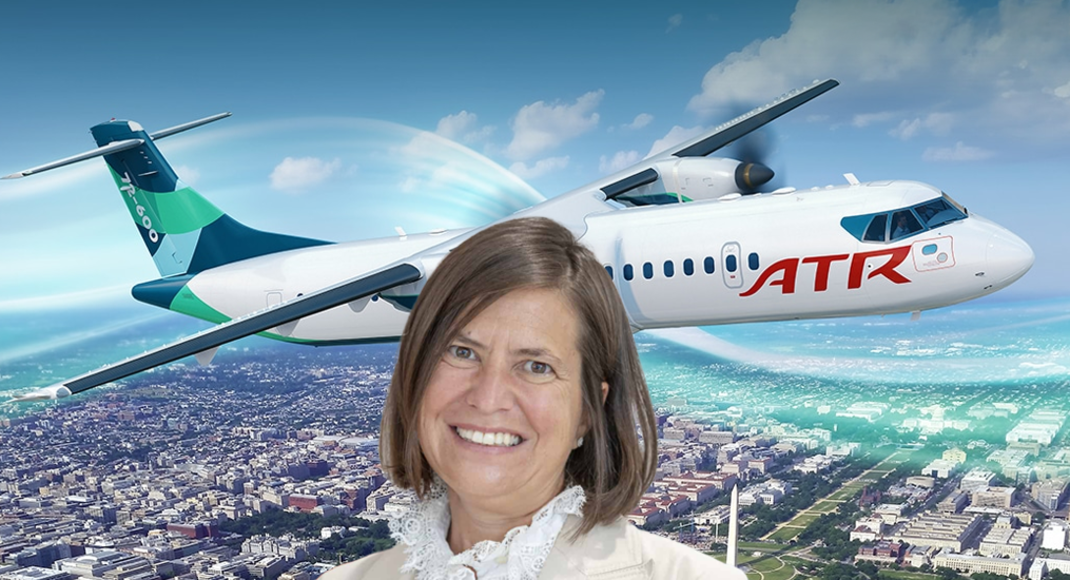
New aircraft order opens door for ATR assembly line in India: CEO
ATR has secured a 40-aircraft order from Fly91, a deal that would offer the aircraft maker a much stronger foothold in Indias emerging regional aviation market.

UAC and India's HAL have almost agreed on a licensing agreement for the localization of the SJ-100
Moscow. September 9. INTERFAX.RU - A license agreement to localize the production of SJ-100 aircraft in India has almost been agreed upon and will be signed with Hindustan Aeronautics Limited (HAL) in the near future, the head of the PJSC said "United Aircraft Corporation" (UAC, part of Rostec) Vadim Badekha at the INNOPROM forum. India"."To date, we have more than 80% agreed on the license agreement and plan to sign it soon. At the upcoming AeroIndia 2027 exhibition we expect to conclude an agreement with the first Indian operator (SJ-100 - IF)", said Badeja, quoted by the company's press office.
Also, according to him, after the Wings of India exhibition in January, the UAC "made significant progress" in negotiations and reached a number of agreements on the Il-114-300 aircraft. The latter are planned to be signed at INNOPROM. India', where the UAC presents solutions for the development of air transportation.
In January this year, UAC and HAL we signed an agreement about joint activities, which are expected to become the basis for organizing licensed production of Superjets in India. Production itself could begin in three years; in the future, UAC hopes to produce from 20 to 40 aircraft per year, Badekha previously estimated. He also noted the potential possibility of localizing the Il-114-300 aircraft in India - with a subsequent production rate of 30-40 aircraft per year.

Russia is offering these 3 aircrafts for Indian civil market:

They are offering the largest variant of all three aircrafts.
Russia is also showing their PD-8 & PD-14 high bypass engines, which powers the SJ-100 & the MC-21 respectively. Wonder if they are planning to license these engines to HAL for production:
Google translated:
India has agreed to purchase 200 MS-21 aircraft. Passenger liners are assembled at the Irkutsk Aircraft Plant
Countries look forward to long-term cooperation
4 September 2026, 18:17

Russia may sell 200 MS-21 aircraft to India, which are assembled at the Irkutsk Aviation Plant. This number was agreed upon by the buying party. This is reported by TASS with reference to the First Deputy Chairman of the Board of Sberbank Alexander Vedyakhin.
At the same time, the parties have not decided for what period of time India will buy 200 aircraft. According to Vedyakhin, this is an ambitious number for years to come.
He also noted that Russia and India are discussing potential deliveries and localization of production of Sukhoi Superjet and Il-114 aircraft.
"It is planned to promote the MS-21 in the Indian market. There are different estimates. Let's say the UAC estimates a potential order from Indian airlines from 100 to 200 aircraft. We will help our colleagues as much as possible in the implementation of these plans," Vedyakhin said.
MS-21 is a new generation medium-haul passenger aircraft with a capacity of 163 to 211 passengers. The first and second serial aircraft have already been assembled at the Irkutsk Aircraft Plant; flight tests are being carried out.
A batch of 18 MS-21s was ordered by the Russian airline Aeroflot. In August, it became known that Aeroflot plans to conclude an additional agreement to the existing contract for the supply of another 90 aircraft.
Aeroflot should become the largest operator of the MS-21 in the country. The carrier expects to increase their number in its fleet to 200 units by 2033. Even now, before the official completion of the certification of the aircraft and the start of serial assembly, the company has begun to form a staff of technicians for the maintenance of airliners.
Индия согласовала закупку 200 самолетов МС-21. Пассажирские лайнеры собирают на Иркутском авиазаводе
INVITATION FOR REQUEST FOR INFORMATION (RFI) FOR SUPPLY OF AIRCRAFT ENGINE AND ITS INTEGRATION ON HAL DO-228/HINDUSTAN 228 AIRCRAFT
Govt of India has launched UDAN (Udey Desh ka Aam Nagrik) / RCS (Regional Connectivity Scheme) with the primary objective to facilitate and stimulate
regional air connectivity by making it affordable, With a view to support the Govt initiative HAL has obtained Type Certificate for HINDUSTAN 228 (H 228), a derivative of Do-228 from DGCA India. HAL has produced 5 number of H 228 aircraft and out of which 4 number H 228 aircraft are exported.
Hindustan Aeronautics Limited (HAL) invites budgetary techno-commercial proposal for supply of alternate engine & engineering support to integrate
alternate engine on Do-228 aircraft and its certification.
The objective Of this RFI is to seek responses from and shortlist eligible engine manufacturer, which could supply aircraft engine for HAL Do-228/H 228
aircraft.
regional air connectivity by making it affordable, With a view to support the Govt initiative HAL has obtained Type Certificate for HINDUSTAN 228 (H 228), a derivative of Do-228 from DGCA India. HAL has produced 5 number of H 228 aircraft and out of which 4 number H 228 aircraft are exported.
Hindustan Aeronautics Limited (HAL) invites budgetary techno-commercial proposal for supply of alternate engine & engineering support to integrate
alternate engine on Do-228 aircraft and its certification.
The objective Of this RFI is to seek responses from and shortlist eligible engine manufacturer, which could supply aircraft engine for HAL Do-228/H 228
aircraft.