
India - United States Relations
- Thread starter Butter Chicken
- Start date
You are using an out of date browser. It may not display this or other websites correctly.
You should upgrade or use an alternative browser.
You should upgrade or use an alternative browser.


Apologies for the delay on this, I wanted to watch the video first and didn't have a lot of time. I watched it on a flight and am typing this up while waiting for our plane to find a gate >.<
1. Unless you are grilling literally everyday, there is no point in using a brush, just use a wet rag. It's better for your grill. Seriously. Also LOL at his "unique" design, chainmail brushes have been a thing forever.
2. His approach is mind boggling. He couldn't find anybody to do t&d? Has he tried Thomasnet instead of just random other youtubers? There is plenty of tool and die capacity here in the states. I can nitpick small points too. Why use imperial screws instead of metric? Literally every relevant industry uses metric which would drive down his costs. This guy really needs a process consultant. Probably many local engineering firms could point him the right direction.
3. American automobiles compete at the highest levels and the lowest levels but I tend to agree that Japanese and especially Korean cars are the best in terms of value (I will die on the hill that the Rivian R1S is both practical and incredibly fun to drive, just horrendously expensive). Honestly, any new car in the US will get you at least 10 Years/100,000 miles with even semi-regular maintenance. I think transmissions used to be the Achilles heel of American cars, but nowadays everyone just uses the same CVTs to make the most sterile souless driving experiences.
4. Don't diss our barrels. But seriously, they are just condensers and for the majority of north America, they are good enough. They aren't as efficient, but they are plenty reliable. It's not like GE, American Standard, and other domestic companies don't make the modern designs for apartments or small modular buildings (this is the fast evolving space here btw if you are entrepreneurial), it's just Mitsubishi specifically is just so cheap.
This guy goes out of his way to make his process difficult, but I will agree that compared to China making things is not as streamlined. I have to work with suppliers across many different states to fabricate specialized machines, whereas many companies in China are right down the street from one another and can coordinate better. American work culture is hit or miss but I personally find working with Americans better than Europeans. Chinese are definitely the most prompt.
Ultimately, it doesn't matter if low value added manufacturing is done elsewhere. Why do I care if the pipes, screws, kitchen utensils, etc are made in China or India? A lot of manufacturing has left, and there is a lot of food left on the table, but the doom and gloom about industry is hyperbole. There is plenty of tool and die capacity here. Plenty of industrial equipment is made here. Injection molding might be a field where we are falling behind, but if there is a demand a local player will emerge. The US industrial sector is impressive where it does compete and is world class. There is also a lot of highly skilled labor available here.
You don't have to believe me. I have only lived here my whole life and work in this exact field. My experiences and anecdotes may not hold as much weight to you as random youtubers or spicy internet articles. Your own experiences may also contradict me.
Let the deal play out. Let's revisit this in 15 years and see how it goes. Maybe Boeing will get another 200 orders. I think industrial grain storage and processing will be a huge space for US vendors. Who knows. I'm confident if the US industrial base is truly allowed to play, it'll make waves.
It took me like 15 minutes to type this out but we still haven't gotten a gate.
The saga continues. Dustin is desperate for anyone else but China, and reaches out to India! Finally India's moment to shine. And what does the Indian supplier do? Dropships a Chinese part!
How extremely disappointing.


There should be response from India , at least subtle if not overt. Some monkey in south block thinks once trump goes away , every thing will be alright. Thats plainly wrong. They are going after BRICS not iran, target is our economic growth.

glorious commission brokers. In India no one is willing to invest and take risk no wonder services sector reign supreme. There also it is just exploiting the employees instead of creating any value.The saga continues. Dustin is desperate for anyone else but China, and reaches out to India! Finally India's moment to shine. And what does the Indian supplier do? Dropships a Chinese part!
How extremely disappointing.
Such a disgrace, our mentality & culture needs some severe fixing.


Got the screenshot from here
https://www.justice.gov/usao-sdny/p...plotting-assassinate-us-citizen-new-york-city

-> using "Foreign adversaries" while describing the case while also mentionaning india in earlier sentence.
-> describing the pannu as "vocal critic of indian government" who wants to break India and incite hate against indians/Hindus in USA.
Use of interesting words by FBI senior leadership.
https://www.justice.gov/usao-sdny/p...plotting-assassinate-us-citizen-new-york-city
-> using "Foreign adversaries" while describing the case while also mentionaning india in earlier sentence.
-> describing the pannu as "vocal critic of indian government" who wants to break India and incite hate against indians/Hindus in USA.
Use of interesting words by FBI senior leadership.


when we buy oil from venezuela , money directly goes to the US govt not the venezeulan govt.
Rubio optimistic, but India not ready to sign trade deal, yet
By: Abhinandan Mishra
Last Updated: October 25, 2026 01:47:11 IST
Despite repeated assurances from the United States that a bilateral trade agreement with India is close to completion, the deal is unlikely to be signed in its present form unless New Delhi’s outstanding concerns are addressed, sources aware of the matter and involved in the discussions have said.
“Look at the issue at a macro level. The US has been making claims for several months that the deal is close to being signed, but the reality is that the agreement remains stuck,” a source involved in the discussions said.
The assessment comes amid renewed optimism from US Secretary of State Marco Rubio, who was visiting India and said that the two countries were weeks away from finalising the agreement. Rubio described the negotiations as being at an advanced stage, with a limited number of issues remaining to be resolved.
However, sources said the repeated indications from Washington that the deal was nearing completion should not be confused with an agreement that India was prepared to sign.
“Unless and until India’s concerns are addressed, the deal will not be signed in its present form. These are issues that are relevant to protecting India’s interests, and the government cannot simply overlook them to meet a timeline being indicated by the US,” a source aware of the discussions said.
According to the sources, reservations have emerged from trade organisations, agricultural interest groups and sections of the wider domestic policy establishment, including the Rashtriya Swayamsevak Sangh (RSS), over provisions of the proposed agreement. These include data localisation and other issues that sources said could have implications for India’s economic and strategic interests.
The sources said India had maintained its position despite sustained pressure from Washington over the past several months to conclude negotiations. They argued that the two sides were operating under different domestic compulsions, with the US having its own reasons for wanting an early agreement, while India was under no comparable pressure to sign immediately.
“The US has its own domestic requirements and reasons for wanting the deal concluded. India does not have the same compulsion to sign an agreement simply because Washington wants it done quickly,” another source involved in the discussions said.
The political implications of the agreement are also a consideration, the sources said. They argued that signing the deal without addressing the concerns raised by domestic stakeholders could expose the government to substantial political criticism.
“If the government signs the deal without resolving the issues that have been raised, the political cost could be significant. The government will have to explain why it accepted terms despite concerns about their implications for India’s interests,” a source said.
The negotiations have repeatedly generated expectations of an imminent breakthrough. On 1 October, US Trade Representative Jamieson Greer said the talks were in their final phase, while cautioning that a signing was not imminent.
Union Finance Minister Nirmala Sitharaman subsequently said negotiations had reached a “plateau”, adding that further concessions would be “very, very difficult” for both sides.
India’s Commerce Secretary Rajesh Agrawal said on 15 October that the first phase of the trade agreement had been finalised and was undergoing legal drafting. He said India hoped to conclude and sign the agreement at the earliest possible time.
Rubio’s latest remarks have again raised expectations of an early conclusion. He has said the two sides are close to an agreement but acknowledged that differences over the precise wording and interpretation of provisions still need to be resolved.
For India, sources said, the question is not simply how quickly the agreement can be concluded, but whether its final provisions adequately protect domestic economic interests.
“The fact that the US says the deal is close does not mean India has agreed to sign it in its present form. The outstanding concerns have to be addressed first,” said a source aware of the discussions.
The sources maintained that until the substantive differences are resolved, expectations of an imminent signing should be treated with caution.
https://sundayguardianlive.com/news...ndia-not-ready-to-sign-trade-deal-yet-311537/
By: Abhinandan Mishra
Last Updated: October 25, 2026 01:47:11 IST
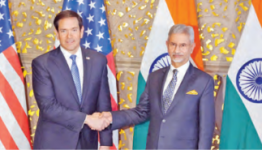
External Affairs Minister S. Jaishankar meets US Secretary of State, Marco Rubio, in Mumbai on 20 October 2026. ANI
‘The fact that the US says the deal is close does not mean India has agreed to sign it in its present form. The outstanding concerns have to be addressed first,’ said a source aware of the discussions.
‘The fact that the US says the deal is close does not mean India has agreed to sign it in its present form. The outstanding concerns have to be addressed first,’ said a source aware of the discussions.
Despite repeated assurances from the United States that a bilateral trade agreement with India is close to completion, the deal is unlikely to be signed in its present form unless New Delhi’s outstanding concerns are addressed, sources aware of the matter and involved in the discussions have said.
“Look at the issue at a macro level. The US has been making claims for several months that the deal is close to being signed, but the reality is that the agreement remains stuck,” a source involved in the discussions said.
The assessment comes amid renewed optimism from US Secretary of State Marco Rubio, who was visiting India and said that the two countries were weeks away from finalising the agreement. Rubio described the negotiations as being at an advanced stage, with a limited number of issues remaining to be resolved.
However, sources said the repeated indications from Washington that the deal was nearing completion should not be confused with an agreement that India was prepared to sign.
“Unless and until India’s concerns are addressed, the deal will not be signed in its present form. These are issues that are relevant to protecting India’s interests, and the government cannot simply overlook them to meet a timeline being indicated by the US,” a source aware of the discussions said.
According to the sources, reservations have emerged from trade organisations, agricultural interest groups and sections of the wider domestic policy establishment, including the Rashtriya Swayamsevak Sangh (RSS), over provisions of the proposed agreement. These include data localisation and other issues that sources said could have implications for India’s economic and strategic interests.
The sources said India had maintained its position despite sustained pressure from Washington over the past several months to conclude negotiations. They argued that the two sides were operating under different domestic compulsions, with the US having its own reasons for wanting an early agreement, while India was under no comparable pressure to sign immediately.
“The US has its own domestic requirements and reasons for wanting the deal concluded. India does not have the same compulsion to sign an agreement simply because Washington wants it done quickly,” another source involved in the discussions said.
The political implications of the agreement are also a consideration, the sources said. They argued that signing the deal without addressing the concerns raised by domestic stakeholders could expose the government to substantial political criticism.
“If the government signs the deal without resolving the issues that have been raised, the political cost could be significant. The government will have to explain why it accepted terms despite concerns about their implications for India’s interests,” a source said.
The negotiations have repeatedly generated expectations of an imminent breakthrough. On 1 October, US Trade Representative Jamieson Greer said the talks were in their final phase, while cautioning that a signing was not imminent.
Union Finance Minister Nirmala Sitharaman subsequently said negotiations had reached a “plateau”, adding that further concessions would be “very, very difficult” for both sides.
India’s Commerce Secretary Rajesh Agrawal said on 15 October that the first phase of the trade agreement had been finalised and was undergoing legal drafting. He said India hoped to conclude and sign the agreement at the earliest possible time.
Rubio’s latest remarks have again raised expectations of an early conclusion. He has said the two sides are close to an agreement but acknowledged that differences over the precise wording and interpretation of provisions still need to be resolved.
For India, sources said, the question is not simply how quickly the agreement can be concluded, but whether its final provisions adequately protect domestic economic interests.
“The fact that the US says the deal is close does not mean India has agreed to sign it in its present form. The outstanding concerns have to be addressed first,” said a source aware of the discussions.
The sources maintained that until the substantive differences are resolved, expectations of an imminent signing should be treated with caution.
https://sundayguardianlive.com/news...ndia-not-ready-to-sign-trade-deal-yet-311537/
Trade treaties need to be ratified by the congress, if Reps lose the majority in congress then treaty has no chance of getting through. If the elections go sideways then Trump himself might be staring at impeachment. India is just playing the waiting game. But there is zero chances of better treaty under a dem president as well. India is in a lose - lose situation , better to sit out on this.
what is this assumption based on??But there is zero chances of better treaty under a dem president as well