
Indo - Japan Relations
- Thread starter RISING SUN
- Start date
You are using an out of date browser. It may not display this or other websites correctly.
You should upgrade or use an alternative browser.
You should upgrade or use an alternative browser.


The broadcaster for the Japan-India T20I is expected to be decided in the next day or two. Cricbuzz understands that quotations have been sought from all the major Indian broadcasters, including Star Sports, Sony Sports and Zee, for the game. The Japan Cricket Association (JCA) will allot the broadcast and digital rights for the September 22 match.
With the governments of both countries backing the match, interest levels among private parties is believed to be encouraging. As a source put it, this is not about a game between the No. 1-ranked and No. 41-ranked sides; it is about taking the game to new territories and having the world champions in action.
“Cricket’s global journey is being shaped by moments that take the game beyond its traditional boundaries. The India–Japan T20I match on 22nd. September,’26 is one such moment taking international cricket to Japan, connecting with a new audience and strengthening the game’s presence in a region with immense potential,” BCCI secretary Devajit Saikia said in his social media handle.
The match will be the first step of “Sport 75”, an initiative by the top leaders of the countries – Prime Minister Narendra Modi of India and Prime Minister Sanae Takaichi of Japan. The initiative aims to promote human exchanges and cooperation between India and Japan in the field of sports, taking note of India’s ambition to host the Olympic and Paralympic Games in 2036.

Japan Confirms Dispatch to India to Explore Anti-Ship Missile Drills
Discussions highlight the training challenges posed by Japan’s expanding arsenal and opportunities for closer defense cooperation with New Delhi.
By Takahashi Kosuke
October 27, 2026
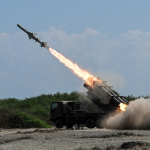
A Japan Ground Self-Defense Force (GSDF) Type 88 surface-to-ship missile is launched during a live-fire exercise. Credit: Japan Ground Self-Defense Force.
Japan has dispatched personnel to India to explore possible live-fire training involving Ground Self-Defense Force (GSDF) surface-to-ship missiles and small attack drones, GSDF Chief of Staff General Arai Masayoshi confirmed at a press conference on October 27.
“It is true that we dispatched personnel to coordinate various matters with India,” the head of the GSDF said.
The confirmation followed an October 21 report by public broadcaster NHK that Defense Ministry officials had traveled to India in mid-October and spent about one week inspecting test facilities and firing ranges.
The missile system for any prospective exercise has not been selected, and no decision has been made to conduct the training. But the exploratory talks attempt to solve a new problem for Japan.
“When operating relatively long-range missiles, such as surface-to-ship missiles, how to conduct training that makes use of their range is a major challenge,” Arai said.
The service is examining how to secure suitable training environments in Japan while also considering overseas facilities, he added.
The issue is becoming increasingly important as Japan expands its stand-off defense capabilities. Acquiring missiles capable of reaching targets hundreds of kilometers away is only part of the challenge. Personnel must also be trained to deploy and operate these weapons effectively.
Japan’s newly deployed Type 25 surface-to-ship guided missile illustrates the growing training requirements.
The GSDF deployed the missile to Camp Kengun in Kumamoto Prefecture in March 2026. Its range is believed to be around 1,000 kilometers, compared with around 200 kilometers for the earlier Type 12 surface-to-ship missile.
On October 25, during Keen Sword 27, a large-scale Japan-U.S. joint exercise running from October 19 to 29, the GSDF demonstrated the Type 25 to reporters at a training area spanning Nagasaki and Saga prefectures. Personnel demonstrated procedures for deploying a mobile launcher and preparing it for firing, but no missile was launched.
Such exercises help troops practice operating the system, but live-fire training that makes full use of its range presents additional challenges involving safety, airspace, maritime areas, and coordination with relevant authorities.
There is no confirmation that the Type 25 specifically would be used in India.
Japan has previously conducted surface-to-ship missile firing exercises in the United States and Australia. During the Philippine-U.S. Balikatan exercise in April and May 2026, the GSDF conducted such training in the Philippines for the first time, firing its Type 88 surface-to-ship missile.
Philippine Defense Secretary Gilberto Teodoro later told the Asahi Shimbun that the Type 88 was one of the leading candidates for acquisition by Manila.
Access to training facilities in India could further expand Japan’s overseas options while creating opportunities for closer cooperation with New Delhi.
“India is an important partner in the Indo-Pacific region, and we recognize the importance of promoting various forms of defense cooperation and exchanges amid an increasingly severe and complex security environment,” Arai, the GSDF chief, said.
Japan and India already conduct bilateral military exercises and cooperate with the United States and Australia through the Quadrilateral Security Dialogue, or Quad, against the backdrop of growing concerns over China’s maritime activities.
However, the latest discussions concern possible bilateral arrangements, not an announced Quad military exercise. Potential Japanese missile training in India would add a practical dimension to bilateral defense cooperation.
Asked specifically about small attack drones, Arai confirmed that training involving such systems was also among the possibilities being explored.
He identified several challenges associated with training involving these systems, including radio frequencies, training content, suitable locations, operational conditions, and safety management.
Training arrangements must also reflect when, where, and how the GSDF expects to employ the drones, Arai explained. The service is considering both domestic training environments and possible overseas alternatives.
The general said no decision had been made on whether overseas training would precede domestic exercises or proceed alongside them. Conducting live-fire training in Japan would require coordination with relevant local governments and other authorities, taking account of the training activities and safety requirements.
For now, the India discussions remain exploratory. Neither the location nor the timing of any prospective exercise has been announced.
As Japan’s weapons gain greater reach, deciding where and how to train with them is becoming a matter of diplomacy as well as military planning.
Japan Confirms Dispatch to India to Explore Anti-Ship Missile Drills
Discussions highlight the training challenges posed by Japan’s expanding arsenal and opportunities for closer defense cooperation with New Delhi.
By Takahashi Kosuke
October 27, 2026
A Japan Ground Self-Defense Force (GSDF) Type 88 surface-to-ship missile is launched during a live-fire exercise. Credit: Japan Ground Self-Defense Force.
Japan has dispatched personnel to India to explore possible live-fire training involving Ground Self-Defense Force (GSDF) surface-to-ship missiles and small attack drones, GSDF Chief of Staff General Arai Masayoshi confirmed at a press conference on October 27.
“It is true that we dispatched personnel to coordinate various matters with India,” the head of the GSDF said.
The confirmation followed an October 21 report by public broadcaster NHK that Defense Ministry officials had traveled to India in mid-October and spent about one week inspecting test facilities and firing ranges.
The missile system for any prospective exercise has not been selected, and no decision has been made to conduct the training. But the exploratory talks attempt to solve a new problem for Japan.
“When operating relatively long-range missiles, such as surface-to-ship missiles, how to conduct training that makes use of their range is a major challenge,” Arai said.
The service is examining how to secure suitable training environments in Japan while also considering overseas facilities, he added.
The issue is becoming increasingly important as Japan expands its stand-off defense capabilities. Acquiring missiles capable of reaching targets hundreds of kilometers away is only part of the challenge. Personnel must also be trained to deploy and operate these weapons effectively.
Japan’s newly deployed Type 25 surface-to-ship guided missile illustrates the growing training requirements.
The GSDF deployed the missile to Camp Kengun in Kumamoto Prefecture in March 2026. Its range is believed to be around 1,000 kilometers, compared with around 200 kilometers for the earlier Type 12 surface-to-ship missile.
On October 25, during Keen Sword 27, a large-scale Japan-U.S. joint exercise running from October 19 to 29, the GSDF demonstrated the Type 25 to reporters at a training area spanning Nagasaki and Saga prefectures. Personnel demonstrated procedures for deploying a mobile launcher and preparing it for firing, but no missile was launched.
Such exercises help troops practice operating the system, but live-fire training that makes full use of its range presents additional challenges involving safety, airspace, maritime areas, and coordination with relevant authorities.
There is no confirmation that the Type 25 specifically would be used in India.
Japan has previously conducted surface-to-ship missile firing exercises in the United States and Australia. During the Philippine-U.S. Balikatan exercise in April and May 2026, the GSDF conducted such training in the Philippines for the first time, firing its Type 88 surface-to-ship missile.
Philippine Defense Secretary Gilberto Teodoro later told the Asahi Shimbun that the Type 88 was one of the leading candidates for acquisition by Manila.
Access to training facilities in India could further expand Japan’s overseas options while creating opportunities for closer cooperation with New Delhi.
“India is an important partner in the Indo-Pacific region, and we recognize the importance of promoting various forms of defense cooperation and exchanges amid an increasingly severe and complex security environment,” Arai, the GSDF chief, said.
Japan and India already conduct bilateral military exercises and cooperate with the United States and Australia through the Quadrilateral Security Dialogue, or Quad, against the backdrop of growing concerns over China’s maritime activities.
However, the latest discussions concern possible bilateral arrangements, not an announced Quad military exercise. Potential Japanese missile training in India would add a practical dimension to bilateral defense cooperation.
Asked specifically about small attack drones, Arai confirmed that training involving such systems was also among the possibilities being explored.
He identified several challenges associated with training involving these systems, including radio frequencies, training content, suitable locations, operational conditions, and safety management.
Training arrangements must also reflect when, where, and how the GSDF expects to employ the drones, Arai explained. The service is considering both domestic training environments and possible overseas alternatives.
The general said no decision had been made on whether overseas training would precede domestic exercises or proceed alongside them. Conducting live-fire training in Japan would require coordination with relevant local governments and other authorities, taking account of the training activities and safety requirements.
For now, the India discussions remain exploratory. Neither the location nor the timing of any prospective exercise has been announced.
As Japan’s weapons gain greater reach, deciding where and how to train with them is becoming a matter of diplomacy as well as military planning.
Japan Confirms Dispatch to India to Explore Anti-Ship Missile Drills
There is speculation in the media that India may be buying some Mogami hulls given that a number of Indian officials have toured these ships in Japan off late. Heck we haven't even signed for the UNICORN mast yet.
Japan has loosened export controls recently but I'm skeptical we'll ever get anything worthwhile from them.
Japan has loosened export controls recently but I'm skeptical we'll ever get anything worthwhile from them.
Last edited:
IN has shown no specific interest in Mogami. This had happened previously as well. Lots of RUMINT and a few paid articles to hype things. I believe a few other members (including you) and I have discussed this previously.There is speculation in the media that India may be buying some Mogami hulls given that a number of Indian officials have toured these ships in Japan off late. Heck we haven't even signed for the UNICORN mast yet.
Japan has loosened export controls recently but I'm skeptical we'll ever get anything worthwhile from them.
Japan Confirms Dispatch to India to Explore Anti-Ship Missile Drills
Discussions highlight the training challenges posed by Japan’s expanding arsenal and opportunities for closer defense cooperation with New Delhi.
By Takahashi Kosuke
October 27, 2026
View attachment 54634
A Japan Ground Self-Defense Force (GSDF) Type 88 surface-to-ship missile is launched during a live-fire exercise. Credit: Japan Ground Self-Defense Force.
Japan has dispatched personnel to India to explore possible live-fire training involving Ground Self-Defense Force (GSDF) surface-to-ship missiles and small attack drones, GSDF Chief of Staff General Arai Masayoshi confirmed at a press conference on October 27.
“It is true that we dispatched personnel to coordinate various matters with India,” the head of the GSDF said.
The confirmation followed an October 21 report by public broadcaster NHK that Defense Ministry officials had traveled to India in mid-October and spent about one week inspecting test facilities and firing ranges.
The missile system for any prospective exercise has not been selected, and no decision has been made to conduct the training. But the exploratory talks attempt to solve a new problem for Japan.
“When operating relatively long-range missiles, such as surface-to-ship missiles, how to conduct training that makes use of their range is a major challenge,” Arai said.
The service is examining how to secure suitable training environments in Japan while also considering overseas facilities, he added.
The issue is becoming increasingly important as Japan expands its stand-off defense capabilities. Acquiring missiles capable of reaching targets hundreds of kilometers away is only part of the challenge. Personnel must also be trained to deploy and operate these weapons effectively.
Japan’s newly deployed Type 25 surface-to-ship guided missile illustrates the growing training requirements.
The GSDF deployed the missile to Camp Kengun in Kumamoto Prefecture in March 2026. Its range is believed to be around 1,000 kilometers, compared with around 200 kilometers for the earlier Type 12 surface-to-ship missile.
On October 25, during Keen Sword 27, a large-scale Japan-U.S. joint exercise running from October 19 to 29, the GSDF demonstrated the Type 25 to reporters at a training area spanning Nagasaki and Saga prefectures. Personnel demonstrated procedures for deploying a mobile launcher and preparing it for firing, but no missile was launched.
Such exercises help troops practice operating the system, but live-fire training that makes full use of its range presents additional challenges involving safety, airspace, maritime areas, and coordination with relevant authorities.
There is no confirmation that the Type 25 specifically would be used in India.
Japan has previously conducted surface-to-ship missile firing exercises in the United States and Australia. During the Philippine-U.S. Balikatan exercise in April and May 2026, the GSDF conducted such training in the Philippines for the first time, firing its Type 88 surface-to-ship missile.
Philippine Defense Secretary Gilberto Teodoro later told the Asahi Shimbun that the Type 88 was one of the leading candidates for acquisition by Manila.
Access to training facilities in India could further expand Japan’s overseas options while creating opportunities for closer cooperation with New Delhi.
“India is an important partner in the Indo-Pacific region, and we recognize the importance of promoting various forms of defense cooperation and exchanges amid an increasingly severe and complex security environment,” Arai, the GSDF chief, said.
Japan and India already conduct bilateral military exercises and cooperate with the United States and Australia through the Quadrilateral Security Dialogue, or Quad, against the backdrop of growing concerns over China’s maritime activities.
However, the latest discussions concern possible bilateral arrangements, not an announced Quad military exercise. Potential Japanese missile training in India would add a practical dimension to bilateral defense cooperation.
Asked specifically about small attack drones, Arai confirmed that training involving such systems was also among the possibilities being explored.
He identified several challenges associated with training involving these systems, including radio frequencies, training content, suitable locations, operational conditions, and safety management.
Training arrangements must also reflect when, where, and how the GSDF expects to employ the drones, Arai explained. The service is considering both domestic training environments and possible overseas alternatives.
The general said no decision had been made on whether overseas training would precede domestic exercises or proceed alongside them. Conducting live-fire training in Japan would require coordination with relevant local governments and other authorities, taking account of the training activities and safety requirements.
For now, the India discussions remain exploratory. Neither the location nor the timing of any prospective exercise has been announced.
As Japan’s weapons gain greater reach, deciding where and how to train with them is becoming a matter of diplomacy as well as military planning.
Japan Confirms Dispatch to India to Explore Anti-Ship Missile Drills

India, Japan to finalise use of Indian ranges to test Japanese missile
Authored By Siddhant Sibbal
Published: Nov 19, 2026, 13:23 IST | Updated: Nov 19, 2026, 13:41 IST
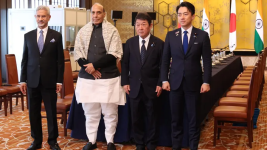
(L to R) India's Foreign Minister Subrahmanyam Jaishankar, India's Defence Minister Rajnath Singh, Japan's Foreign Minister Toshimitsu Motegi and Japan's Defence Minister Shinjiro Koizumi Minister pose prior to their meeting at the Iikura Guest House in Tokyo on November 19, 2026.
Story highlights
India and Japan are expected to finalise an arrangement allowing Japanese forces to use Indian missile test ranges for trials of long-range weapons, deepening their defence cooperation.
India and Japan are expected to finalise arrangements allowing Japanese forces to use Indian missile test ranges for trials of long-range weapons during Defence Minister Rajnath Singh’s ongoing visit to Tokyo. The understanding is likely to be sealed following the Defence Ministers’ Dialogue later today, following the India-Japan 2+2 foreign and defence ministers meeting.Japanese Ground Self-Defence Force Chief of Staff General Masayoshi Arai confirmed in late October that officials had been dispatched to India to inspect possible sites. Japanese media back then reported that the visit focused on facilities suitable for training with the Type 25 surface-to-ship missile, which has a range of roughly 1,000 kilometres, and with smaller attack drones, Japanese media reported back then.
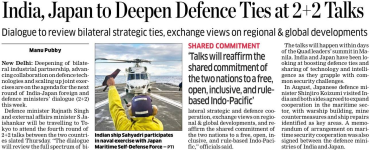
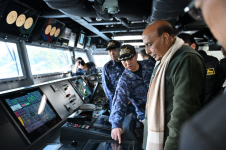
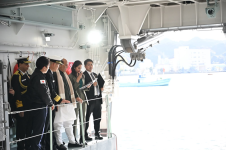
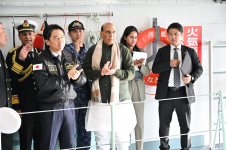
Indian Defence Minister Rajnath Singh arrived in Tokyo on 18 November, with External Affairs Minister S. Jaishankar joining him from Manila. The two Indian ministers co-chaired the 2+2 talks with Japanese Defence Minister Shinjiro Koizumi and Foreign Minister Toshimitsu Motegi. On the first day of the visit, Indian & Japanese defence ministers toured the Japan Maritime Self-Defence Force base at Yokosuka and inspected the Mogami-class frigate JS Natori.
This is the 3rd meeting between the 2 defence ministers in 4 months. The two had previously met in New Delhi in August and on the margins of the ASEAN Defence Ministers’ Meeting-Plus in Cebu in October. Officials say the talks build on that momentum and cover defence equipment and technology collaboration, maritime security, joint exercises across all three services, and industrial partnerships, while reaffirming commitment to a free, open and rules-based Indo-Pacific.
Japan’s interest in Indian ranges arises from its expanding standoff-strike capabilities. Additionally, India’s coastal ranges facing the Bay of Bengal offer extensive safety zones and tracking infrastructure already used for its own missile tests. The prospective range-access arrangement would deepen an already expanding defence partnership that includes regular exercises, technology discussions and participation in the Malabar Naval exercises.
India, Japan to finalise use of Indian ranges for Japanese missile


India to let Japan use firing ranges for missile tests
The deal came as the nations’ top diplomats and defense chiefs agreed to boost military and arms industry cooperation.

In a major shift in India's defence cooperation policy, New Delhi is preparing to open up its most prized missile-testing facility to a foreign country for the first time, allowing Japan to use the Defence Research and Development Organisation's (DRDO) Integrated Test Range (ITR) at Chandipur in Odisha for its missile programme.
Not just Chandipur, India is also open to allowing Japan access to two upcoming state-of-the-art testing facilities in West Bengal and Andhra Pradesh, government sources told Firstpost.
The move goes beyond providing testing infrastructure. The two countries are also exploring the possibility of sharing technical know-how and collaborating on advanced missile programmes, including hypersonic weapons, sources said.
They added that India and Japan are also looking at cooperating on the shipbuilding front, especially warships. Sources clarified that, contrary to reports of plans to build Mogani-class multi-mission stealth frigates in India, both sides are working on sharing technical know-how and design features.
India has offered its shipyards and defence PSUs to Japan for collaboration, as well as manufacturing for Tokyo itself and exports from India.
Sources explained that manufacturing in India will be cheaper for Japan, and that this is something under discussion. For example, plans are not just to manufacture the Unicorn (Unified Complex Radio Antenna) for the Indian Navy's requirements but also for exports by Japan itself.
Following the meeting, the two countries signed a Letter of Intent (LoI) on the utilisation of firing ranges in India.
Why Japan is keen for Indian firing ranges
Under the arrangement, Japan's Self-Defence Forces will, for the first time, be able to conduct live-fire training in India, including trials involving surface-to-ship missiles such as the Type-25, a next-generation anti-ship missile with a reported range of around 1,000 km.
Both sides will now work towards accelerating coordination between their respective defence authorities to operationalise the arrangement at the earliest. Japan is also in talks with Australia for the test ranges.
Japan is undergoing one of the most significant transformations in its military posture since the Second World War.
What was once a military force constitutionally constrained to an exclusively defensive role is gradually becoming a force with long-range strike capabilities, an expanding defence industry and a much greater role in Indo-Pacific security.
Sources said a Japanese military team had visited India in October to assess various missile-testing facilities. The team spent about a week examining potential ranges where Japan could conduct missile trials as well as test its small attack drones.
Japan faces geographical constraints at home, particularly in identifying sufficiently large and safe maritime corridors for long-range missile firing. India's eastern coastline, with its established missile-testing infrastructure and access to the Bay of Bengal, offers an attractive alternative.
Sources said the discussions are not limited to access to testing facilities. India and Japan are also looking at sharing technical expertise and exploring opportunities for collaboration in advanced weapons programmes, particularly hypersonic technologies.
Japan is seeking to develop a multi-layered coastal defence system incorporating large numbers of relatively inexpensive unmanned aerial, surface and underwater vehicles for reconnaissance and attack missions.
These capabilities would complement its growing arsenal of stand-off missiles, which are designed to strike targets from outside an adversary's engagement range.
Tokyo is developing a new generation of missiles to strengthen deterrence against China's growing military activity around its periphery and respond to North Korea's increasingly sophisticated missile arsenal.
Why the Integrated Test Range matters
The Integrated Test Range at Chandipur is among India's most strategically important defence-testing facilities. It is a critical part of the country's missile-development ecosystem, providing the infrastructure required to launch, track and validate advanced missile systems.
Its capabilities include sophisticated radars, telemetry systems, electro-optical tracking equipment and mission-control infrastructure, which allow DRDO scientists to monitor missile trajectories and assess their performance during flight trials.
The facility has played an important role in testing several Indian missile systems, including air-defence and ballistic missile defence interceptors.
Opening up such infrastructure to Japan would mark a significant expansion of bilateral defence cooperation, taking the relationship beyond joint military exercises and conventional defence technology partnerships, sources said.

In a major shift in India's defence cooperation policy, New Delhi is preparing to open up its most prized missile-testing facility to a foreign country for the first time, allowing Japan to use the Defence Research and Development Organisation's (DRDO) Integrated Test Range (ITR) at Chandipur in Odisha for its missile programme.
Not just Chandipur, India is also open to allowing Japan access to two upcoming state-of-the-art testing facilities in West Bengal and Andhra Pradesh, government sources told Firstpost.
The move goes beyond providing testing infrastructure. The two countries are also exploring the possibility of sharing technical know-how and collaborating on advanced missile programmes, including hypersonic weapons, sources said.
They added that India and Japan are also looking at cooperating on the shipbuilding front, especially warships. Sources clarified that, contrary to reports of plans to build Mogani-class multi-mission stealth frigates in India, both sides are working on sharing technical know-how and design features.
India has offered its shipyards and defence PSUs to Japan for collaboration, as well as manufacturing for Tokyo itself and exports from India.
Sources explained that manufacturing in India will be cheaper for Japan, and that this is something under discussion. For example, plans are not just to manufacture the Unicorn (Unified Complex Radio Antenna) for the Indian Navy's requirements but also for exports by Japan itself.
Following the meeting, the two countries signed a Letter of Intent (LoI) on the utilisation of firing ranges in India.
Why Japan is keen for Indian firing ranges
Under the arrangement, Japan's Self-Defence Forces will, for the first time, be able to conduct live-fire training in India, including trials involving surface-to-ship missiles such as the Type-25, a next-generation anti-ship missile with a reported range of around 1,000 km.
Both sides will now work towards accelerating coordination between their respective defence authorities to operationalise the arrangement at the earliest. Japan is also in talks with Australia for the test ranges.
Japan is undergoing one of the most significant transformations in its military posture since the Second World War.
What was once a military force constitutionally constrained to an exclusively defensive role is gradually becoming a force with long-range strike capabilities, an expanding defence industry and a much greater role in Indo-Pacific security.
Sources said a Japanese military team had visited India in October to assess various missile-testing facilities. The team spent about a week examining potential ranges where Japan could conduct missile trials as well as test its small attack drones.
Japan faces geographical constraints at home, particularly in identifying sufficiently large and safe maritime corridors for long-range missile firing. India's eastern coastline, with its established missile-testing infrastructure and access to the Bay of Bengal, offers an attractive alternative.
Sources said the discussions are not limited to access to testing facilities. India and Japan are also looking at sharing technical expertise and exploring opportunities for collaboration in advanced weapons programmes, particularly hypersonic technologies.
Japan is seeking to develop a multi-layered coastal defence system incorporating large numbers of relatively inexpensive unmanned aerial, surface and underwater vehicles for reconnaissance and attack missions.
These capabilities would complement its growing arsenal of stand-off missiles, which are designed to strike targets from outside an adversary's engagement range.
Tokyo is developing a new generation of missiles to strengthen deterrence against China's growing military activity around its periphery and respond to North Korea's increasingly sophisticated missile arsenal.
Why the Integrated Test Range matters
The Integrated Test Range at Chandipur is among India's most strategically important defence-testing facilities. It is a critical part of the country's missile-development ecosystem, providing the infrastructure required to launch, track and validate advanced missile systems.
Its capabilities include sophisticated radars, telemetry systems, electro-optical tracking equipment and mission-control infrastructure, which allow DRDO scientists to monitor missile trajectories and assess their performance during flight trials.
The facility has played an important role in testing several Indian missile systems, including air-defence and ballistic missile defence interceptors.
Opening up such infrastructure to Japan would mark a significant expansion of bilateral defence cooperation, taking the relationship beyond joint military exercises and conventional defence technology partnerships, sources said.
For once, it will be China's turn to do some kadi ninda when the Type 12 ASCM is testfired from ITR Orissa for the 1st time
