This is a highly ambitious move from TEC, but it makes perfect sense from an engineering standpoint. Choosing a 9-engine cluster layout (which looks very similar to Falcon 9's Octaweb design) powered by Methane/LOX shows they are following a proven playbook: optimizing for mass production and leveraging engine-out capability.
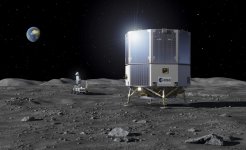
ESA to seek lunar mapping capability for Argonaut lander
spacenews.com
"...Several spacefaring countries with lunar ambitions have invested over the past two decades in high-resolution topographic mapping, which is essential for identifying safe landing areas and potential sites for future lunar infrastructure.
Europe, however, does not have sovereign lunar topographic data to support Argonaut. That means ESA will need to rely on existing mission data, including data that can be procured from other providers, at least for the early phases of the program.
Albeit not confirmed, the three most likely nations that can provide lunar maps to Europe are the United States, India or China. NASA’s Lunar Reconnaissance Orbiter, launched in 2009, has provided global lunar topographic maps at about 100 meters per pixel, with targeted imaging down to about 0.5 meters/pixel. India’s Chandrayaan-2 Orbiter High Resolution Camera, launched in 2019, can image selected areas at about 0.25 meters/pixel, making it one of the highest-resolution lunar mapping instruments currently in operation. China, from Chang’e-1 onwards, has also built up a substantial lunar mapping capability to support future landing and exploration activities..."