Indian Missiles and Munitions Discussion

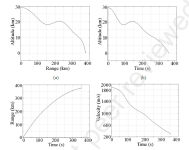
Yep its an optimised gliding trajectory from the apogee point (ie the max altitude gained after booster burnout). So it is more of a custom algorithm model based trajectory optimisation method that you can implement in various missiles guidance system in OBC, be it surface or air launched for a specific range constraint ie upto 300-400km. Based on this optimisation, your regular vanilla ballistic article can be flown like a hypersonic glide weapon or like mimicking flight path of a very high speed cruise missile across multiple altitude level (and also implement waypoint navigation with other technique) as compared to flying in predictable parabolic/elliptical flight path. Range extension possible as much as 25-30%.

Rudram 2 R3 and other aeroballistic future missiles will also have various programs inbuilt based on this model that will optimise the flight path like that which is absolute nightmare for any AD system to track and lock onto. This technique is more of universal mathematical model that would be implemented for a specific range engagement case. When a missile flies along such optimal trajectory, the max range can be extended without changing general aerodynamic config or addition of extra fuel/motor stages , but rather by prioritising specific control parameters like total flight time, angle of attack, velocity of missile, flight height , flight path angle etc in the program.

Usual method of flight trajectory optimisation technique is either via direct method where mathematical programming like this will make a pure ballistic article fly like a real timecontrollable glide missile. Or via indirect method based on optimal control principle involving two point boundary value solution which is more extensive programming dependent.

 
Given that the starting velocity & altitude were not zero at first I thought it must be an air-launched weapon of some kind...but starting off at Mach 5.5 and altitude of ~100,000 ft ???

That doesn't make any sense.
No need to fixate on the apogee point, that point is the starting point where the glide phase control laws kick in pre programmed or via datalink.
Apogee point is not fixed because , you can maneuver your missile across all phases of flight including post launch ;) ( hence great drdo quote maneuverable across all flight regime phases) from ground after certain height control actuation kicks in, from air also the same. One reason why the control surfaces are retained in all our missiles. That 30km alt point is not the tip of a ballistic parabolic curve at all.

In short enemy ad asset be like chacha apun praan bancha :D
 
Yep its an optimised gliding trajectory from the apogee point (ie the max altitude gained after booster burnout). So it is more of a custom algorithm model based trajectory optimisation method that you can implement in various missiles guidance system in OBC, be it surface or air launched for a specific range constraint ie upto 300-400km. Based on this optimisation, your regular vanilla ballistic article can be flown like a hypersonic glide weapon or like mimicking flight path of a very high speed cruise missile across multiple altitude level (and also implement waypoint navigation with other technique) as compared to flying in predictable parabolic/elliptical flight path. Range extension possible as much as 25-30%.

Rudram 2 R3 and other aeroballistic future missiles will also have various programs inbuilt based on this model that will optimise the flight path like that which is absolute nightmare for any AD system to track and lock onto. This technique is more of universal mathematical model that would be implemented for a specific range engagement case. When a missile flies along such optimal trajectory, the max range can be extended without changing general aerodynamic config or addition of extra fuel/motor stages , but rather by prioritising specific control parameters like total flight time, angle of attack, velocity of missile, flight height , flight path angle etc in the program.

Usual method of flight trajectory optimisation technique is either via direct method where mathematical programming like this will make a pure ballistic article fly like a real timecontrollable glide missile. Or via indirect method based on optimal control principle involving two point boundary value solution which is more extensive programming dependent.
This is an academic article.

Don’t confuse it for some real missile. This is an algo which can be used my many articles.

Pralay has a much higher burnout speed and terminal vel. So pls don’t confuse it with Pralay.
we have no idea but unlikely
K5 have a dia of 2.4 m.

Whether K5 can go onboard present Arihant class is debatable. Most likely not.

There’s silo based K5 though. To be launched from land.

Now do your calculations.
 
This is an academic article.

Don’t confuse it for some real missile. This is an algo which can be used my many articles.
How exactly do you think path planning , trajectory optimization and control law algos are conceptualised, written, verified and then implemented after several hundred times model simulation runs via super computing facilities ? It is why I said this is a general model where by choosing a specific parameter as primary constraint, trajectory planning is done.
Given different parameters are in the equation , hence by varying the primary constraint, various trajectories can be shaped accordingly and implemented via algo. This can be seen in the poster itself. The OBC has a library of the programs stored and user chooses which one is suitable for a specific mission, prior ground checkout simulation is also run on the basis of it.

After this years of trials.

Don’t know when IAF will be ordering Saaw in quantity.

Trials after trials after trials.
EO SAAW , due to import dependence need various testing as RCI has only just supplied tot for their IIR tech, dome mfg etc and similar goes for the EO level tech too. If we had very good industry base within the country , this would not have been an issue. But here you do trials for various things, first during development phase with imported stuff then if desi alternative is there in future again qualify the same. Actual integrated article test is very costly so you have to plan accordingly. Now the actuators , dsp modules, batteries various other critical stuff keep getting changed or replaced hence many testing. SAT-SAAW BDL has delivered some numbers for inventory so other version will also come.
 
It can't be pralay, it has velocity of mach -6 at point of impact,
It's definitely not pralay
as mentioned its sort of universal glide trajectory optimization under a specific altitude constraint that is max 30 km and in this case by implementing this model program the flight vehicle will be able to cross certain distance within a 400km range given the initial kinetic thrust provided by velocity of 1800-1850m/sec that is peak velocity. Convert it and you get peak 5.5 mach. That is dead giveaway.

Flight vehicle like this also has 2 phases of flight usually, boost phase and glide phase. This above I posted is for the glide phase only. Boost phase has already happened before (and not shown on graph) and due to this the FV has velocity of peak 5.5mach at the apogee of 30km altitude. Now guess :oops::sneaky:
 
  • Like
Reactions: Rajput Lion
as mentioned its sort of universal glide trajectory optimization under a specific altitude constraint that is max 30 km and in this case by implementing this model program the flight vehicle will be able to cross certain distance within a 400km range given the initial kinetic thrust provided by velocity of 1800-1850m/sec that is peak velocity. Convert it and you get peak 5.5 mach. That is dead giveaway.

Flight vehicle like this also has 2 phases of flight usually, boost phase and glide phase. This above I posted is for the glide phase only. Boost phase has already happened before (and not shown on graph) and due to this the FV has velocity of peak 5.5mach at the apogee of 30km altitude. Now guess :oops::sneaky:
But in the last graph, the velocity does decreases when it's coming near to the point of impact, decreasing from 2000m/s to under 600m/s

Does Rudram series goes upto 30km apogee point?
Rudram 2
 

Attachments

  • 1749708766346.png
    1749708766346.png
    106.8 KB · Views: 11
  • Like
Reactions: Rajput Lion
But in the last graph, the velocity does decreases when it's coming near to the point of impact, decreasing from 2000m/s to under 600m/s

Does Rudram series goes upto 30km apogee point?
Rudram 2
It's a anti radiation ballistic missile, it should climb that high.
Even air to air missiles climb in altitude to increase range " called lofted trajectory".
 
  • Like
Reactions: Rajput Lion
But in the last graph, the velocity does decreases when it's coming near to the point of impact, decreasing from 2000m/s to under 600m/s
This is how glide phase happens , you trade very high speed for longer reach while keeping excellent control over thee vehicle good enough to maneuver and evade any AD system because the interception point calculated by the ad system becomes null & void due to no fixated trajectory found via tracking. A nightmare for any AD system in the world available today.

Does Rudram series goes upto 30km apogee point?
Rudram 2
The lower altitude you can implement this optimised trajectory the better because enemy AD gets less chance to react. Check R2 posters from 2022 expo and 2025 event.
 
  • Like
Reactions: Rajput Lion
This is how glide phase happens , you trade very high speed for longer reach while keeping excellent control over thee vehicle good enough to maneuver and evade any AD system because the interception point calculated by the ad system becomes null & void due to no fixated trajectory found via tracking. A nightmare for any AD system in the world available today.


The lower altitude you can implement this optimised trajectory the better because enemy AD gets less chance to react. Check R2 posters from 2022 expo and 2025 event.
It has to be rudram 2, the Data matches with it
 

Attachments

  • FfgsOSSXkAAGu62_2.jpg
    FfgsOSSXkAAGu62_2.jpg
    59.7 KB · Views: 12
  • Like
Reactions: Rajput Lion