Indian Naval Aviation : Squadrons

Ashwin

Agent_47
Staff member
Administrator
Nov 30, 2017
11,206
26,732
Bangalore
Some pictures that i took last year when i visited Naval Aviation Museum, Goa.
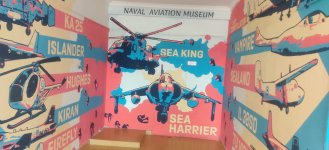
IMG_20220813_173439.jpg

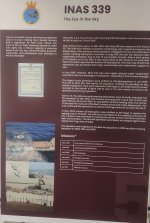
INAS 339

D8FE1749-918D-4088-8E65-E3EC2089DC2E.jpg

INAS 339, a.k.a. the Falcons, with Sea King 42B helicopters was commissioned at NAS Kuniali on 23 Nov 1990.

After almost three years, In Mar 1993, Sea King 42B was replaced with Kamov-28. The shift from Western to Eastern technology was a quantum leap for the Indian Navy. The inventory of the squadron changed from the conventional to contra-rotating helicopters. However, in Aug 1993 the unit was placed under suspended animation due to lack of serviceable aircraft. After a brief period of 21 months, on 01 Jun 1996. it was reactivated at INS Hansa to co-exist with INAS 333 (Kamov 25).

in Jun 1998, however, INAS 339 was once again placed under suspended animation due to a shortage of manpower, especially in the aircrew strength.

The Rajnut class Destrovers were shifted to Vishakhapatnam in Jan 1999. This led to INAS 333. the Kamov 25 sauadron. shiftina its operation to the eastern seaboard. They were rebased to INS Dega in Oct 2000 and this event resulted in the rebirth of INAS 339 at Goa in its new avatar as Kamov 28 operational/training squadron.

Kamov 31. the airborne early warning helicopters were formally inducted into the squadron in Mar 2003. The Falcons thus acquired a dual role of ASW and AEW training. Since Oct 2003, on completion of deck landing trials, the Kamov has been the lookout or the fleet in everv minor a major deployment. The unit continued the operations as well as training of aircrew for both 28 and 31

In May 2009, Kamov 28 helicopters were shifted to INS Dega to replace the ageing Kamov 25 fleet. The shift was inevitable as the majestic presence of the 'Contras' was essential for easing the nerves of both the fleets and their fleet commanders. The Talwar aircraft operated seamlessly as integral flights from and Teg class of ships

The squadron won trophies for the Best Air Squadron in 2008 and Best Training Squadron in 2008. 2012 and 2015
 
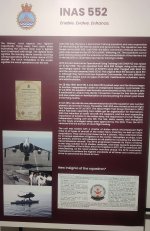
INAS 553

C980A0FD-3ADD-4955-AD2D-67C15A3D1341.jpg

INAS 552 was the Navy's Sea Harrier training squadron and was responsible for the training of the harrier pilots and around crew. The sauadron was the feeder unit to INAS 300. Until 1990 the basic conversion of Naval sea Harrier. pilots was carried out by 233 OCU at RAF, Wittering, UK. The exorbitant cost of pilot training along with the induction of the second batch of sea Harriers led to the decision to undertake Sea Harrier training in India.

With this aim Sea Harrier Operational Flying Training Unit (SHOFTU) was raised on 16 Apr 1990. The unit operated from INAS 300 hangar using a few offices and hangar space. The assets of SHOFTU were later merged with INAS 551and the unit was renamed INAS 551B. The original INAS 551 became INAS 551A. Although they had a common Squadron Commander, the units differed in every other aspect such as types of aircraft, maintenance schedules, tools, and administration.

On 28 May 1995, INAS 551 A and INAS 551 B parted ways and the Braves began to function independently under an independent Squadron Commander. On 07 Jul 2006, the squadron was formally commissioned as INAS 552 and till 2014 it continued to conduct Sea Harrier Conversion Courses for Sea Harrier pilots and also undertook re-familiarisation of aircrew joining the stream post break in the flying routine.

In Oct 2014, Sea Harrier was decommissioned and the squadron was number plated to be revived in future. Thereafter, INAS 552 was revived as Naval Flight Test Squadron on 01 Jul 2017. The Naval Flight Test Group (formed in 2014) which had been operating from HQNA got an organisation for themselves. With the induction of newer aircraft, the weapons, and the ever-expanding importance of aviation in the Indian Navy, the requirement of a full-fledged, independent testing unit was felt. The role, tasks, assets, and manpower for the newly envisaged setup were approved by the NHQ. Thus, the NFTS ventured into the domain of naval flight testing.

The unit was tasked with a charter of duties which encompassed flight trials of all types of aircraft of the Indian Navy inventory as well as future acquisitions. They came to be known as the X-piorers. They undertook trials for envelope expansion of fighters on the carrier, helicopters on ships, trials for sensors, avionics, and weapons on all platforms including the Maritime Reconnaissance aircraft. The NFTS progressed towards its vision of being a one-stop solution for all studies, analyses, and trials towards expanding the capabilities of the IN fleet. Since its inception in 2017, NFTS undertook 402 trials/tasking. As the naval aviation marched ahead, the NFTS committed themselves to achieve the highest standards at all times and continued to strive to spearhead the Naval Air Arm.
 
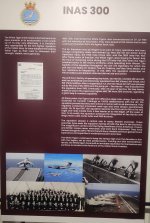
INAS 300

AB89182E-145A-4BC7-AFB5-0F89D0F28B22.jpg

INAS 300, nicknamed the White Tigers, was commissioned on 07 Jul 1960 with the induction of Sea Hawks. They were based at INS Hansa and to date
continue to function from the fighter town, Goa.

The Air Squadron was privileged to be part of many operations and wars. Though completely ready and worked up, they did not see action during
Operation Vijay, the 1962 Indo-China War, and the 1965 Indo-Pak War. After these years of inaction, the White Tigers were baying for blood. And,
the hour of reckoning came during the 1971 Indo-Pak War when the Tigers wreaked havoc in the enemy territories while operating from Vikrant. The
exploits of the squadron throughout the war are legendary for which the unit won one Maha Vir Chakra, five Vir Chakras, one Nao Sena Medal, and four Mentions-in-Despatches. In Feb 2019, the squadron embarked on Vikramaditya post Balakot strike but did not see any action.

The unit has a history of operating Sea Hawk, Sea Harrier, and MiG 29K aircraft, and has embarked and extensively operated from INS Vikrant, INS Viraat, and INS Vikramaditya. After a stupendous run, the Sea Hawk aircraft was phased out by the end of the 1970s and the jump-jet - Sea Harrier - was inducted into the squadron from 1983. Eventually, after 33 years of service, the Sea Harrier made its way to the supersonic fighter MiG 29K from 2016 onwards, signalling a giant leap in combat capability.

All these years, the Tigers kept their offensive edge razor-sharp. Even during Dissimilar Air Combat Trainings or TACDE detachments with the IAF, the
squadron proved that they were a force to reckon with in air dominance. They regularly conducted armament work-ups and were always operationally ready. On 24 Apr 1997, the squadron became the first unit to fire a live Sea Eagle anti-ship missile from a Sea Harrier at ex-INS Nilgiri, off the coast of Goa. To its credit, the squadron achieved the integration of Sea Harrier with Magic Matra AAM, Derby AAM, and 1000 lb bomb.

The squadron played a central role in many theatre exercises. These exercises have seen the squadron facing off with the best in the business.
The magnificent carriers and the flying machines of the American, French, and British navies came, exercised, and went back impressed. They have
trained alongside USN's F18 and French Navy's Rafale and have gained much experience and expertise in multinational joint exercises.

The White Tigers continues to keep the tempo high over the decades in line with the legacy set by their predecessors. Coming out with extraordinary
results, the White tigers have built an enviable reputation for themselves and continue to remain at the forefront of the Indian Naval Aviation.
 
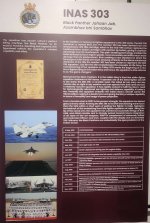
INAS 303
A2FB63D4-ABF2-4057-ABD7-B170C814F25B.jpg


In the tradition of naming its fighter squadrons in the 300 series, the MiG 29K squadron, is named INAS 303. The number 303 has been derived from the revolutionary 303 rifle cartridge, which in the mid-19th century replaced the traditional lever-action cartridges with pointed-tip bullets, giving it pallisti advantage over its counterparts. This path-breaking technology enabled the bullet to travel at much higher speeds, more accurately and inflict much more damage than its predecessors, thus creating a new standard on which the future guns of the world were built. Drawing similarity to the above mentioned attributes of the rifle the number 303 has been chosen to represent the MiG 29K squadron. Just like the rifle revolutionized the concepts of rifle firing, the commissioning of the squadron on 11 May 2013 marks the beginning of a new era of fighter flying in the Indian Navy and hence, the squadron is also referred to as 'the game changers'.

Nicknamed the Black Panthers, it is the Indian Navy's front line strike-fighter squadron stationed at INS Hansa. It operates one of the latest fighter aircraft in the world, the MiG 29K. A versatile asset, this lethal jet can carry out any mission day or night in any weather and can operate from both land and sea. A relatively nascent squadron, it has rapidly evolved to fulfil the Navy's need for technologically advanced war fighting and defence capability in today's era. Presently the squadron embarks the Indian Navy's aircraft carrier INS Vikramaditya making it a deadly force and giving the Navy a unique capability in terms of versatility and range of power projection.

From a humble start in 2007 to the present strength, the squadron has tasted glory at every stride. Pushing the MiG 29K to its limit and clocking more hours than the OEM within a short span of getting the fighter in India, highlights the bedrock of this embarking front line fighter squadron of India. Being the tip of the sword arm, the squadron has carried out successful firings of BVR, A4M, and ASHM missiles and is strongly poised towards future integration of all state-of-the-art weapons. With its complement of extremely skilled and motivated Officers and men, coupled with the deadly one of a kind MIG 29K Fulkrums, the Black Panthers are undoubtedly the apex predators of the Indian Ocean.
 
INAS 336
Train, Seek, Destroy

4B8A67E8-721B-452C-A8A7-54008801F044.jpg

The submarine, ever since its inception has been one of the most important factors in deciding the fate of a sea battle. With this in mind, the Naval
Headquarters ordered the formation of an Anti-Submarine Warfare (ASW) squadron. Commissioned on 20 Dec 1974 at INS Garuda, Kochi, INAS 336
operated Sea King helicopters, manufactured by Augusta Westland Helicopters. This was later substituted by MH60R. The squadron was initially a standby squadron for INS Vikrant and was also assigned the task of training the Westland Sea King crew on the type. Conversion training of
pilots and observers on Sea King subsequently became the primary task of the squadron, which the unit undertook with competence and alacrity. The squadron, also known as Flaming Arrows, has the unique distinction of having operated all four variants of Sea King helicopters i.e. Sea King Mk 42, 42A, 42B and 42C in various roles of ASW, ASV, SAR, and Commando Ops. The squadron has been the alma mater for all Sea King aircrew of the Indian Navy and has the unique privilege of being both, a training as well as an operational squadron. More than 37 years since commissioning, the Flaming Arrows has seen many budding aviators and veteran 'Rotor Head' pass through its hallowed portals to become front line ASW/Marine Commando helicopter crew. The squadron has always been at the forefront of all major air operations of the Southern Naval Command.
 
  • Like
Reactions: Fatalis and Parthu
INAS 343
Inspiring Fear Since Inception
343.jpg

INAS 343, known as the Frontier Formidables, was commissioned on 17 Jan 2011. The squadron is the second RPA squadron to be commissioned in the Indian Navy and the first operational RPA squadron of Western Naval Command. It is the first Naval Air Squadron to be based in Gujarat very close to India's western adversary.

The RPA is an acronym for Remotely Piloted Aircraft. It is a type of aircraft which is controlled by a pilot from a remote location. This means that all the dull, dirty, and dangerous missions can be accomplished by using RPAS without risking precious human life. RPAs were first inducted into the Indian Navy in mid-2002 and soon the utility was acknowledged in the maritime surveillance. RPA with its specialized payloads of maritime Radar, day/night camera, COMINT, and ESM has proved its worth to the Indian Navy over time aiding for the development of Maritime Domain Awareness in the North Arabian Sea.

The primary role of the unit is to carry out search and surveillance in and around Gujarat. However, the squadron can be tasked with a multitude of objectives. The various tasks undertake includes maritime surveillance, Fleet support (for building up naval tactical picture, providing targeting data, and undertaking Battle Damage Assessment) and real-time intelligence gathering for providing real-time video feed for better assessment of the prevailing situation. The RPAs of the unit is also utilized for assisting ships/helicopters in disaster management.

With the help of Maritime Patrol Radar in the RPA, the squadron frequently provides air situational awareness to the ships operating along International Maritime Boundary Line. Being geographically close to our western neighbour, it is an arduous task to monitor their smallest activities and report every move. It is only possible by maintaining constant surveillance in the region. Nevertheless, the squadron has regularly provided vital inputs during peacetime to build up the library for the reference to be used during the war. Also with the large endurance and comparatively higher operating altitude, the RPAs maintain vigil in the area for a large duration. The RPAS have the capability of streaming the live video to the Maritime Operations Centre which in turn can provide the input to the surface units deployed in the area to undertake necessary counteraction.

Regular feedback from the unit consolidated the Indian Navy's awareness of the Pakistan Navy's disposition during critical periods which helped in maintaining an upper hand in the region. Further, the squadron has provided many valuable data w.r.t. terrain mapping and have gathered intelligence that aided the Indian Army in their operations. The unit undertook ESM mapping off specific coastal regions for fixed and mobile radars and kept an eye on the enemy posts. Their operations helped to de-classify the location and deployment patterns of the enemy Radars. RPAs with the camera act as 'Eyes in the Sky' to the ground force and deliver the real-time input to the ground forces by updating the situation on the ground to deliver the knockout punch and put the intruder on the back foot. The tactical picture generated by the RPAs is provided to the Marine Commandos deployed in the region for planning clandestine attacks.

Besides, the unit also undertakes the training of aircrew joining the squadron for Internal Pilot conversion after the ab-initio training, every year.

Suffice to say, the Frontier Formidables with round-the-clock operations in the region has become the sharp end of the Sword Arm of the Indian Navy.
IN98313
 
  • Like
Reactions: Fatalis and Ashwin
INAS 314
Resolute and Relentless


314.jpg

INAS 314 was commissioned at Naval Air Enclave, Porbandar, on 29 Nov 2 The squadron, a.k.a the Raptors, is the mainstay for MR flying effort on western seaboard and is the only MR squadron of the Indian Navy operation from a Forward Operating Air Base at Gujarat.

The squadron flies extensively. Still, it sustains a high tempo of operation towards maritime reconnaissance, coastal surveillance, fleet exercise and search & shadow of multinational/extra-regional forces. Due to proximity to Pakistan, the squadron regularly undertakes MR surveillance and ELINT missions along the Makran coast within the Indian Flight Information Region and it also closely monitors major exercises and activities of the Pakistan Navy. The squadron, thus, contributes immensely towards national security by keeping vigil and gathering valuable ELINT data, which are the utmost significance for the mission planners, both at the Western Naval Command and the Integrated Headquarters, Ministry of Defence (Navy). These surveillance missions on daily basis helped the squadron to familiarize themself with the area of operations and the general trend of the Pakistan Navy's activities. In addition, the squadron regularly undertakes exercise with the Fleet and submarines.

The squadron is equipped with the latest state-of-the-art Coastal Security Dorniers (CSDO) and is the nodal agency for trials/modifications of the Dornier aircraft for various ongoing projects. The unit received the firs next-generation glass cockpit CSDOS equipped with state-of-the-art avionics and sensors including ELTA V(3+) Radar, advanced AES 212 V4 ESM system, LINK II, COMPASS III EO/IR system, etc, in Dec 2019. The induction of these new aircraft marked a quantum jump in the ability of Dorniers to undertake MR surveillance and allowed the squadron to integrate with network-centric operations to provide real-time feed to the Fleet and Maritime Operation Centers ashore.

The highest state of combat efficiency, role worthiness of the aircraft, and the forward base-location of the squadron has made the Raptors the first preferred responder on the western seaboard.

The squadron Missions*
Exercise Sea Guardian
Monitored Pakistan and Chinese military exercises off Makran coast in Jan 2020

PN Missile Firing
Observed missile firing by the Pakistan Navy (PN) units off Makran coast in Apr 2020

Exercise Sea Spark
Detected 17 different units of Pakistan Navy/Pakistan Maritime Security Agency units at sea operating across Indo-Pak International Maritime Boundary Line

Deployment to Muscat for Bagla
Captured ELINT data of Radars operating along the Makran Coast and in the Gulf of Oman

Exercise White Star
Monitored British and Pakistan navies' exercise in Aug 2020

Operation Sea Shield
Monitored the ops comprising of USS Winston Churchill, HMS Montrose, and PNS Khaibar in Oct 2020 in the North Arabian Sea

PN Missile Firing
Observed live weapon firing of anti-ship missiles from the surface and air platforms in the North Arabian Sea by the Pakistan Navy

Sagar Kavach/TACEX
Exercises conducted off Saurashtra coast to enhance the operational readiness of Gujarat Naval Area

SAR off Goa
Detachment to Goa in 2020 to augment resources for the SAR ops for the missing MIG 29K off Goa

Op Trigger
Exercise for sanitisation of Gujarat coast from any asymmetric threat

Op Avardhan
Ops off INS Hansa

Exercise RIBAT
Detected and identified various PN and PMSA units patrolling in the firing area for range clearance

Sea Vigil
Exercise to enhance patrolling along IMBL, Gujarat, Diu and Daman coasts, in coordination with the State and other security agencies route/land to prevent any infiltration by anti-national elements through sea route/land

IN-IAF Joint EW exercise
ELINT gathering by IN/IAF followed by structured ECM mission by each force and war at sea

Ex-AMAN
Karachi Monitored the PN's multinational exercise AMAN 2021 in Feb 2021 at Karachi
• Updated till early 2021
 
  • Like
Reactions: Fatalis and Ashwin
INAS 313
Mighty Wings, Dauntless Spirit

313.jpg
INAS 313, the fifth Dornier squadron of the Indian Navy, was commissioned at Meenambakkam on 22 Jul 2019. Commissioning of this unit marked year another milestone towards enhancing security and safeguarding the nation's maritime interests. Known as the Sea Eagles (the name of the bird of prey family Accipitridae), they operate from the Chennai International Airfield. From the commissioning day itself, the squadron had its task cut out. Immediately after the ceremony, they were pressed into action when the aircraft undertook its maiden operational flight to carry out MR surveillance in the Bay of Bengal It amply signified their operational preparedness.

Within a few months of the commissioning, the unit had the honour of being the first squadron in the naval history to undertake the maiden deployment at the Forward Operating Air Base Weerawila, Sri Lanka as part of Op Kasauti. This was the first time any Indian naval aircraft was operating from this FOAB. The squadron has also participated in various bilateral and multilateral exercises with various foreign naval forces such as IN-BN CORPAT (with Bangladesh Navy), SLINEX (with Sri Lanka Navy), and Malabar (with US, Japanese, and Australian navies) and achieved its operational objectives in an exemplary manner.

Over the years, the squadron maintained vigil over the Gulf of Mannar, Palk Bay, and other areas of maritime interest. Towards safeguarding these regions, the squadron undertook various MR missions viz., Op Sentinel, Op Nireekshan, Sagar Kavach, and Sea Vigil. Being part of an integrated force, the squadron often engages with the Fleet ships, submarines, and Su 30 multirole fighter aircraft of the Indian Air Force to exercise various war scenarios and synergise the efforts between all the three dimensions of the Navy and maritime element of the Indian Air Force.

The squadron showed valour and proved its mettle in the maiden offshore interdiction exercise with the Marine Commandos during ex-Prasthan wherein the squadron undertook surveillance over the area of interest and provided the commandos with live inputs of threats to assist them in interdiction. The operational competence of the squadron was widely acclaimed and it also received a letter of appreciation for its efforts from the Commanding Officer, INS Karna, at that time.

While the envisaged role of the squadron is to strengthen the presence of the Indian Navy in the southeastern seaboard, the squadron also marched alongside the frontline warriors while undertaking multiple COVID support missions and ferried vaccines, oxygen concentrators, and personnel. The squadron has also consistently pitched in towards any arising casualty or medical evacuation requirements.

The strategic location of the squadron gives the Indian Navy dominance over the north-eastern part of the Indian Ocean and trade routes. It strengthens the Navy's footprints over the Bay of Bengal, Palk Bay, Gulf of Mannar, and adjoining regions, and allows the Naval Commanders to regularly monitor the developing geopolitical situation in the region.
 
  • Like
Reactions: Fatalis and Ashwin
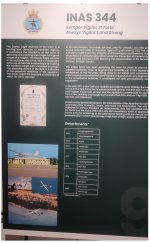
INAS 344
Semper Vigiles Et Forte Always Vigilant And Strong

344.jpg


In the late nineties, the Indian soil was used for unlawful activities perpetrated by the remnant cadre of Liberation Tigers of Tamil Eelam (LTTE). The LTTE a threat to India's security, integrity, and sovereignty and therefore, they were declared as an unlawful association under the Prevention of Unlawful Action Act and were banned in 1992 following the assassination of the former Minister, Mr Rajiv Gandhi.

The Indian Navy has been patrolling the area for years to prevent such unlawful activities. Thus, to augment the surveillance, a UAV squadron was established at INS Parundu. Being close to Sri Lanka and considering unfortunate terror events that were faced in the past years, any augment in the surveillance activities is considered not only precautionary but imperative.

In the year 2011, a UAV Cell was established at INS Parundu. Initially, the cell set up in the Ops Room for its command and control. The first batch of special and support equipment arrived and the squadron commenced its operation from a new building and hanger by the end of Feb 2012. And, on 11 Apr 2012, 344 was commissioned.

Known as the Spirited Shadowers, the core activity of the squadron is maritime reconnaissance to search, locate, and track the adversaries. The unit was deployed to various locations on detachments and has operated with Air Force and the Army. INAS 344 was also awarded a letter of appreciation by the Army for achieving all the operational tasking with the utmost level professionalism whilst maintaining a high level of flight safety standards.

Detachments*

2013
Visakhapatnam
New Mangalore

2014
Kochi

2016
Porbandar

2017
Porbandar
Port Blair
Visakhapatnam

2018
Port Blair

2019
Visakhapatnam
Porbandar
Port Blair

2020
AFS Carnic
AFS Bareilly
* Updated till 2020
 
  • Like
Reactions: Fatalis and Ashwin
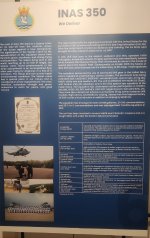
INAS 350
We Deliver

350.jpg

The saga started with the signing of a contract with the United States for the purchase of INS Jalashwa and along with it six Sea King helicopters (UH-3H). After the initial batch of pilot acceptance and training, the six birds were brought to India, onboard Jalashwa in Jul 2007.

A new unit was born in the eastern seaboard and they operated UH3H helicopters. Armed with a team of highly spirited men who relentlessly worked for its success, the Intensive Flying Trials Unit etched its name in the annals of special ops in the Eastern Fleet. Subsequently, on 24 Mar 2009, the Saaras or INAS 350 was commissioned into the Indian Navy at INS Dega, Visakhapatnam.

The squadron pioneered the use of advanced SAR gear in the Indian Navy and is capable of undertaking a variety of tasks. The prominent ones being extended SAR, CASEVAC/ MEDEVAC, armament role, special ops, oil rig ops, HADR, utility role and medium-lift. The unit is affiliated with MARCOS (East), with mother ship INS Jalashwa, and is the only special ops squadron of the Indian Navy. The squadron has undertaken active participation in TROPEX, ENCORE, EFDEP, IFR, PFR, AMPHEX, DEFEXPO, Sagar Kavach, Samudra Setu, etc. They have also carried out extensive armament firing sorties towards ORR of pilots, flight divers, and MARCOS sniping. Saaras has fired approximately 30,000 rounds since induction in addition to sniping by MARCOS.

The squadron has amongst its ranks 03 NM gallantry, 21 CNS commendations, and 25 C-in-C commendations and was adjudged Best Frontline Squadron in 2013.

The unit has been involved in several HADR and CASEVAC missions and is a sought after unit under the Eastern Naval Command.

Sunabeda
(13 Apr 2009)
Casualty evacuation (CASEVAC) of two injured civilians including one woman. The operation was in a Maoist infected area and the squadron flew sorties despite the threat

Jaypore, Odisha
(04 Apr 2010)
CASEVAC of eight civilians injured by Maoist insurgents. Three were critically injured and the quick response of the squadron saved the lives

Op Blossom
(08-09 Mar 2011)
Evacuation of Indians from Libya.
Approximately 200 people of Indian origin were evacuated by INS Jalashwa from Libya to the port of Malta, towards which the squadron contributed extensively.


Op Astra
(11-16 Sep 2011)
Flew 45 Hr in six days, dropping 45 tons of relief material in an area spanning 40 nm around Bhubaneswar.

Cyclone Thane
(29 Dec 2011)
Rescued 11 fishermen from two capsized boats in a daring mission, running against time and fuel.

Cyclone Hud-Hud
(Oct 2014)
Despite the damages to squadron infrastructure and loss of power and water supplies, the unit flew sorties to drop relief materials and to provide media coverage to the extent of the damage.

Rayagada
(19 Jul 2017)
Dropped approximately 1,000 kg of relief material in flood-affected districts of Rayagada, Odisha

Salvage op
(21 Dec 2018)
Transferred 12 ONGC technicians to damaged and tilted oil rig Olinda Star off Kakinada

SAR ops
(09 Aug 2019)
13 people including women and children were rescued from a boat that was stuck at Polavaram cofferdam on the Godavari river

Op Samudra Setu
(Mar 2020).
Evacuation of Indian stranded abroad; carried out MEDEVAC/CASEVAC missions by day and night
* Updated till 2020
 
  • Like
Reactions: Fatalis and Ashwin
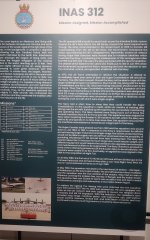
INAS 312
Mission Assigned, Mission Accomplished
312.jpg


The crest depicts an Albatross bird flying with a fish between its beak over the blue and white waves of the ocean against the light blue of the sky. In the background, a compass is depicted showing the four Cardinal Points with the North indicated by the North Star. Albatrosses are amongst the largest of flying birds and have the longest wingspan of any existing bird in the world, reaching up to 12 feet. They are highly efficient in the air, using dynamic soaring to cover great distances with little exertion. In similar lines, the largest, heaviest, and fastest turboprop aircraft in the world with a wingspan of just over 50 m, the TU 142M has a long endurance of up to 16 hours without any inflight refuelling. It is capable of long-distance maritime reconnaissance and anti-submarine warfare, where it devours ships and submarines routinely. Thus, as the squadron operated the mighty TU 142M aircraft, was nicknamed the Albatross and they continued the tradition after the induction of the P81.

The IAF operated MR aircraft for naval tasks as per the inherited British system. Despite the IAF's best efforts, the MR barely covered the naval requirements. Though the Navy recommended to the Government in 1966 to transfer MR responsibilities from the IAF to the Navy, the Government maintained the status quo following the IAF's disagreement. Meanwhile, several air attacks during major fleet exercises were wasted due to mistaken identities which frustrated the Navy. Considering the inadequacies of this arrangement after the 1965 and 1971 Indo-Pak wars, the Navy persisted with the recommendation. The debate which lasted for ten years was finally put to rest in Jun 1975 when the Government accepted the Navy's reasoning and took the decision to vest the command, control, and operation of MRASW with the Navy.

In 1976, the Air Force attempted to retrieve the situation. It offered to immediately hand over some of their old Super Constellation MR aircraft to the Navy. The offer had a caveat. Should the Navy not be able to cope with the large multiengine Super Constellations, then the MR role, along with the Super Constellations and the IL 38s (that were being inducted) should revert to the Air Force. Thus, five Super Constellation aircraft of No. 6 squadron at Pune were taken over by the Navy on 18 Nov 1976 and the squadron was designated INAS 312. It was a challenge to naval aviation as till then the experience as far as flying and maintenance was concerned was confined to relatively small turboprop or jet aircraft which were single-engine.

The Navy had a short time to show that they could handle the Super Constellations. To the squadron's credit, within six months of training after taking over the aircraft, it picked up the expertise for successfully maintaining and operating them. The Navy clocked more flying hours out of those five ancient machines than the Air Force ever did. This experience even helped the Navy when acquiring the Russian IL 38 maritime aircraft, which the Navy was able to fly and operate in no time. Ever since then, the squadron ensured that the maritime reconnaissance remained an integral part of the Navy.

The Super Connies were phased out from 1981 and the squadron was wound down in Jan 1984. In 1981, in response to the Navy's requirement for MRASW aircraft having longer endurance at longer range, the Soviets stated that they would not be able to supply new aircraft but would examine the possibility of providing refurbished TU 142 aircraft from their existing fleet. The Navy was hesitant about the TU because its much larger size, much heavier weight, and different equipment would require the runways to be upgraded and extended and maintenance facilities to be augmented. The Navy, therefore, pressed for three of the IL 38s being phased out of the Russian Navy to be refurbished. The Russians were unable to do this. Eventually, an agreement was signed in Dec 1984 for the acquisition of eight TUS.

On 30 Mar 1988, the first set of TU 142 M aircraft took off from Simferopol in the Crimean Peninsula and arrived at Goa after a non-stop flight. And, INAS 312 was re-commissioned at Hansa on 16 Apr 1988.

In May 1992, the squadron relocated to the new Naval Air Station INS Rajali - at Arakkonam on the east coast of India. The aircraft became a force multiplier, and the squadron was the true sentinel of the oceans. They had an area of influence covering the Arabian Sea, the Bay of Bengal, and the Indian Ocean. The squadron flew over 30,000 Hr which was accident-free and kept a watch on the enemy warships and submarines in the Indian Ocean Region.

To replace the ageing TUS, Boeing P81s were inducted into the squadron from 2013 and in 2017, the TU 142M was phased out. P81 was equipped with state-of-the-art sensors and was capable to launch the Harpoon Block Il missiles and MK 54 torpedoes. With the induction, the squadron's roles included long-range maritime patrol, anti-submarine ops, anti-surface vessel warfare missions, limited SAR, and ELINT/IMINT missions, and they continued to be the proud flag bearers of maritime reconnaissance.


Missions*
1988 - Op Cactus
1999 - Op Vijay
2001 - International Fleet Review
2002 - Op Parakram
2006 - President's Fleet Review
2011 - President's Fleet Review
2011- Anti-piracy operations
2014 - MH 370 SAR mission
2017 - SAR towards cyclone Ockhi
2018 - SAR for Cdr Abhilash Tomy
2018 - Maldon Landing at Car Nicobar
2018 - Malabar/RIMPAC at Guam/ Hawall
2019 - Op Trigger
2020 - Vaccine Maitri
* Updated till early 2021
 
  • Like
Reactions: Fatalis and Ashwin
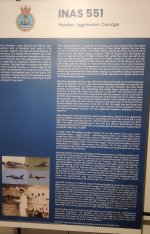
INAS 551
Passion. Aggression. Courage
551.jpg


The Phantom crest depicts the Navy's foul anchor with a Phantom bird over it. The 'Anchor' depicts the age-old resemblance to the Navy. The fouled anchor depicts the trials and tribulations that are undergone with time. The Phantom bird, the appearance of which is regarded as prophetic, depicts an aura of mystery. The bird itself is strong and ruthless when hunting its prey, is a rare sight to be seen. The phantom in its essence is something existing in perception only. On the whole, the squadron insignia depicts the squadron being immortal, with the essence of leaving its mark wherever it ventures.

The requirement for a separate jet training unit was realized by the Indian Navy to train pilots after the acquisition of Sea Hawk fighters for the then aircraft carrier INS Vikrant. The Indian Navy contracted three Vampire FB 52 fighters from HAL and a single Vampire T Mk 55 trainer from the Indian Air Force to operate as the 'A' Flight of INAS 550, while the other aircraft of the same squadron was designated as the 'B' Flight. However, it was on 05 Sep 1961, when the foundation of INAS 551 was laid down, at INS Hansa in Sulur. A year later, eight Sea Hawks ex-INAS 300 from the reserve stock were inducted into INAS 551. The role of the squadron at the time was to train pilots in tactical flying and air combat on the Vampire. The pilots were then converted onto Sea Hawks and underwent an Operational Flying Course before being transferred to INAS 300. INAS 551 thus became the feeder squadron for fighter pilots into the Indian Naval Aviation.

After the Liberation of Goa in Dec 1961, the Indian Navy took over the Portuguese airfield at Dabolim, Goa, by Apr 1962 and established facilities to relocate INS Hansa at Dabolim in Jun 1964. Eventually, as both Vampire and Sea Hawk aircraft serviceability was dwindling, the Indian Navy acquired seven HAL built HJT-16 Kiran Mk I basic jet trainers in mid-1971. The aircraft was fully operational by 1972 and were augmented with the armed version, Kiran Mk IA by 1978. After catering for training the pilots of the Indian Air Force, Kirans were proving their role in the training of fighter pilots in the maritime environment as well. Meanwhile, by 1976, all the Vampires were phased out and by 1978, all the Sea Hawks were returned to INAS 300. In 1987-88, eight new and improved Kiran Mk II aircraft made their way into the inventory of the squadron. These aircraft had superior avionics fit and additional weapons payload carrying capacity.

After induction of the Sea Harrier into the Indian Navy, INAS 551 was separated into two flights, namely INAS 551 A, operating the Kiran Mk IA and MK II, and INAS 551 B, operating Sea Harrier T Mk 60 trainers, again borrowed from INAS 300. The latter was established as the first Sea Harrier Operational Flying Training Unit (SHOFTU) in Apr 1990, and subsequently became an independent
squadron, INAS 552, in 2006.

In 2003, INAS 551 added another feather to its cap when it set up a naval aerobatic team - Sagar Pawan - operating Kiran Mk II. On 11 May 2003, they made their debut at INS Garuda, Kochi, on Willington Island. The Indian Navy thus became one of the only two Navies in the world (at that time) to have a fixed-wing aerobatics team. Since then, Sagar Pawan has enthralled several spectators in multiple cities across the country. On 14 Feb 2006, the team undertook the first four aircraft display off RK Beach at Visakhapatnam during the President's Fleet Review.

With the advent of new technology and advancements in military aviation, the transition to advanced jet aircraft became inevitable. After a glorious history of over 40 years in service, the Kirans were decommissioned in 2013 and were replaced with Hawk Mk 132 Advanced Jet Trainers. The Hawks possess an advanced glass cockpit with Heads Up Display and Multi-Functional Displays thus facilitating easier transition to subsequent frontline fighter aircraft, i.e., MiG 29K. The Hawk AJT Cell was set up at INS Dega, Visakhapatnam, on 04 Jul 2013. The first Hawk Mk 132 was officially handed over to the Indian Navy on 23 Sep 2013 at HAL, Bengaluru, and was ferried into Visakhapatnam on 27 Sep 2013. On 01 Jan 2014, INAS 551 was commissioned at INS Dega, Visakhapatnam, under the operational and administrative command of Eastern Naval Command with four Hawk Mk 132 aircraft in its inventory.

INAS 551 continues to fulfil its role of training fledgling naval fighter pilots to date. Many aviators have passed through its hallowed portals and the navy's fighter stream stands tall on its shoulders. The squadron also plays a key role in providing flying experience to the naval and Coast Guard pilots before they proceed for training at the Flying Instructors' School with the Indian Air Force. Further, training of Direction Officers towards interception exercises is also undertaken by this squadron. Additionally, INAS 551 also serves as a Fleet Requirement Unit undertaking missions in support of Eastern Fleet ships towards equipment trials and other requirements. With its exceptional air combat and air-to-ground training capabilities, it is needless to say that Hawk Mk 132 forms the bedrock of Indian Naval fighter training today.

Training demands commitment, dedication, and a determined, conscientious strive for excellence. The spirited men who belong to this magnificent squadron, both pilots and technicians, know how high the stakes are. They are have been the bedrock of the naval fighter stream for sixty years. They better than the best. They are 'The Phantoms'.

INAS 551 was awarded the Unit Citation for the period 2007-08.
 
  • Like
Reactions: Fatalis and Ashwin
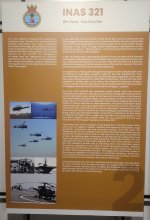
INAS 321
We Dare, You Survive
321.jpg

The crest depicts a flying hand rescuing an individual from the sea. The armoured hand pointing downwards with wings symbolizes the hands of the Angel protecting the survivors and rescuing them. The hand pointing upwards depicts the hand of the survivor who is being rescued by the aircraft. The background of waves and sky represents the maritime operating environment. The crest emphasizes the rescue and logistics support provided by the squadron and is also figurative of the team titled The Angles'.

In the year 1953, when the chaos of the World War was just settling and the world forged its way through an era of industrialization, the French joined the rotorcraft race by developing the SE 3120 Alouette, the first gas turbine engine helicopter in the world. Through many modifications and additions to this model, its successor - the Alouette III - came into being and since then, it has scaled most skies across the globe.

In 1961, the Indian Navy deputed personnel to France to train on the Alouette Il helicopters. Subsequently, two Alouette II helos were acquired on lease and they embarked INS Vikrant on 10 Jul 1961. They were found to be extremely efficient in meeting all the SAR requirements of the carrier. However, they had to be returned after the three-month lease period.

The experience of flying SAR helicopters brought out the indispensable need for setting up a helicopter squadron solely for the SAR requirements. Thus, the Indian Naval Air Squadron 321, the first helicopter squadron of the Indian Navy, was commissioned on 15 Mar 1969 at INS Hansa. The aircraft was later renamed as Chetak after Lt Col James Tod referred to Maharana Pratap's horse as 'Chytuc' and the 'Blue Horse' in his anecdote about the famous battle of Haldighati and the heroics of the horse for bringing in supplies.

On 03 Apr 1972, INAS 321 was relocated to NAS Kunjali II with one aircraft, followed by the addition of the second aircraft on 01 Aug 1980. Subsequently, several helicopters were added to the fleet until most ships of the Western Fleet had integral helicopter flights. Soon thereafter, both commands of the Indian Navy on the Eastern and Western fronts had full-fledged operational Flights for Search and Rescue, deck operations, and other secondary flying requirements like training of flight divers and transfer of stores and cargo. INS Garuda too, commissioned the Navy's Helicopter Training School INAS 561 in the year 1991 to undertake ab-initio training of rookie pilots post basic flying, which was relocated to Rajali. In Mumbai, a conscious call was taken to integrate all flights into a single unit and with the amalgamation of all ship-borne flights of the Western Fleet into one squadron, the unit was renamed 321 Fleet Support Squadron on 26 Mar 2007.

The primary role of the squadron is SAR operations including various other tasks such as logistics support, medical and casualty evacuation, cargo operations, armament role and personnel transfer. Over the years, the Chetak proved to be a reliable and versatile helicopter undertaking many daring life-saving missions both at sea and over the land. Even without armour, the daring Angles (nickname of 321) held the air superiority at sea when confronted with piracy whilst patrolling off the Gulf of Aden. The unit witnessed the thick of the action against the LTTE while aiding Sri Lanka and also played a pivotal role in providing relief and undertook search and rescue operations in the state of Kerala during the floods. Whether at high-seas, hinterland or in foreign waters, 321 have always risen to the occasion and have provided succour. The Angels have also been a part of the summer expedition to Antarctica on numerous occasions, where they have rendered yeoman service in terms of being the only available means of communication to the scientists, both Indian and foreign.

Over the past 50 years, they have embarked all the helicopter carrying ships for every mission, both by day and night. The Angels have thus left their footprint on every sea and ocean, including the Antarctic region, exercising with all major Navies. The squadron has had the unique distinction of flying the same aircraft since commissioning.
 
  • Like
Reactions: Fatalis
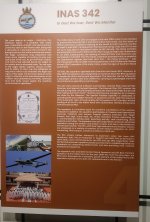
INAS 342
In God We fear, Rest We Monitor

342.jpg

The crest depicts an eagle - Brahminy Kite (Haliastur Indus) - a predator with sharp eyes, indomitable strength and perseverance, commonly seen on the Kerala coast, along with a silhouette of a Remotely Pilot Aircraft in the background over the white and blue sea waves. The eagle symbolises long endurance and sharp vision capable of locating its prey over vast areas of the sea. As per the Hindu culture, Lord Vishnu had selected Garud (an eagle) as his vehicle due to aforesaid traits. The red eyes of the eagle signify superior sensors of RPA and its ability to loiter over the battlefield for long hours which truly embodies the flight and vigour of the eagle. The dominant posture of the eagle is reflective of the total dominance of the modern-day battlefield by the RPAS. Alternate blue and white waves signify the maritime environment of operations.

The Indian Navy's tryst with UAV began in the late 1990s when it was decided to procure the Searcher MK II and Heron UAVS from Israel. The first batch of Officers and men underwent training at the Israeli Aircraft Induction Facility in Israel in mid 2002. Consequently, the Intensive Flying Trials Unit (IFTU) was set up in Aug 2002 in renovated cabins at INS Garuda. The flying activities commenced at the end of 2002 and the first inaugural flight was undertaken in Jan 2003. Subsequently, the training of Internal Pilots and Observers was completed in mid 2003. The IFTU (UAV) undertook extended trials to establish the operational regimes and then INAS 342 - the Flying Sentinels - was commissioned on 06 Jan 2006. The Flying Sentinels is the first Remote Pilotless Aircraft (RPA) squadron of the Indian Navy under the ages of Southern Naval Command.

Till 2018, the squadron operated both Searcher and Heron RPA. However, in May 2019 the squadron was designated as exclusive Searcher RPA squadron to handle ab initio training and operations. The Searcher can be fitted with a day/night camera, ESM, and COMINT for carrying out prolonged maritime reconnaissance operations over the sea.

The UAV crew consists of a Mission Commander, Internal Pilot, External Pilot, Observer and Special Payload Operator. The External Pilot (EP) controls the aircraft during take-off and landing whereas the Internal Pilot flies the aircraft after taking over from the EP. Tactical planning and navigation for a mission are done by the Observer. The Special Payload Operator is dedicated to operating ESM and COMINT fitments on board the aircraft. With the induction of the Automatic Take-Off and Landing (ATOL) system in 2011, the take-off and landing of all UAVS in the Indian Navy were automated, thereby doing away with the External Pilot.

The squadron is a frontline asset for maritime surveillance of the western seaboard. In addition, the squadron participates in Theatre Level Operational Exercises (TROPEX) and various Coastal Defence Exercises like Sagar Kavach, Sea Vigil, Thera-Veta, etc. These exercises involve searching for a commandeered fishing boat, poaching activity, and monitoring other suspicious activities. The squadron has also undertaken numerous detached operations along the western and eastern coasts and also in the Andaman and Nicobar islands. The RPAs with their high endurance and modern sensors are employed on a variety of missions on the western seaboard, viz., SLOC monitoring, Fleet support, coastal surveillance, HADR, etc.

The RPA stream further witnessed its expansion when two more UAV squadrons, INAS 343 at Porbandar in Gujarat and INAS 344 at Ramnad in Tamil Nadu were commissioned in Jan 2011 and Apr 2012 respectively. INAS 342 being the pioneer squadron played a pivotal role in establishing these two squadrons by undertaking detachments and also providing men, material and technical expertise.

The squadron was awarded the Best Naval Squadron and the Best Frontline Squadron of the Indian Navy for the year 2008-09. From the early days, the RPAs have bloomed into a versatile, proud element of the Indian Navy with operations spread across both the seaboards and in the littorals.
 
  • Like
Reactions: Fatalis
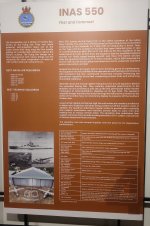
INAS 550
First and Foremost
550.jpg


The Exocoetidae are a family of marine fish, known as the flying fish. They can make powerful, self-propelled leaps out of the water where their long wing-like fins enable gliding for considerable distances above the water's surface. The flying fish design on a blue background with waves brings out the necessity for close cooperation of naval air with surface and sub-surface forces.

INAS 550, known as the Flying Fish, is the oldest squadron of the Indian Navy. Initially, the unit was commissioned as Fleet Requirement Unit (FRU) comprising of two Sealands on 11 May 1953 at Venduruthy II, Kochi. Then, as the type and the number of aircraft that were inducted grew, it was re-commissioned as INAS 550 on 17 Jun 1959 as the first squadron of the Indian Naval Air Arm. At that time, the squadron had ten amphibia Sealand aircraft, ten Firefly target-towing aircraft, and three HT2 trainer aircraft. Later the squadron flew Dove, HT-2, Kiran, Islander, and in 1990 inducted the Dornier 228 aircraft to train pilots and observers and to undertake maritime patrol, evacuation, and SAR

Despite the diverse air assets and an ever-evolving genre of maintenance, the squadron not only fulfilled all the operational and training commitments with excellence but also contributed immensely towards enhancing the operational capability of the fleet, conducting various trials and enhancing its combat readiness.

INAS 550 clocks the second highest-flying hours for any Air Squadron behind the venerable Boeing P81s. They routinely undertake detachments to the Maldives for EEZ surveillance and set up the first permanent Indian Dornier Contingent at Hanimaadhdhoo, Maldives on 26 Sep 2020. The squadron shadows foreign warships that transit through the IOR and thus reinforces the ability of the Indian Navy to consistently display its presence off the Southern Arabian Sea.

As part of Op Vigilant and Op Sea Vigil, the unit carries out coastal surveillance to detect any suspicious activities being carried out off the western coast. In addition, the squadron undertakes regular sorties to provide aid in causality and medical evacuations and executes several tasks to carry men and medical kits to various remote areas. The squadron also undertakes fleet support exercises which include tracking exercises, OTHT, CASEX, and sea trial of various equipment fitted onboard.

The squadron has won several trophies over the years for its stupendous performance.

First Civil Aid Mission
(10 Jan 1954)
Search for about 300 fishermen missing off the coast of Varkala

Exercise Bombex
(19 to 24 Sep 1955)
Anti-submarine escort for the IN fleet during transit from Colombo to Mumbai

1971 Indo-Pak War
Searched for enemy ships and submarines off Kochi

Op Brasstacks
(Mar 1987)
Flew extensively during this major operation

Op Pawan
(Dec 1987)
Operated a detachment from Trincomalee during the IPKF deployment

Op Vijay
Operated a detachment from Porbandar

Op Parakram
(Dec 2001)
Undertook flying efforts at Mumbai for the operation

Op Jal Nikas
(Jun 2000)
Patrolled the Palk Straits

Op Rainbow West
(Feb 2004)
Relief efforts in Sri Lanka

Transportation of harvested heart
(19 Jul 2016)
Flew a harvested heart which was successfully transplanted in a 47-year old person at Lisie Hospital, Kochi

Op Sahayam
(30 Nov 2017)
Rescue mission in the aftermath of the cyclone Ockhi

OP Madad
(2018)
Rescue mission in the flood-affected areas of Kerala

COVID
(2019-21)
Extensively flew sorties for operational reasons and for transporting spares and technical support for other naval units during lockdown

Op Crossbow
Monitoring and shadowing of PN and PLA (N) ships that transit through the area of interest

• Updated till early 2021
 
  • Like
Reactions: Fatalis
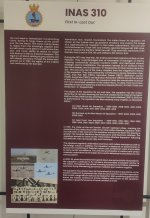
INAS 310
First In-Last Out

310.jpg


The crest depicts 'Hamadryad', the lethal King Cobra, baring its fangs shown at the centre over the sea waves. The name Cobras draws its legacy from the amazingly capable Alize aircraft which could detect a submarine from afar, and move swiftly to attack its target and destroy it with its onboard weapons. This legacy is all about striking its prey silently and with deadly accuracy. Though the Alizes were phased out in 1989, the legacy of the Cobras was continued by the Dorniers.

Admiration, fear, respect, fascination! The Indian Naval Air Squadron 310 known as the Cobras stirs up powerful emotions and evokes the image of a sophisticated Air Squadron in the Indian subcontinent. The unit was commissioned on 21 Mar 1961 and initially operated Bréguet BR 1050 Alizé, an Anti-Submarine Warfare (ASW) aircraft. They were then stationed at INS Garuda, Kochi, and in 1970, the unit shifted to INS Hansa, Goa,

During the 1971 Indo-Pak War, the Cobras launched extensive strikes on East Pakistan. They sunk/damaged tens of thousands of tonnages of enemy shipping, successfully disrupted maritime traffic, and destroyed several strategic enemy installations. The squadron earned six Vir Chakras, three Nao Sena Medals, and one Mention-in-Despatches for their active role in the war. This was only one of the many chapters from the magnificent history of the squadron. They had noteworthy contributions during Operation Vijay (1961), Indo-Pak War (1965), Operation Pawan (1987), Operation Cactus (1988), Kargil War (1999), and Operation Parakram (2002). Due to the heroics of the unit in these operations, the squadron holds the remarkable record of the most decorated squadron of the Indian Navy. To date, they have been awarded a total of 19 Gallantry & Wartime Medals (06 VrC, 01 YSM, 07 NM, and 05 Mention-in-Despatches).

The laurels of the squadron do not end here. The squadron has the unique distinction of not only receiving the first Unit Citation by the Chief of the Naval Staff on 04 Dec 2000 but also winning two more such citations (2007 & 2016) for its performance. The squadron has also received many trophies as tabulated below:-

(a) Best Naval Air Squadron - 1994-1995, 1998-1999, 2001-2002, 2003-2004, 2010-2011, 2013-2014, 2015-2016

(b) Runners up for Best Naval Air Squadron - 1999-2000, 2000-2001, 2006-2007

(c) Best Front Line Squadron 1989-1990, 1992-1993, 1994-1995, 1998-1999, 1999-2000, 2000-2001, 2003-2004, 2006-2007

In 1991, the state-of-the-art Dornier aircraft replaced Alizes, marking the evolution of the Cobras from ASW to the 'Information Warfare' squadron. With the induction of the new bird, the squadron transformed itself into playing a greater role towards Maritime Reconnaissance and Electronic Warfare. The squadron earned its name as the 'Information Warfare Squadron' following its ESM/ELINT roles during Op Vijay and Parakram.

The squadron regularly undertakes exercises with Indian warships as well as the foreign navies. In addition, the squadron is deployed on detachments to Muscat for monitoring of Pakistan naval units off Makran coast and to Male to carry out EEZ surveillance. The unit also participates in various anti-piracy missions undertaken by the Indian Navy and is detached to Seychelles for the same purpose.

In 2019-20, when the world turned upside down due to the COVID-19 pandemic, the squadron continued to fly missions and provided invaluable service to the nation. Throughout the period including lockdowns, the Cobras undertook extensive flying transferring personnel, material, and medical supplies.

The squadron has always been at the forefront of maritime operations on the western seaboard. It possesses the skills for any maritime and fleet operation that a short-range MR aircraft can be tasked for. With ambitious goals for the future, the Cobras continue to amaze military enthusiasts as the squadron embodies a powerful essence of naval aviation in India.
 
  • Like
Reactions: Fatalis
INAS 315
Victory is my Profession
315.jpg

The Winged Stallion has taken its legacy from the mighty bird IL 38 which is a force multiplier with its long-range endurance, ASW/ELINT and anti-ship attack capabilities. The white colour of the horse symbolizes peace and loyalty. Wings over the stallion symbolize reachability. Neighing and galloping of the horse over sea waves is a representation of offensive capability and dominance over the seas. Thus, a white-winged stallion denotes the Indian Navy's core values.

INAS 315 also known as the Winged Stallions is the oldest Long-Range Maritime Reconnaissance (LRMR) squadron of the Indian Navy. The Navy had to pursue its case hard with the Government of India to obtain approval for establishing a long-range multi-engine reconnaissance/strike squadron. Eventually, the government approved the request and acquired the multi-engine IL 38 aircraft from the Soviet Union. Thus, with the induction of IL 38, INAS 315 was commissioned on 01 Oct 1977 at INS Hansa, Dabolim.

With its induction, the Indian Navy moved into the realm of airborne LRMR combined with anti-submarine warfare (ASW) capability for the first time. A new era in long-range maritime air operations that came forth, turned the MR/ASW aircraft into a formidable force multiplier. With an endurance of eight to nine hours and a range of 9,800 km, the entire gamut of airborne naval operations saw a colossal leap and from thence, the entire Indian Ocean Region was with the Indian Navy's operational reach. With IL 38, the squadron undertook the primary roles of LRMR, ASW, anti-shipping strike, and ELINT, furthermore to its secondary roles of Search and Rescue and training.

On 02 Jan 1978, the squadron utilized the Magnetic Anamoly Detector onboard IL 38 for locating and identifying the wreckage of Air India jumbo that crashed into the sea off Bandra point, Mumbai. In Nov 1988, the Winged Stallions were part of the task force to search and locate MV Progressive Light during Op Cactus. During the ops, the squadron crossed the equator as well as landed at Male and Colombo for the first time. The Stallions flew 21 sorties totalling 102 flying hours on 20 Aug 1990 and operated from Goa, Vizag, and Kolkatta to locate the life rafts of sunken INS Andaman. Efforts of the IL 38 team to locate and thus save the Andaman crew were appreciated by the FOC-IN-C (East) and the FONA. Similar stories of search and rescue by the squadron are galore. Similarly, they have also been successful in intercepting illegal transfer of arms and ammunition through the high seas. During Op Parakram, IL 38 fleet was deployed for continuous surveillance over the Arabian Sea. Over the complete duration, the Winged Stallions were on a continuous watch with back-to-back sorties.

Even for HADR missions, the squadron was not behind any other units. In Oct 2014, the Stallions undertook Op Jal Seva to provide relief and humanitarian aid to the people of Vizag during cyclone Hud-Hud. Towards COVID-19 relief operations, the squadron airlifted massive loads of hand sanitisers, face masks, and PPE kits for Goa and Maharashtra state governments. The squadron's efforts were highly appreciated by the governments.

315 has won many awards. They were presented with the Unit Citation by the Chief of the Naval Staff for 2014-15. In addition, the unit has won trophies for the Best Front Line Squadron for the years 1992-93, 2007-08 and 2014-15 and Best Naval Air Squadron for the years 1990-91 and 2017-18.

After almost 30 years of service with the Indian Navy, in the mid-2000s, IL 38 was upgraded with a completely new mission suite. The birds with their 'new feathers' were then on known as IL 38SD (Sea Dragon). It is to the unit's credit that they were able to integrate its weapons and successfully fire the KH35E missiles on 28 Jan 2017 and on 30 Jan 2021 (the later one sunk ex-Nirbhik within 24 m of impact) and the ATIME torpedo on May 2017. The successful drop of Sahayak Mk I (air droppable containers to enhance ops-logistics capability) with an actual load of approximately 50 kg on 07 Jan 2019 proved that the IL 38SD is not only a potent long-range MR aircraft, but it is also an ops-logistics support platform. Further, on 12 Mar 2021, the unit successfully integrated and dropped Torpedo Advanced Light (TAL), the first indigenous advanced lightweight, electrically propelled, self-homing torpedo developed by the Naval Science and Technology Laboratory. The torpedoes can be used to attack the submarines in shallow and deep waters.

The Winged Stallions are vigilant and resilient, and persistent to take on any adversary, during any weather, at all time, and everywhere with their indomitable spirit. This warhorse has galloped for more than four decades and has flown more than 40,000 hours of operational flying. This is no mean feat and all of it is a testament to the persistent and dogged will of all the past and the present stallions who have endeavoured and toiled with their flesh and blood to keep this mighty beast up and running.
 
  • Like
Reactions: Fatalis
INAS 311
Determined and Vigilant

311.jpg

The crest of INAS 311 depicts a Kite over a sky blue background. The Kite signifies a high flying bird of prey with an extremely sharp
vision which gives it an inherent capability to hunt accurately. The bird above the blue water waves represents the air operation over the sea.

A 318 (Vizag) flight was established in June 2005, with one Islander aircraft at Visakhapatnam. Soon, the need to expand this unit was felt owing to an increase in activities on the Eastern seaboard and consonance with the Nation's 'Look East' Policy

The beginning of a new era for the erstwhile 318 (Vizag) flight started on 24th Mar 2009, as it got commissioned as a fully operational squadron INAS 311 and with a new name. Kites. The ‘squadron was commissioned with three Dornier aircraft fitted with state-of-the-art Maritime Reconnaissance (MR) and Information Warfare (IW) equipment. The versatile MR/IW Dornier aircraft soon took to the skies operating with the Eastern Fleet and became an inseparable part of the operational unit.

Determined and Vigilant, as the squadron motto says, the squadron proved its mettle in a wide array of missions ranging from search and shadow, SNOOPREX, PARA drop, tracking runs to the fleet ships, and ferry of men and material. The squadron was involved in providing support to the Centre and the State authorities by carrying out relief missions like Medical and Casualty Evacuation which were of great help during the COVID-19 pandemic. The squadron has participated in various international exercises with counties like Singapore (SIMBEX), Sri Lanka (SLINEX), and Bangladesh (IN-BN CORPAT) since its inception.

The unit got its major upgrade in Oct 2020 with the induction of a new Coastal Security Glass Cockpit Dornier fitted with state of the art RADARs and ESM sensors. 311 has tremendously expanded its operational capabilities, to such an extent that it features among the major assets of the Eastern Naval Command.
 
INAS 318
Sahasi, Sudhrudh, Karya me Daksh

318.jpg

The crest of the squadron depicts the apex predator Hawk which is epitomized as being vigil, resolute, focused, and steadfast. The sharp talons bring out the 'dedicated to defending' intent and the wide wings symbolize the high flying and long endurance capability of INAS 318, for its vigilance and long flights. The menacing bird can be seen flying over the vast expanse of the ocean far away from the shore. With its head stooped towards the ocean and eyes focused on the prey, the logo brings out the squadron's reconnaissance capability making INAS 318 the eyes and the ears of the Andaman and Nicobar Command. The strong claws signify the short take-off and landing capability, making the Hawks a formidable and versatile squadron for short field and FOAB operations. In the crest, the Hawk can be seen in an aggressive stance towards foes having malice intent over the sovereignty and territorial surveillance over the Andaman and Nicobar Command's area of responsibility.

In the spring of the year 1981, during the Prime Minister's visit to Port Blair, a Burmese gunboat made an unprecedented landing at Narcondum Island and bullied the Indian Police into vacating the island. The government then felt the need to base Maritime Reconnaissance aircraft (Islanders) to patrol the skies around the island and also to meet any exigency arising from time to time. The directives of the Government of India then resulted in a two-aircraft Islander flight being positioned at Port Blair in the year 1982-83. The flight of these Islander aircraft then mushroomed into a full-fledged squadron and was subsequently commissioned as Indian Naval Air Squadron 318 on 08 Mar 1984. The birth of INAS 318 marked the beginning of airborne surveillance in the Andaman & Nicobar Islands which was a landmark achievement in the history of Indian Naval Aviation. The squadron undertakes short-range maritime reconnaissance (surveillance over Andaman and Nicobar Command), armed patrol (for deterrence), Search and Rescue missions, casualty evacuation (humanitarian assistance and disaster relief), and communication duties.

The ageing fleet of the Islanders was subsequently replaced with the versatile state-of-the-art Dorniers from 1999 onwards. The arrival of Dorniers from the mainland marked the end of the glorious era of Islanders patrolling the Emerald Waters. The Hawks, the nickname of 318, grew in strength with the new induction that was armed with the latest maritime patrol Radar. The Dorniers' versatility and capability were fully exploited by the squadron to effectively maintain a continuous vigil over the Andaman & Nicobar area. The operational efficiency of the squadron was highly appreciated by all the three Services in the Joint Services Command.

The squadron carries out multiple exercises with foreign naval ships and maritime patrol aircraft from Indonesia, Myanmar, and Thailand as part of coordinated patrols and other such surveillance missions on a bi-annual basis. These exercises and missions consolidate the Indian Navy's diplomatic role and also go a long way in enhancing the virtues of friendship with our neighbouring countries under India's Look-East policy.

The squadron was adjudged runners-up for the Best Naval Air Squadron 2018-19 trophy.

Apart from the intensive operational commitments, the squadron is also a major help during humanitarian relief works. 318 was an integral part of Op Madad for providing HADR assistance post tsunami in Dec 2004. During that time the unit flew multiple sorties under inclement weather and flooded runways transferring 2000 kg of relief material across the South Group of Islands. The squadron also carried out other missions apart from the relief operations such as aerial photography, surveillance, communication link, casualty evacuations, and transfer of men and medical aid.

The squadron has the unique distinction of being termed as the eyes and ears of the Indian Navy and acts as the lifeline of the Andaman and Nicobar Islands by undertaking various inter-island and mainland sorties for multiple missions such as casualty evacuation, medical support and other exigencies which come up from time to time. The squadron maintains a constant and dedicated vigil over the far eastern waters of India safeguarding the highly strategic Andaman and Nicobar Islands and Six Degree channel, keeping a watchful eye over the area of responsibility assigned to the Andaman and Nicobar Command.
 
INAS 330
Any Sea, Any Mission, Any Deck

330.jpg

The crest shows a writhing shark that symbolizes an enemy submarine, in the last throes of its painful demise, with a blood laden harpoon impaling it. The surprised shark looks up to see its killer but sees only the menacing golden wing of the Fleet Air Arm attached to the head of the harpoon. Fittingly, the squadron and the men who serve there are referred to as Harpoons.

Westland Sea King helicopter, one of the most potent weapon platforms in the naval inventory, took maritime warfare to theatres well beyond the nation's shores.

The firsts of the 'Fivers' (the squadron's helos were numbered from 501 onwards) - 501 and 502 - were commissioned as INAS 330 squadron, a.k.a. the Harpoons, on 17 Apr 1971. Initially, the squadron was equipped with Mk 42 ASWs acquired from British Westland Helicopters Ltd. The squadron got greater punch with the procurement of Mk 42B which had an improved sensor fit and the capability for anti-shipping strikes.

On 26 Jul 1971, the squadron landed on INS Vikrant with this multi-role helo for the first time. From then on, the indomitable team of Harpoons and the 'Mother' (the aircraft carrier) saw a series of firsts. The first operational anti-submarine warfare mission was flown on 18 Oct 1971. On 31 Nov 1971, while on an 'advance screen', a Sea King picked up a suspected submarine contact and carried out a vectored attack for the first time. The Harpoons received their baptism with fire when hostilities broke out in 1971. Extensive ASW operations were undertaken and the unit clocked over 156 hours of the war effort. Over the decades, the Harpoons operated from INS Vikrant and INS Viraat as the only front line carrier-borne rotary wing squadron and earned the honour and reputation of being the most versatile and baleful of the whirlybirds.

The squadron shifted to INS Shikra, Mumbai, from INS Garuda, Kochi, in Oct 1995 and was based there ever since. As always, the Harpoons are the eyes and ears of the fleet. Aptly named the Flying Frigate, the Sea Kings acted as force multipliers while operating from INS Vikramaditya, Kolkata class Destroyer, and Brahmaputra class Frigates. The unit also operated detachments from Advanced Landing Grounds and oil rigs. The ship-borne flights of the squadron executed multifarious missions in all weather - by day and night.

The squadron on several occasions embarked on Western Fleet ships for bi- lateral/ multilateral exercises with various foreign navies. The unit's partici- pation in the exercises significantly enhanced the footprint of the Indian Navy in the IOR and aptly upheld the country's honour. Some of the prominent exer- cises participated are Varuna, IBSAMAR, DIMDEX, Gulfstar, Malabar, Indra, Konkan, and EEZ surveillance amongst others

The unit also participated in all major exercises of the IN including Tropex, XPL, and WEFDEPS consistently for more than 50 years. On average, the squadron was at sea for over three hundred days annually participating in multiple WEFDEPS, LRDS and cross coast deployments.


Missions*

Op Falcon
Longest coordinated ASW ops off Kathiawar coast for the search of PNS Hangor post sinking of INS Khukri, Dec 1971

Op Cactus
Aid to Mauritian government, 1988

Op Pawan
Embarked Viraat towards IPKF ops in Sri Lanka, Jul 1989

Op Shield
De-induction of UN Forces from Somalia, 1994

Op Vijay
Undertook ALG ops, 1999

Op Parakram
Deployed with Western Fleet units, 2001-02

Op Castor
Tsunami relief operations, Dec 2004

Op Rahat
Flood relief operations, Jul 2005

SAR ops
Multiple occasions including the rescue of stranded naval personnel from INS Shankush, Aug 2010; during Cyclone Ochki at Kochi, Nov 17; and Cyclone Taukate at Mumbai, May 21