News India and Asean look to each other to balance against China’s rise

Infowarrior

Active member
Dec 5, 2017
429
133
India
Swaran Singh says the presence of Asean leaders at India’s upcoming Republic Day celebration is the latest sign of the bloc’s ties to their giant neighbour, as both seek to counterbalance China while acknowledging Beijing’s regional importance

PUBLISHED : Thursday, 18 January, 2018, 2:35pm
UPDATED : Thursday, 18 January, 2018, 7:27pm
Swaran Singh
Diplomacy & Defence How India became China-led development bank’s main borrower
19 Jan 2018


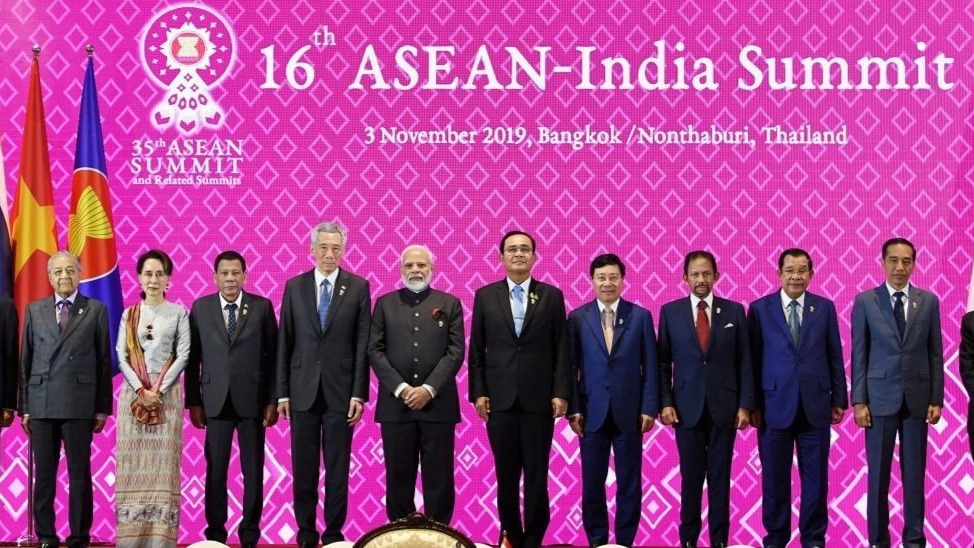
Only twice in the past 65 years have India’s Republic Day celebrations hosted two foreign dignitaries, rather than one, as chief guests. So the presence of 10 Asean heads is expected to boost India’s acceptance across the region, and also the fledgling Indo-Pacific discourse. Its implications will be assessed in all major capitals, including Beijing.

Experts have often insinuated that containment of China has been the motive for India’s Look East, and now Act East, policies. Studies also allude to Asean engaging India since the early 1990s to obtain a counterweight to China’s rise. Both the Association of Southeast Asian Nations and India deny such motives and continue to expand partnerships with Beijing.

No doubt this period has seen an increasingly assertive China become a shared concern, yet neither India nor Asean will publicly address the dichotomy of their dependence on and discomfort with Beijing. Meanwhile, US President Donald Trump’s tweets generate scepticism in New Delhi about US interest in catapulting India onto the centre stage of the Indo-Pacific. In that light, 10 Asean heads in New Delhi may become a watershed, where Asians chose to take charge of Asian affairs, marginalising Washington.

48a68f94-fc07-11e7-b2f7-03450b80c791_1320x770_143547.JPG


Why Nepal can play a vital role in bringing India and China together
This explains the new focus on the Act East policy. In the past 44 months, Prime Minister Narendra Modi has travelled to nine out of the 10 Asean states. Modi announced India’s policy shift from Look East to Act East, with Asean as its core, during his debut at the 12th India-Asean summit in 2014. This shift implied widening and deepening India’s strategic partnerships with Asean, with maritime security, especially anti-piracy, taking priority. Pragmatism seems to increasingly define policy in all of these counties. That explains how both India and Asean have accepted China’s lead in building the Regional Comprehensive Economic Partnership. India understands its growing asymmetry with China.

Mutual respect key in South Asia push by China
At home, Modi’s “neighbourhood first” programme means the focus of his Act East policy is on immediate eastern neighbours. India hopes to boost its least-developed provinces in the northeast through this policy.

The birth of the Look East policy coincided with the expansion of Asean, which added Cambodia, Laos, Myanmar and Vietnam, bringing Asean’s borders to India’s northeast. This connectivity promises economic relief among enduring political turmoil, meaning the stakes are high for India, which must steer its ambitions carefully.

Swaran Singh is a professor in the School of International Studies, Jawaharlal Nehru University, New Delhi

This article appeared in the South China Morning Post print edition as: India, Asean growing closer
India and Asean look to grow closer without offending Beijing
 
IS threat to Phillippines President Duterte on Republic Day worries Indian agencies
Ananya Bhardwaj 18 January, 2018
RepDayrehearsal-696x449.jpg
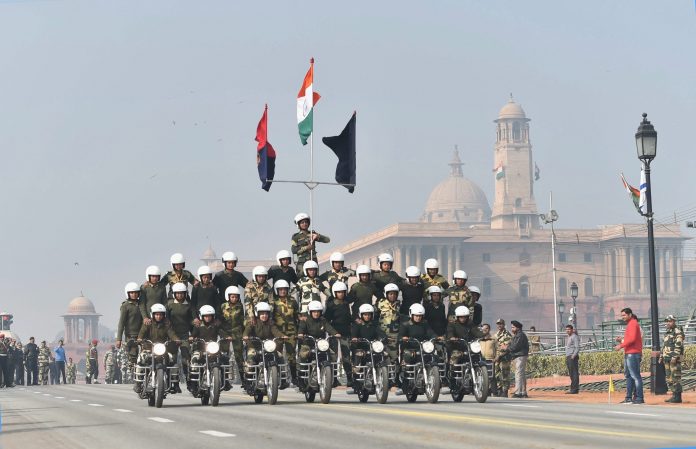
New Delhi: The newly-raised all women bikers contingent of Border Security Force (BSF) Daredevils' practice ahead of their first performance at the Republic Day parade, in New Delhi on Wednesday. PTI Photo by Vijay Verma


Ten heads of state are set to attend the celebrations in New Delhi, including Rodrigo Duterte, and agencies are scrambling to bolster security.

New Delhi: As India prepares to receive 10 ASEAN leaders for the Republic Day celebrations, an intelligence alert that the President of the Philippines, Rodrigo Duterte, is on the radar of the Islamic State is giving security agencies sleepless nights.

According to sources, Duterte’s agenda to militarily wipe out Islamist extremism from the state of Mindanao—along with killing Isnilon Hapilon, leader of Abu Sayyaf and emir of the IS in Southeast Asia in the city of Marawi—has provoked the group to mobilise sleeper cells based in Indonesia, which are now planning a strike.

“Duterte is coming with baggage, as he has been very vocal about wiping out IS. The Indonesian President too will be present, and could also be a target. We have intelligence inputs that the IS has mobilised its people and is planning to strike,” a security agency source told ThePrint.

The problem
Generally there is just one visiting dignitary at the Republic Day parade, but this time, with 10 of them expected, Rajpath is more vulnerable than usual to sabotage.

“The space for the enclosures remains the same, while the turnout of dignitaries and people is higher. Therefore, the chances of infiltration are higher,” an official of a security agency who wished to remain anonymous said.

“Since the inputs from intelligence agencies are very specific, we are exercising extra caution and have made a separate unit to check the antecedents of persons, including government officials on duty, entering the enclosures.”

Duterte’s history with the IS
Abu Sayyaf is a faction that aims to create an Islamic Caliphate in the Philippines, and is allegedly involved in several kidnappings and beheading hostages, including foreigners.

The Philippines has been facing an insurgency problem since the late 1970s, with the state of Mindanao, inhabited by minority Muslims, demanding autonomy.

The demand for a Muslim Mindanao was followed by many armed rebellions, and was being spearheaded by Hapilon, who had pledged loyalty to IS leader Abu Bakr al-Baghdadi after he declared a caliphate in Mosul, Iraq, in 2014. Duterte’s military eliminated Hapilon and sanitised his followers.

Moreover, martial law was extended in Mindanao for one more year, until the end of 2018.

Duterte, who vocally condemns the IS, has also vowed that he will never allow IS to make the Philippines its base in Southeast Asia, and that he will not let the ones who subscribe to the Daesh or IS ideology succeed in making the Philippines their regional centre. He has said that through martial law, he aims to eradicate terror groups and communist rebel groups in Mindanao.

New Chinese IEDs
Intelligence agencies have inputs that the terror groups, especially the Jaish-e-Mohammad, might use a new-age improvised explosive device (IED), which has been made in China.

“This circuit is very difficult to detect by standard explosive detectors. It’s reported that China has exported a bulk of these circuits to Pakistan, ostensibly for road construction in the China Pakistan Economic Corridor,” a source said.

“Since heads of state from 10 countries will be present at one place, terror groups will see this as a chance to strike and send out a message. Hence the threat perception is high”.
IS threat to Phillippines President Duterte on Republic Day worries Indian agencies
 
ASEAN and India: Reinforcing an important partnership amid rare disruption
We are witnessing an unprecedented global health crisis due to the spread of the Coronavirus or COVID-19. It has shaken the world economy and society in every country. Association of South East Asian Nations (ASEAN) and India are also badly affected by the pandemic like many other countries. The ASEAN-India relationship has transformed in recent years. India attaches great importance to her partnership with ASEAN countries, giving the highest importance to ‘ASEAN centrality’ as an essential anchor for regional development, peace and stability in the region. Therefore, it is of utmost importance for ASEAN and India to reinforce its partnership amid the rare disruption due to COVID-19.

As part of India’s ongoing engagement with various world leaders on the virus, India’s prime minister Narendra Modi and his cabinet ministers have spoken to several leaders in the region. While ASEAN leaders met virtually and pledged to form a joint front against COVID-19, so far there is no ASEAN-India virtual summit on the emerging situation. Though robust cooperation between ASEAN and India is growing, there are some vital issues which require enormous humanitarian assistance operations in addition to intense healthcare cooperation.

The situation in some ASEAN countries is dangerous due to an ill-equipped health care system with limited testing facilities and a lack of resources. The special ASEAN Virtual Summit on 14 April 2020 generated some hope as ASEAN leaders came together and reiterated a united front through a comprehensive policy and a mechanism for joint action.

The declaration of the Summit emphasised strengthening public health cooperation measures to contain the pandemic and protect the people. It also talked about enhancing practical cooperation among ASEAN defence establishments to organise information and best practice sharing activities, and with external partners, bilaterally or multilaterally, promoting scientific cooperation and enhancing professional linkages (including the holding of a table-top exercise on public health emergencies response by the ASEAN Center of Military Medicine (ACMM) and the Network of ASEAN Chemical, Biological and Radiological Defence Experts).

ASEAN-India Partnership
Other neighbouring countries including India have reaffirmed their commitment to enhance cooperation and mutual support to control and contain the spread of the pandemic, and to strengthen joint efforts toward post-pandemic recovery. India and ASEAN have existing mechanisms of collaboration in the area of health and pandemic preparedness and response, which includes capacity building to strengthen areas on surveillance, laboratory networking, human resource capacities and information networking; working together to develop affordable quality medicines and traditional medicines that is accessible to the people; and sharing of information and exchange of experts in the field of public health, medicine, health education and promotion.

India needs to beef-up its collaborations in these fields. In fact, India is already working with ASEAN partners with continued supply of life saving drugs and food items, extending support in the evacuation of citizens among others. India, on the other hand, is also receiving support from ASEAN countries. For example, Singapore has provided testing kits and other essential equipment. State governments in India are procuring automatic RNA extract test machines from Singapore, which are vital for tracking the infection.

A coordinated approach is not only essential but also the need of the hour. First and foremost is the need to isolate and quarantine infected persons with not only strict monitoring and enforcement but also by making citizens equal stakeholder in this battle against COVID-19 by educating them through all mediums of communication.

Lockdown and quarantine measures are proving effective to arrest the spread of the pandemic, but it has resulted in severe economic disruptions. Therefore, detailed discussion among leaders is needed to come out with coordinated strategy to deal with the economic ramifications. There must be smooth flow of essential commodities, such as foods, critical agricultural products, lifesaving drugs, medical equipment etc. supported by a robust supply chain with least bureaucratic hurdles in their movement.

Key and basic sectors of the economy such as power plants, information and communication services, pharmaceutical units, banking and financial services, industries manufacturing essential goods need to function. It must be ensured their optimum utilization and safety measures are being followed with minimum intrusion. The economic scenario is grim as manufacturing, aviation, tourism, and hospitality are the hardest hit in the region.

ASEAN and India could enhance their cooperation in the areas of research and development, capacity building, health services, pharmaceutical trade and manufacturing capabilities for drugs and diagnostics. Further, India, under the Indian Technical and Economic Cooperation (ITEC) Programme, could expand ITEC into new innovative areas using digital technologies, for example, in the field of tele-education and tele-medicine project ‘eVidya Bharti e Arogya Bharti’ (eVBAB) etc.

Coordination to Repatriate Citizens
The immediate task, however, for India and ASEAN is to deal with their citizens who are stuck due to travel restrictions. India has extended help to ASEAN countries who wanted to bring back their citizens in India. Similarly, there are thousands of Indians who are stuck in various ASEAN countries. Indian missions are working punishing hours to extend all necessary support and are overstretched. They are not only coordinating essential medical supplies and other emergency needs, but also extending all kinds of support from food to accommodation to Indian citizens who are stuck in different countries.

Perhaps, India is gearing up to begin one of the biggest evacuation exercises to bring back its stranded citizens from all over the world, including from ASEAN region. It requires meticulous planning, resources, logistical support and assistance from partner countries. All Indian citizens are eagerly waiting for India’s policy announcement to facilitate such an ambitious operation so that they can get out of the hardship they are facing due to the implications of COVID-19. They are optimistic that “Modi hai to mumkin hai” (It’s possible when Modi is around).

A pandemic like COVID-19, which is raging around the world with devastating effects, causes massive economic disruptions and extracts a heavy toll on human lives. It has to be stopped through an active partnership between ASEAN member states, their partner countries, international organizations, civil societies and local bodies. The road to recovery and stability would be long and torturous. Therefore, leaders need to act together with a humane approach and pragmatism in their fight against COVID-19.
 
Why do people even waste time to write such BS. China makes cheap, India loves cheap, It's a match made in heaven.
 
India, ASEAN will play a lead role in Post-COVID World Economic Recovery: Dr Jitendra Singh
Union Minister for Development of North Eastern Region Dr Jitendra Singh today said that India and ASEAN will play a lead role in the Post-COVID World Economic Recovery. He said, the future belongs to them due to common traits of grit, courage and determination to scale newer heights. He was delivering the keynote address on Cross-border Conversations with entrepreneurs from ASEAN organized by India ASEAN Women’s Business Forum and FICCI.

Dr. Singh said, due to close business and cultural ties between India and ASEAN, the region will take a lead in the economic recovery in the post-Corona era. The Minister said that North Eastern Region has a special role to play in the promotion of trade and business relations with ASEAN as it is the gateway to the growing economies of South East Asian Nations. He said, Prime Minister Narendra Modi has changed the policy of Look East to Act East with a view to take the bilateral cooperation to newer heights.

Referring to the connectivity issues, Dr. Singh said, in the last six years, there has been a significant development in terms of Road, Rail and Air connectivity. He recalled that the Indo-Bangladesh treaty for exchange of enclaves, which was accomplished under the leadership of Prime Minister Narendra Modi, has cleared the decks for ease of business, ease of movement and ease of commuting.

He said that there will be a train to Bangladesh from Tripura very soon heralding a new chapter and opening new vistas in the development of this region by providing the entire region access to the seaports. He also emphsized the continued focus of the Central Government to explore the alternate modes of transport that is Inland Waterways connecting with other countries of the region as a cheaper option for trade, business and transportation. He said, this will boost the trade across the borders especially with our eastern neighbours by leaps and bounds.
 
Can someone tell me what happened to the 'world's biggest trade block RCEP? The South Asian countries were abusing last year because we didn't sign it. Has anything changed?
 
Can someone tell me what happened to the 'world's biggest trade block RCEP? The South Asian countries were abusing last year because we didn't sign it. Has anything changed?
India and Japan puulled out as China and ASEAN refused to ensure safeguards. We were being drawn into a trap wherein nearly all the stuff imported from whichever country would have had a significant chinese component in it. This means irrespective from which country the stuff comes in, It will be china exporting the stuff not only thru its own borders but also from the borders of these countries.
 
  • Like
Reactions: Ghobbitses
India and Japan puulled out as China and ASEAN refused to ensure safeguards. We were being drawn into a trap wherein nearly all the stuff imported from whichever country would have had a significant chinese component in it. This means irrespective from which country the stuff comes in, It will be china exporting the stuff not only thru its own borders but also from the borders of these countries.

Yes, I'm guessing the ASEAN countries did remain are very regretful right now. Last they were abusing us and calling us @$$holes for not joining in. This year everyone there is being screwed by China.
 
Yes, I'm guessing the ASEAN countries did remain are very regretful right now. Last they were abusing us and calling us @$$holes for not joining in. This year everyone there is being screwed by China.
The whole thing collapsed due to India and Japan pulling out with Australia also opting for direct deals rather than RCEP. So all the countries which were part of this grouping became useless for china and they screwed them. BRI has nearly collapsed now and over $500B worth of investment has become useless.
 
  • Like
Reactions: Ghobbitses

India, Singapore defence ministers sign submarine rescue support agreement​

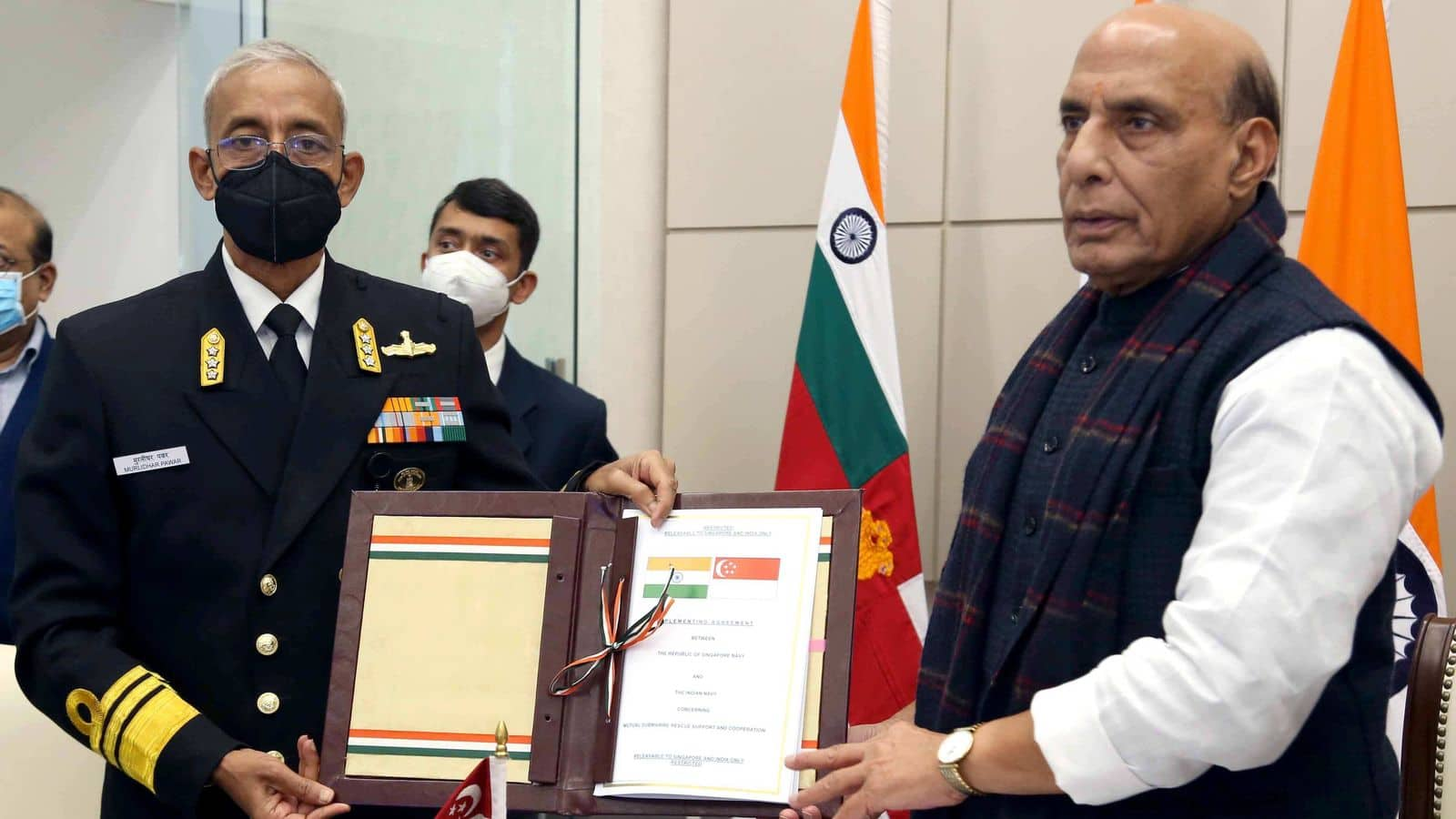
Defence ministers of India and Singapore on Wednesday held a dialogue virtually wherein the navies of the two countries signed an implementing agreement on submarine rescue support and cooperation, according to an official statement.

Rajnath Singh and his Singaporean counterpart Ng Eng Hen conveyed their full support towards early conclusion of agreements to "facilitate conduct of live firings and to establish reciprocal arrangements for the cross-attendance of military courses", said the joint statement issued after the fifth Defence Ministers' Dialogue.

"Both ministers were pleased to witness the signing of the implementing agreement on submarine rescue support and cooperation between the two navies," it noted.

After the dialogue, Singh said on Twitter that it was a productive meeting with Hen and India is fortunate to have a defence partner like Singapore.

"Today's interaction will benefit both countries on many bilateral issues that are being pursued to further strengthen our special relationship," Singh said.

In November last year, the navies of the two countries conducted the 27th edition of maritime bilateral exercise SIMBEX and participated in the second editions of maritime trilateral exercise SITMEX with Thailand's Navy.

The joint statement issued after the fifth Defence Ministers' Dialogue on Wednesday stated that defence and security engagements between the two countries have broadened significantly in scale and scope across all three services of the armed forces, defence industry and technology.

"Both countries have also found common ground on multilateral fora and engagements... The cyber agencies of both armed forces have also stepped up engagements," according to the statement.

During the dialogue, both ministers exchanged views on the impact of the COVID-19 pandemic on the defence and security engagements, including the best practices adopted by their armed forces.

According to the statement, Singh conveyed gratitude to the Singapore armed forces for their role in supporting foreign workers, many of whom were Indian nationals, at the peak of pandemic.

Hen also complimented India's successes in bringing down the overall number of COVID-infected persons despite challenges of scale in terms of geography and population, the statement said.

"Both ministers were committed to further enhance bilateral defence ties between India and Singapore and supported multilateral initiatives to promote lasting peace and stability in the region," it added. PTI DSP NSD NSD
 

India, Indonesia target $50-billion in bilateral trade over next six years​

India and Indonesia have set an ambitious $50-billion target for bilateral trade over the next six years, said Agus P. Saptono, Consul General of the Republic of Indonesia, Mumbai.

Addressing a FICCI business delegation comprising mainly spices exporters and traders at Kochi, he said Indonesia has emerged as the second largest trading partner of India in the ASEAN region. It is an important market for Indian spice buyers and the main imported raw materials for value-add and re-export are cloves, pepper, cassia, ginger, turmeric, cardamom and spice oils. India is also a key importer of spices from Indonesia, he added.


Deepak L Aswani, Co-Chair, FICCI Kerala State Council said: “Kerala, the spice capital of India, has over 100 established organisations producing spices and exporting them to various destinations. More companies are engaged in import of spices raw materials and their value addition in spice blends, processed foods and for export or use in the domestic market”.

The meeting also discussed various issues connected with spices export and import between India and Indonesia and suggested steps to enhance business and co-operation between both the sides.
 

India exempts safeguard duty on Indonesia's isopropyl alcohol: govt​

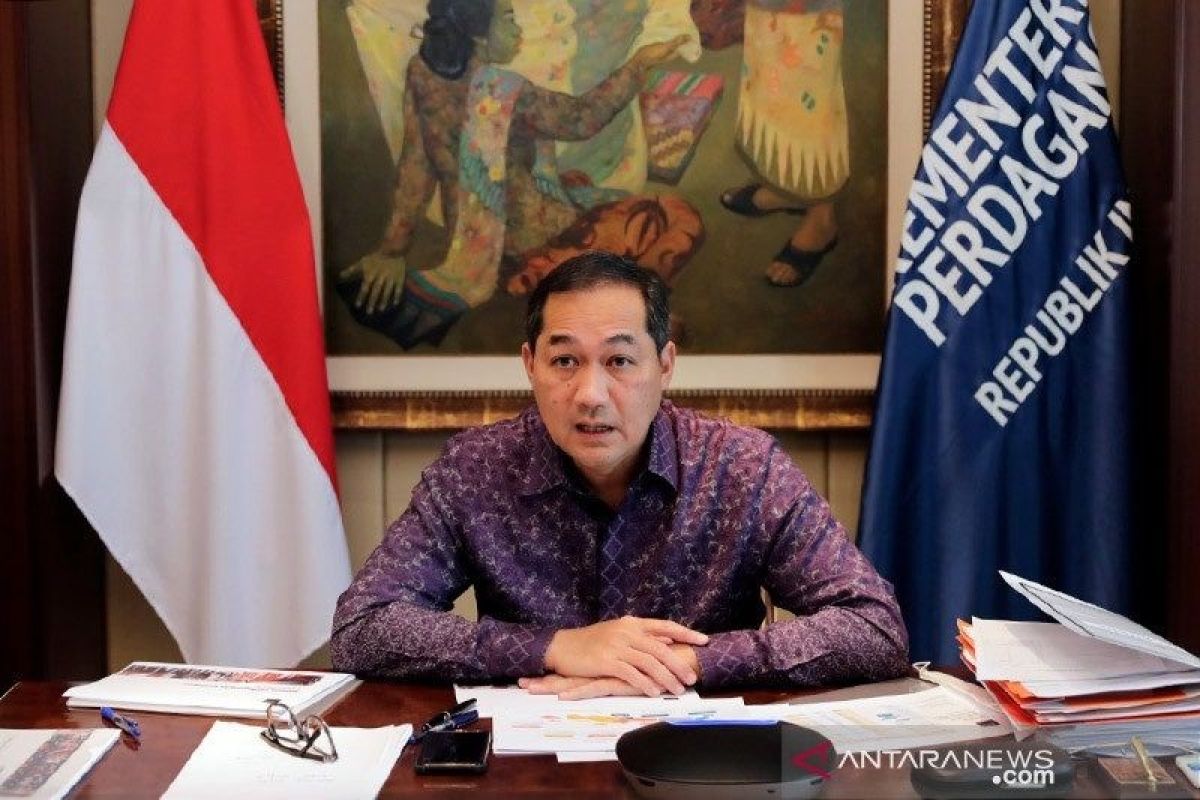
Jakarta (ANTARA) - Trade Minister Muhammad Lutfi has welcomed India’s decision to not impose safeguard duty on Indonesia’s isopropyl alcohol.

"During the COVID-19 pandemic, we still receive good news that Indonesian isopropyl alcohol is exempt from safeguard duties in India. Surely, we must capitalize on it as appropriately as possible to increase national exports,” the minister noted in a written statement released on Tuesday.

The Indian Directorate General of Trade Remedies (DGTR) arrived at the decision to exempt Indonesian isopropyl alcohol from safeguard duty after concluding its final investigation on September 30, 2021. The result of the investigation was contained in a document.

According to the document, isopropyl alcohol imported from developing countries, including Indonesia, whose market share is below three percent, is exempt from safeguard duty.

Isopropyl alcohol, also known as isopropanol, or 2-propanol, is a colorless, inflammable chemical compound, with a sharp musty odor. Isopropyl alcohol is used for different purposes, both as an end product or intermediate product.

It was reported earlier that the increase in India’s isopropyl alcohol imports had caused losses or threat of losses to the domestic industry.

The Directorate General of Trade Remedies arrived at the conclusion that quantitative restrictions were deemed necessary to protect the domestic industry from suffering losses.

“Indonesia did not contribute to the increase in India’s isopropyl alcohol imports that prompt the initiative to conduct a safeguard investigation, so Indonesian isopropyl alcohol can continue to compete in the Indian market,” acting Director General of Foreign Trade at the Trade Ministry Indrasari Wisnu Wardhana stated.

According to Statistics Indonesia (BPS), export markets for Indonesian isopropyl alcohol are Thailand, Vietnam, Hong Kong, India, and Singapore.

During the January-August 2021 period, Indonesia’s isopropyl alcohol exports plunged 98.08 percent from the corresponding period last year. In 2020, India imported 8,320 kilograms of isopropyl alcohol from Indonesia, an increase of 1,633 percent from the previous year.
 

India donates medicines, supplies to Baguio​

BAGUIO CITY: The Indian government and the India Business Forum recently turned over to the local government here P4 million worth of medicines and medical supplies to help boost the city's efforts in containing Covid-19.

The donation, which included a TBS motorcycle, was handed over by Indian Ambassador to the Philippines Shambhu S. Kumaran and Indian Business Forum President Dileep Kumar Tiwari to city officials led by Mayor Benjamin Magalong during the regular Monday flag raising ceremony held at the city hall grounds.

Kumaran disclosed that the Indian government wants to strengthen its partnership with the Philippine government and the local governments units. He said Baguio City is being eyed as a potential investment haven by some Indian companies wanting to expand their operations to the northern part of the country.

The Indian envoy claimed that the city's "favorable" weather condition and natural attractions serve as a natural pull for foreign and local investors to consider the city for future investments.

Officers and members of the India Business Forum are in the city for a global partnership meeting with their counterparts in the Philippine Economic Zone Authority (PEZA) to explore possibilities of bringing to the city various business opportunities that will generate employment and economic activities to local residents.

Tiwari said there are Indian companies that have earlier established their business operations in the PEZA and that more companies are expected to also invest in the local economic zone to help in improving the ongoing efforts to allow the generation of jobs and increase the economic activities of people.

Among the Indian companies that are interested in expanding their operations in the city are those that are engaged in information technology and business process outsourcing.

Philippines seeks stronger ties with India​

MANILA, Philippines — The Philippines is looking to strengthen its economic ties with India through greater trade, the Department of Trade and Industry (DTI) said.

Trade Secretary Ramon Lopez said the DTI is committed to continue to work with the Federation of Indian Chambers of Commerce (Phil) Inc. (FICCI) in further enhancing Philippine-Indian trade and economic ties.

“There is still big room for opportunity for strengthened economic relations,” he said.

He noted that Indian companies in the country are mostly engaged in manufacturing, agriculture, information technology – business process management, wholesale and retail, construction services, and renewable energy.

The Philippines and India are also looking at forging a preferential trade agreement, which would help improve current trade levels in terms of value and volume.

Lopez said India was the Philippines’ top 14th trading partner, 13th export partner and 13th import supplier last year.

Data from the Philippine Statistics Authority showed Philippine exports to India reached $547.98 million, while the country’s imports from India amounted to $1.51 billion last year.

India Ambassador to the Philippines Shambhu Kumaran said India would also want to see the relationship between the two countries continue to grow.

“I am happy to say we are well on our way to building a much stronger and effective partnership, cutting across political dialogue, defense and security cooperation, economic trade and investment linkages and cultural education and people to people ties,” he said.

For his part, FICCI president Mukesh Advani vowed the group would continue to work on helping enhance ties between the two countries.

“Throughout the 70 years, FICCI has been a partner in building a stronger, more prosperous Philippines, and has championed areas such as inclusive growth, poverty alleviation. This will remain our pathway as we move forward,” he said.
 

India, Phillipines agree on having a simplified visa regime​

NEW DELHI: In a bid to expand business, tourism and student exchange, India and Phillipines have agreed that there is a need for a simplified visa regime between the two countries.

The Minister of External Affairs, Dr S Jaishankar, also sought the help of the Phillipine government to facilitate the early return of Indian medical students to the country. Phillipines is an attractive, low-cost destination for students aspiring to study medicine. There are close to 10,000 Indian students studying medicine in the Phillipines.

Dr Jaishankar and his counterpart in Phillipines Teddy Loscin Jr discussed and agreed to further work on strengthening engagement in counter-terrorism and defence and maritime security, covering defence capabilities as well as military training and capacity building.

They also agreed to make efforts to further expand economic cooperation as well as trade and investment links in a range of areas such as agriculture, infrastructure, health and pharmaceuticals, tourism, ICT, and science & technology.

India-Phillipines trade in 2018-19 has been around $2.32 billion. Exports from India to Phillipines are worth $1,743 million and imports to India from Phillipines are worth $581 million

The two countries are cooperating in emerging areas such as fintech, blue economy, renewable energy, space, cyber security and traditional medicine.

Meanwhile, Dr Jaishankar also met with the secretaries of defence, finance and agriculture.

He also interacted with the Indian community in Manila and appreciated their role in promoting friendship and bridging the gap between people of the two nations.