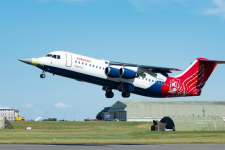
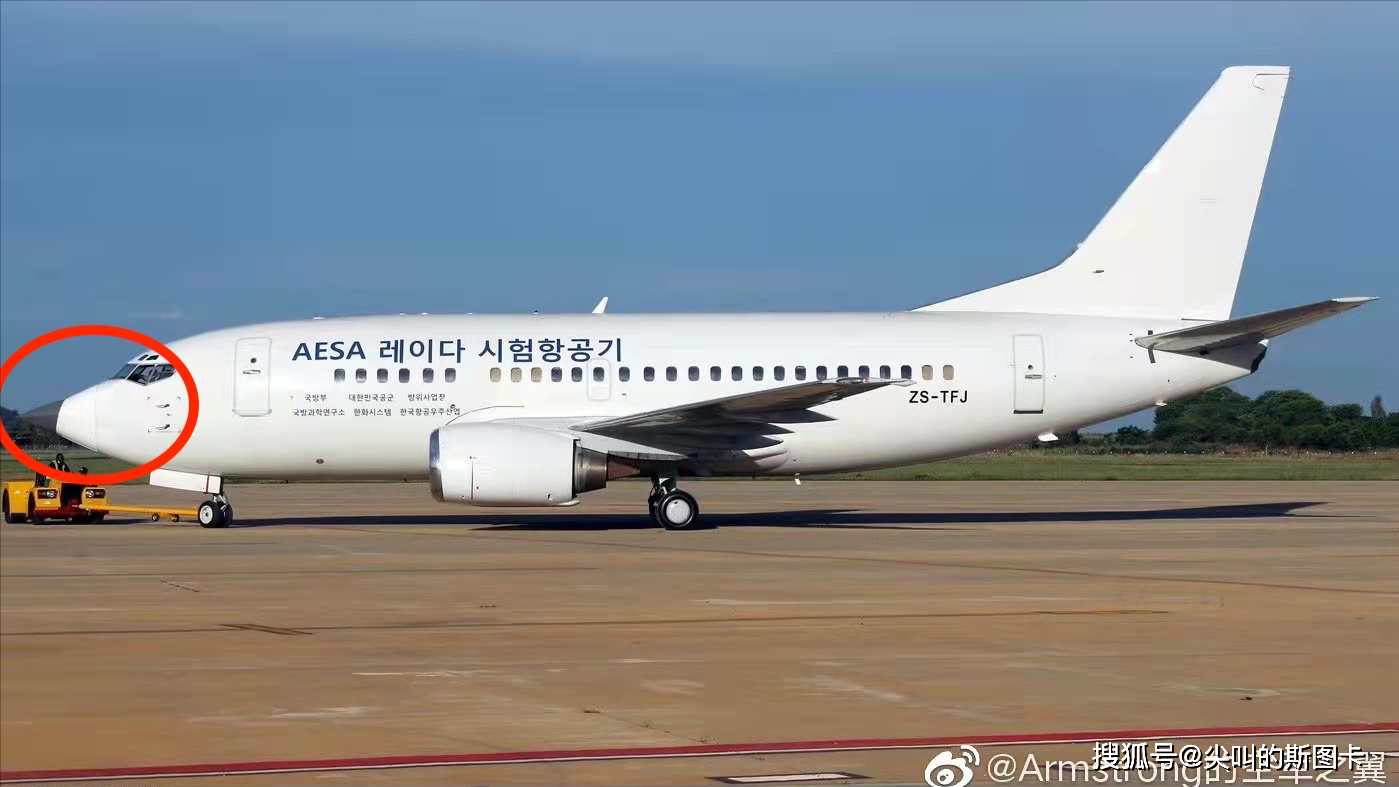
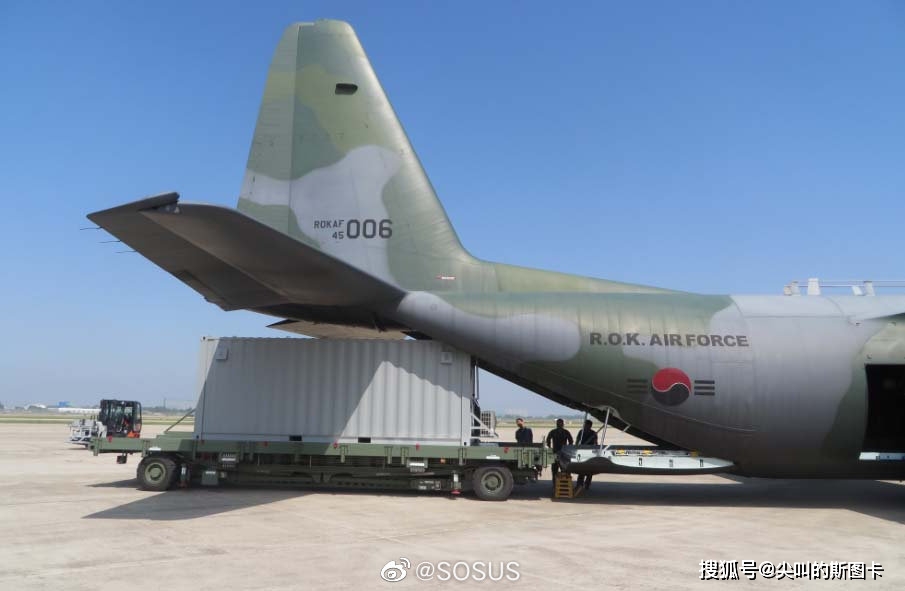
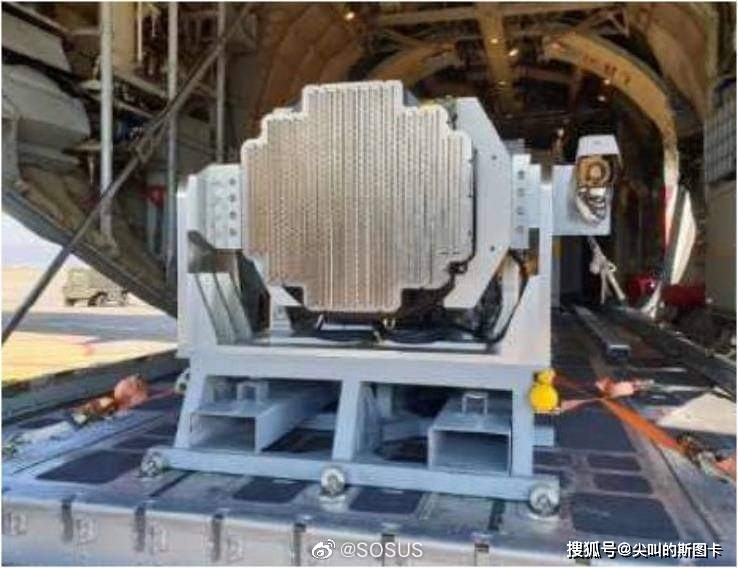
I am creating this thread specifically for discussion and updates on Avionics related test bed aircrafts from around the world with most of the focus on military avionics. Feel free to contribute
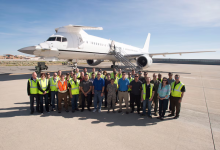
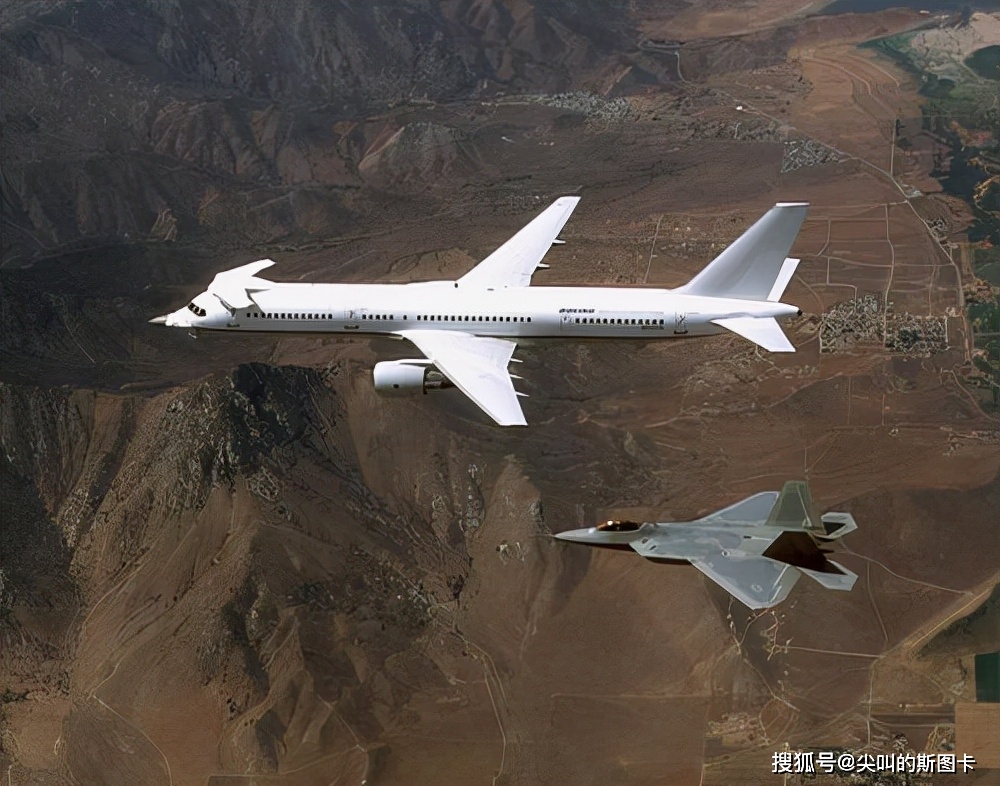
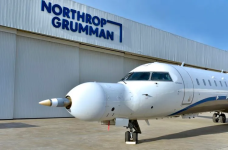
Members of the F-22 Flying Test Bed team pose for a photo in front of the highly modified Boeing 757, 3rd May 2017. The FTB routinely flies with real Raptors both at Edwards and Nellis Air Force Base, Nevada in order to gain an early look at F-22 mission software before the software is released to developmental flight test, mainly at Edwards. The FTB can fly up to 30 crewmembers. (U.S. Air Force photo by Ethan Wagner)
EDWARDS AIR FORCE BASE, Calif. --
From time to time, the F-22 Raptor Combined Test Force at the 411th Flight Test Squadron gets a visit from an old friend.
A highly modified and instrumented Boeing 757 called the F-22 Flying Test Bed is an F-22 avionics laboratory. The experimental FTB is the very first Boeing 757 ever produced and has been retrofitted in order to perform flight test of F-22 avionics and sensors in an open-air, operationally representative environment.
The FTB routinely flies with real F-22 Raptors both at Edwards and Nellis Air Force Base, Nevada in order to gain an early look at F-22 mission software before the software is released to developmental flight testers, mainly at Edwards.
The FTB visited earlier in the month to examine the F-22 Raptor program’s upgraded mission software.
“This particular FTB deployment provided an excellent training opportunity for the FTB test team, as well as members of the F-22 CTF, while reducing risk to the F-22 3.2B (software) program by allowing us to have an early look at some prototype mission software planned for the final 3.2B software delivery,” said Rachel Kitzmann, Boeing Agile Integration Laboratory F-22 lead test director. “Our F-22 mission equipment is completely segregated from the 757 flight controls, so we can fly with prototype software that has not gone through a formal Equipment Operational Flight Clearance process. This allows us to have an early look at developmental software and problem fixes prior to release to the 411 Flight Test Squadron here at Edwards.”
Kitzmann added the FTB has the ability to change software loads real-time during flight, which allows the test team to test multiple configurations during early developmental testing. The fact that all of the mission equipment is housed in a 757 means that Boeing test engineers, F-22 test pilots and other F-22 customer representatives can be present on board and witness the flight test in real time. Additionally, the 757 can fly approximately a seven-hour sortie, which is far longer than a typical F-22 flight test mission, she said.
“The FTB saves money and reduces the F-22 modernization timeline,” said Kevin Sullivan, 411th FLTS F-22 avionics lead. “It provides risk reduction because it’s easier to fly, fix, fly more quickly instead of having software certified and loaded into an actual F-22. It allows us to look at the avionics software in an F-22 representative hardware and software environment and is capable of acting like an F-22, which can integrate with our F-22s here during test sorties.”
When not in flight, the FTB is connected to Boeing’s Agile Integration Ground Laboratory, which allows the company to add additional hardware, instrumentation and test equipment in order to perform system-level integration and development testing of the F-22 mission systems. The F-22 FTB has a unique wing above the flight deck that houses the same sensors as on a Raptor.
More on F-22 Catfish
Kitzmann said this last mission to Edwards was the final flight the FTB took out of Boeing Field in Washington where it had been based since 1999. After leaving Edwards May 5, the FTB headed to its new home in St. Louis, Missouri.
The Catfish’s current job in support of the F-22’s sensor suite is reflected in the Raptor nose grafted onto the forward fuselage, containing the AN/APG-77 active electronically scanned array (AESA) radar. A swept-wing section atop the flight deck houses conformal antennas for the Raptor’s AN/ALR-94 electronic support measures suite.
Less obvious is the Catfish’s use as a test platform for the F-22’s electronic warfare suite, low probability of intercept datalink, AN/AAR-56 IR/UV missile approach warning system, secure communications systems, and various other tactical subsystems.
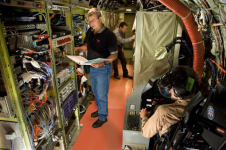
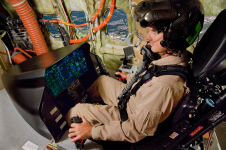
Inside the cabin of the 757 are computer workstations, server racks, and even a replica of the F-22 cockpit, with primary and secondary displays, as well as a throttle and stick, providing the highest level of realism for testing, including recreating the kinds of tactical and environmental scenarios that F-22 pilots would be exposed to in real life. Altogether, there is room on the aircraft for up to 30 software engineers and technicians to evaluate the avionics during testing.

 www.twz.com
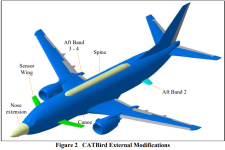
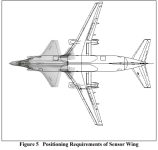
Source: Design of the Lockheed Martin Cooperative AvionicsTestbed, AIAA 2008-157
Robert Lind, James H. Hogue and Ian J. Gilchrist
more images at <title>F-35 CATBird | Code One Magazine</title>

 simpleflying.com
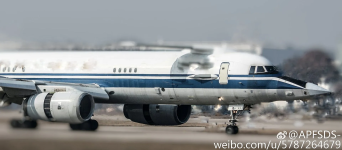
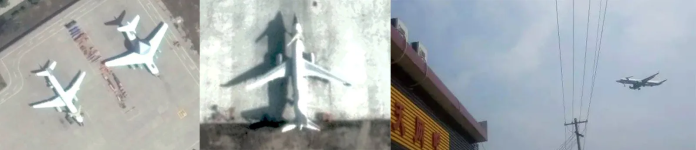
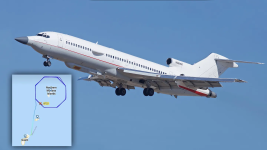
China’s J-20 avionics testbed seen at the Yanglian flight test center (Yan liang, in Xi’an, covers an area of 244.4km2 and has a population of 240000. Xi’an Aircraft Industry (Group) Company, Ltd)
Updated Jul 5, 2020 6:56 PM EDT
China’s heavy stealth fighter-interceptor, the J-20, has rapidly matured over the last half decade, with some reports stating the jet may have reached limited initial operating capability. That term can mean very different things in the Russian and Chinese aerospace and defense communities than it does to their western counterparts. Fielding hardware early on, with minimal capabilities, and developing it in a spiral manner over time by using the operational community as a kind of testing ground, invites higher risk and less than fully vetted capabilities to front-line units. Yet it also offers more immediate results and can be strategically important not just in terms of fielded new capabilities, but also in terms of “optics” both for internal and external consumption.
Regardless of its operational state, the J-20 concept represents a potential threat as it was designed—along with other emerging Chinese aerial weaponry—to exploit weaknesses in American forces’ order of battle and combat doctrine. But the jet also represents a massive leap in Chinese aerospace and manufacturing capabilities and still holds many mysteries—maybe the most pressing among them is the maturity and intended abilities of its integrated avionics suite.
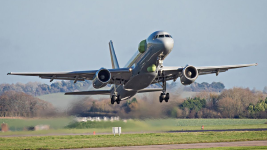
Now an image has emerged that shows how the Chinese are grabbing yet another play right out of modern western fighter development—using a surrogate airliner to act as a flying integrated avionics testbed for their new 5th generation fighter
 www.twz.com
Apparently transferred to PLAAF in 2011
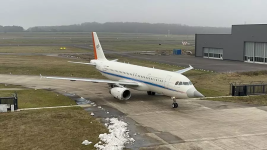
There is a rumor on Chinese military forums that the single Tu-204-120CE operated by Air China Cargo has been transferred to the PLAAF and will get tail number 769. The aircraft was stored at Tainjin airport for a few years.
 Tu-214LMK flying laboratory aircraft (registration number 64507) for Tu-160 supersonic bomber and apparently in future for Su-57 Felon also
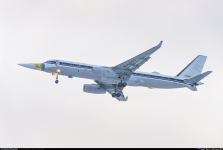
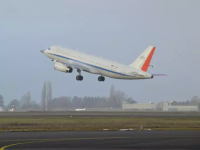
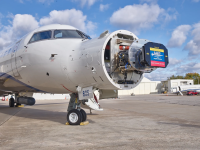
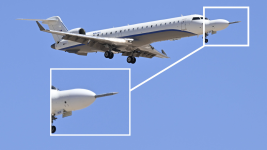
On December 28, 2018, the Tu-214LMK flying laboratory aircraft (registration number 64507) made its first flight after conversion in Kazan. It was converted at the Kazan Aviation Plant (KAZ) named after S.P. Gorbunov, a branch of PJSC Tupolev, from a Tu-214 passenger aircraft (factory number 42305007, serial number 507, registration number RA-64507) built in 2003. The aircraft was converted into a flying laboratory of the LMK-214 multifunctional flight modeling complex of PJSC Tupolev for testing the new radar system of the modernized Tu-160M2 strategic bomber (and in the future - PAK DA), and is therefore equipped with a corresponding nose cone. The Tu-214LMK flying laboratory aircraft of the LMK-214 multifunctional flight modeling complex (factory number 42305007, serial number 507, registration number 64507) belonging to PJSC Tupolev during its first flight after completion of its conversion at the Kazan Aviation Plant (KAZ) named after S.P. Gorbunov, a branch of PJSC Tupolev. Kazan, 12/28/2018 (c) Dmitry Romashko / russianplanes.net
This aircraft was built at KAZ (KAPO) and, being owned by Financial Leasing Company (FLC), was operated in 2004-2008 under financial lease by Dalavia - Far Eastern Airlines (Khabarovsk), which went bankrupt. In 2009-2010, it was operated for some time by Aerostars (Domodedovo). After Aerostars went bankrupt, the aircraft's operation was suspended, and since December 2010, this aircraft has been in storage at KAZ. In June 2014, it was purchased by PJSC Tupolev from FLC, which also went bankrupt, for the purpose of converting the LMK-214 multifunctional flight modeling complex into a Tu-214LMK flying laboratory as part of the Tu-160M2 program. Actual conversion work began at KAZ in 2015.
Let us recall that in early 2014, the documentation of PJSC Tupolev regarding the procurement of "Reconstruction and technical re-equipment of the test base (multifunctional flight modeling complex LMK-214), OAO Tupolev of the city of Kazan, Republic of Tatarstan" was published on the state procurement portal, implemented within the framework of the Federal Target Program for the Development of Enterprises of the Defense Industrial Complex in 2011-2020. Completion of the work was scheduled for the end of 2017. The purchase cost is 1.70925 billion rubles, including 600 million rubles allocated for the purchase of a used Tu-214 aircraft of a standard design, the technical condition of which will ensure a remaining flight time of 3,000 flight hours or 600 landings (the remaining operating life of the RA-64507 aircraft is 3,353 hours or 2,213 landings).
According to the official commentary of PAO Tupolev on this project, "the goal of the work on the Tu-214LMK is to create a flying laboratory for testing in flight the onboard equipment complexes of the Tu-160 and, in the future, the PAK DA.
Source: Начаты летные испытания летающей лаборатории Ту-214ЛМК
- Boeing 757 F-22's Catfish
Members of the F-22 Flying Test Bed team pose for a photo in front of the highly modified Boeing 757, 3rd May 2017. The FTB routinely flies with real Raptors both at Edwards and Nellis Air Force Base, Nevada in order to gain an early look at F-22 mission software before the software is released to developmental flight test, mainly at Edwards. The FTB can fly up to 30 crewmembers. (U.S. Air Force photo by Ethan Wagner)
EDWARDS AIR FORCE BASE, Calif. --
From time to time, the F-22 Raptor Combined Test Force at the 411th Flight Test Squadron gets a visit from an old friend.
A highly modified and instrumented Boeing 757 called the F-22 Flying Test Bed is an F-22 avionics laboratory. The experimental FTB is the very first Boeing 757 ever produced and has been retrofitted in order to perform flight test of F-22 avionics and sensors in an open-air, operationally representative environment.
The FTB routinely flies with real F-22 Raptors both at Edwards and Nellis Air Force Base, Nevada in order to gain an early look at F-22 mission software before the software is released to developmental flight testers, mainly at Edwards.
The FTB visited earlier in the month to examine the F-22 Raptor program’s upgraded mission software.
“This particular FTB deployment provided an excellent training opportunity for the FTB test team, as well as members of the F-22 CTF, while reducing risk to the F-22 3.2B (software) program by allowing us to have an early look at some prototype mission software planned for the final 3.2B software delivery,” said Rachel Kitzmann, Boeing Agile Integration Laboratory F-22 lead test director. “Our F-22 mission equipment is completely segregated from the 757 flight controls, so we can fly with prototype software that has not gone through a formal Equipment Operational Flight Clearance process. This allows us to have an early look at developmental software and problem fixes prior to release to the 411 Flight Test Squadron here at Edwards.”
Kitzmann added the FTB has the ability to change software loads real-time during flight, which allows the test team to test multiple configurations during early developmental testing. The fact that all of the mission equipment is housed in a 757 means that Boeing test engineers, F-22 test pilots and other F-22 customer representatives can be present on board and witness the flight test in real time. Additionally, the 757 can fly approximately a seven-hour sortie, which is far longer than a typical F-22 flight test mission, she said.
“The FTB saves money and reduces the F-22 modernization timeline,” said Kevin Sullivan, 411th FLTS F-22 avionics lead. “It provides risk reduction because it’s easier to fly, fix, fly more quickly instead of having software certified and loaded into an actual F-22. It allows us to look at the avionics software in an F-22 representative hardware and software environment and is capable of acting like an F-22, which can integrate with our F-22s here during test sorties.”
When not in flight, the FTB is connected to Boeing’s Agile Integration Ground Laboratory, which allows the company to add additional hardware, instrumentation and test equipment in order to perform system-level integration and development testing of the F-22 mission systems. The F-22 FTB has a unique wing above the flight deck that houses the same sensors as on a Raptor.
More on F-22 Catfish
Kitzmann said this last mission to Edwards was the final flight the FTB took out of Boeing Field in Washington where it had been based since 1999. After leaving Edwards May 5, the FTB headed to its new home in St. Louis, Missouri.
The Catfish’s current job in support of the F-22’s sensor suite is reflected in the Raptor nose grafted onto the forward fuselage, containing the AN/APG-77 active electronically scanned array (AESA) radar. A swept-wing section atop the flight deck houses conformal antennas for the Raptor’s AN/ALR-94 electronic support measures suite.
Less obvious is the Catfish’s use as a test platform for the F-22’s electronic warfare suite, low probability of intercept datalink, AN/AAR-56 IR/UV missile approach warning system, secure communications systems, and various other tactical subsystems.
Inside the cabin of the 757 are computer workstations, server racks, and even a replica of the F-22 cockpit, with primary and secondary displays, as well as a throttle and stick, providing the highest level of realism for testing, including recreating the kinds of tactical and environmental scenarios that F-22 pilots would be exposed to in real life. Altogether, there is room on the aircraft for up to 30 software engineers and technicians to evaluate the avionics during testing.
Boeing’s 757 ‘Catfish’ Flying F-22 Avionics Testbed Emerges With Retro Look
Retro colors recall that the famous Catfish began life as the very first of Boeing’s 757 narrow-body airliners. Retro colors recall that the famous Catfish began life as the very first of Boeing’s 757 narrow-body airliners.
www.twz.com
- Boeing 737-330 F-35's Cooperative Avionics Test Bed; CATBIRD
Source: Design of the Lockheed Martin Cooperative AvionicsTestbed, AIAA 2008-157
Robert Lind, James H. Hogue and Ian J. Gilchrist
more images at <title>F-35 CATBird | Code One Magazine</title>
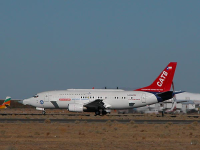
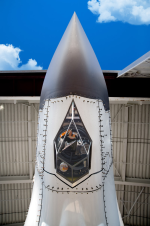
A Look At Lockheed Martin's 'CATBird' Boeing 737 Testbed
The CATBird performed its first flight in January 2007.
simpleflying.com
- Tupolev Tu-204-120CE for J-20's Catfish
China’s J-20 avionics testbed seen at the Yanglian flight test center (Yan liang, in Xi’an, covers an area of 244.4km2 and has a population of 240000. Xi’an Aircraft Industry (Group) Company, Ltd)
China’s Own “Catfish” Flying Avionics Testbed For The J-20 Fighter Emerges
Tyler RogowayUpdated Jul 5, 2020 6:56 PM EDT
China’s heavy stealth fighter-interceptor, the J-20, has rapidly matured over the last half decade, with some reports stating the jet may have reached limited initial operating capability. That term can mean very different things in the Russian and Chinese aerospace and defense communities than it does to their western counterparts. Fielding hardware early on, with minimal capabilities, and developing it in a spiral manner over time by using the operational community as a kind of testing ground, invites higher risk and less than fully vetted capabilities to front-line units. Yet it also offers more immediate results and can be strategically important not just in terms of fielded new capabilities, but also in terms of “optics” both for internal and external consumption.
Regardless of its operational state, the J-20 concept represents a potential threat as it was designed—along with other emerging Chinese aerial weaponry—to exploit weaknesses in American forces’ order of battle and combat doctrine. But the jet also represents a massive leap in Chinese aerospace and manufacturing capabilities and still holds many mysteries—maybe the most pressing among them is the maturity and intended abilities of its integrated avionics suite.
Now an image has emerged that shows how the Chinese are grabbing yet another play right out of modern western fighter development—using a surrogate airliner to act as a flying integrated avionics testbed for their new 5th generation fighter
China’s Own “Catfish” Flying Avionics Testbed For The J-20 Fighter Emerges
Lifting a play from western 5th generation fighter development methodology, China is facing its own challenges with 5th-gen fighter sensor fusion in the air.
www.twz.com
Apparently transferred to PLAAF in 2011
China’s Own “Catfish” Flying Avionics Testbed For The J-20 Fighter Emerges
Posted on May 25, 2011 by alert5There is a rumor on Chinese military forums that the single Tu-204-120CE operated by Air China Cargo has been transferred to the PLAAF and will get tail number 769. The aircraft was stored at Tainjin airport for a few years.
Air China Cargo Tu-204C transferred to PLAAF? - Alert 5
There is a rumor on Chinese military forums that the single Tu-204-120CE operated by Air China Cargo has been transferred to the PLAAF and will get tail number 769. The aircraft was stored at Tainjin airport for a few years. Related posts (Automatically Generated): Japan to deploy more fighters...
alert5.com
On December 28, 2018, the Tu-214LMK flying laboratory aircraft (registration number 64507) made its first flight after conversion in Kazan. It was converted at the Kazan Aviation Plant (KAZ) named after S.P. Gorbunov, a branch of PJSC Tupolev, from a Tu-214 passenger aircraft (factory number 42305007, serial number 507, registration number RA-64507) built in 2003. The aircraft was converted into a flying laboratory of the LMK-214 multifunctional flight modeling complex of PJSC Tupolev for testing the new radar system of the modernized Tu-160M2 strategic bomber (and in the future - PAK DA), and is therefore equipped with a corresponding nose cone. The Tu-214LMK flying laboratory aircraft of the LMK-214 multifunctional flight modeling complex (factory number 42305007, serial number 507, registration number 64507) belonging to PJSC Tupolev during its first flight after completion of its conversion at the Kazan Aviation Plant (KAZ) named after S.P. Gorbunov, a branch of PJSC Tupolev. Kazan, 12/28/2018 (c) Dmitry Romashko / russianplanes.net
This aircraft was built at KAZ (KAPO) and, being owned by Financial Leasing Company (FLC), was operated in 2004-2008 under financial lease by Dalavia - Far Eastern Airlines (Khabarovsk), which went bankrupt. In 2009-2010, it was operated for some time by Aerostars (Domodedovo). After Aerostars went bankrupt, the aircraft's operation was suspended, and since December 2010, this aircraft has been in storage at KAZ. In June 2014, it was purchased by PJSC Tupolev from FLC, which also went bankrupt, for the purpose of converting the LMK-214 multifunctional flight modeling complex into a Tu-214LMK flying laboratory as part of the Tu-160M2 program. Actual conversion work began at KAZ in 2015.
Let us recall that in early 2014, the documentation of PJSC Tupolev regarding the procurement of "Reconstruction and technical re-equipment of the test base (multifunctional flight modeling complex LMK-214), OAO Tupolev of the city of Kazan, Republic of Tatarstan" was published on the state procurement portal, implemented within the framework of the Federal Target Program for the Development of Enterprises of the Defense Industrial Complex in 2011-2020. Completion of the work was scheduled for the end of 2017. The purchase cost is 1.70925 billion rubles, including 600 million rubles allocated for the purchase of a used Tu-214 aircraft of a standard design, the technical condition of which will ensure a remaining flight time of 3,000 flight hours or 600 landings (the remaining operating life of the RA-64507 aircraft is 3,353 hours or 2,213 landings).
According to the official commentary of PAO Tupolev on this project, "the goal of the work on the Tu-214LMK is to create a flying laboratory for testing in flight the onboard equipment complexes of the Tu-160 and, in the future, the PAK DA.
Source: Начаты летные испытания летающей лаборатории Ту-214ЛМК
In the Footsteps of "Buratino": How the Strategic Tu-160 Was "Crossed" with the Passenger Tu-214 in Kazan
(Translated from Russian to English with Google Translate)The fragments of the Tu-214 serial passenger aircraft program, once promoted by the Tatarstan government but pushed to the sidelines, continue to work for the benefit of the aviation industry. The Kazan aircraft plant is preparing an unusual aircraft for the first flight - an airliner of the once bankrupt airline Dalavia with the nose of a Tu-160. Why is this necessary and what does the strange decisions of Dmitry Medvedev's government have to do with it, a correspondent of BUSINESS Online found out.
CHEAP AND CHEERFUL?
By the end of the year, the Kazan Aviation Plant named after Gorbunov, a branch of PAO Tupolev (KAZ), will take the Tu-214 with the nose of the Tu-160 to its first flight, sources in the aviation industry told BUSINESS Online. What a miracle! We asked Tupolev and KAZ to comment on this information, but received no response.
Some wits might say that the production responded to the "order" of Russian President Vladimir Putin , given during his visit to the Kazan aircraft plant and inspection of the Tu-160: the head of state then said that it was possible to think about passenger supersonic aircraft. The bacchanalia that arose in the media then and has not died down to this day, with statements about redesigning bombers for sheikhs, the already ongoing design of a business supersonic aircraft with variable-sweep wings, and so on, of course, has nothing to do with reality. However, all this also has nothing to do with the program in question. It is purely utilitarian and, in all likelihood, solves two problems: to work out elements of the Tu-160M2 program and to create a simulator aircraft for future "strategist" pilots.
Apparently, we are dealing with a program, information about which appeared on procurement portals in early 2014 — “Reconstruction and technical re-equipment of the test base (multifunctional flight modeling complex LMK-214), JSC Tupolev of the city of Kazan, Republic of Tatarstan” (within the framework of the Federal Target Program for the development of enterprises of the military-industrial complex in 2011-2020). The cost was also indicated (as far as can be judged, for one stage) — 1 billion 709 million 250 thousand rubles. The work was supposed to be completed at the end of 2017. Among other things, a used Tu-214 of a standard design was to be purchased for 600 million, the technical condition of which would ensure a flight time of 3 thousand flight hours or 600 landings. Presumably, this aircraft was a Tupolev 64507, built in 2003, which once flew for Dalavia and, after its bankruptcy in 2008, for Aerostars (it lost its operator certificate in 2011).
"Used Tu-214s can be used to train pilots - they have not yet flown their service life. Besides, civil aviation with its strict certification requirements is one thing, and military aviation, where there are none, is another," Roman Gusarov, editor-in-chief of the Aviarunet portal, noted in an interview with BUSINESS Online . "I assume that this will be something like a simulator. Not to learn how to fly a Tu-160 (after all, these machines have different flight dynamics, it's like learning to drive a bus in a passenger car), but to get used to the cockpit, control system, procedures. It is even quite possible that this is a replacement for a ground simulator, which could be comparable in price to a real passenger plane. And then, the data that needs to be entered into the simulator's brain is closed, and it needs to be transferred to some developer company. Will it leak? And Western component suppliers need to be attracted. Plus, a simulator is usually developed with the understanding that it will be replicated in dozens, but here, most likely, one is needed, or at most several. In short, the price would be astronomical. But at the same time, the simulator is closer to a real aircraft than such a "flying desk", since it can simulate the dynamics of a specific type of flight - whatever program you input, it will give you. And in this case, apparently, they decided to do it cheap and cheerful."
FROM "FLYING DESKS" TO VIP LOUNGES
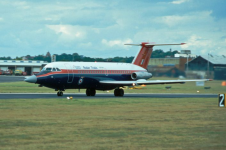
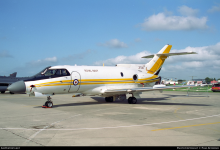
This had already happened in the Soviet Union. In the late 1970s, when the country was developing the long-range Tu-22M3 and strategic Tu-160 programs, the question arose: how to train their crews in practice? Therefore, the Tupolev Design Bureau developed a training aircraft with some of the aerobatic properties inherent in combat aircraft. The mass-produced passenger Tu-134B was taken as a basis - it more than others conventionally corresponded to the behavior of heavy combat aircraft in the air, plus by that time the military had already used the 134th to train navigators (Tu-134Sh).
The Tu-134UBL (training and combat for pilots - this is the name the aircraft received) had in common with the supersonic "Tuskas" radio communication and navigation systems, part of the cockpit instrumentation and a new... nose - similar to the Tu-22M3 and Tu-160. This was required to create an authentic view from the cockpit for the cadets. Because of this, the aircraft became 4.6 meters longer. But the Tu-134 retained its main characteristics: cruising speed - 890 km / h, range - 2300 km, ceiling - 11,800 meters.
In 1981–1984, the Kharkov aircraft plant produced 90 Tu-134UBLs. The program had two objectives: the first was to train pilots; the second was to test various systems, such as radar stations for the Tu-95MS and Tu-22M3. It should be noted that not a single Tu-134UBL was lost in a crash, which is not quite typical for a “flying desk” — it was not for nothing that the aircraft was loved by military pilots, and therefore the mocking nickname for the aircraft, “Buratino,” which was first given to the masses, did not catch on.
In the late 90s, with the onset of hard times, the Tu-134UBL began to be decommissioned (about 20 UBLs appeared in open lists of released military real estate) and converted into passenger aircraft, including VIP versions. And what? The big-nosed Tu-134 looks downright dandyishly impressive. For example, the Tu-134UBL in pseudo-Aeroflot paint and with its own name "Count Muravyov-Amursky" is used to fly the Presidential Plenipotentiary Envoy to the Far East (among others, Kamil Iskhakov flew on it ). It was transferred to transport senior civilian officials of the 11th Army of the Air Force and Air Defense. The Air Force also began to use the machine for official flights of personnel.
The next blow to UBL was the crash of a passenger Tu-134 in Petrozavodsk on June 20, 2011. At that time, Russian President Dmitry Medvedev ordered preparations to decommission the Tu-134 by 2012. Following the cessation of civil airliners, military modifications were also stopped, “with the exception of flights related to combat training.” But, as Izvestia wrote , despite this reservation, in 2012 the disgraced “Tushkas” hardly flew, the program for training and advanced training of navigators and flight personnel of long-range aviation stalled. Therefore, a year later, the military proposed to return the Tu-134 to service for training pilots and navigators, which was done. However, there are still few of these machines left, today there are hardly even fifteen of them.
Around the same time, the then Minister of Defense, Anatoly Serdyukov, ordered the preparation of tactical and technical specifications for the aircraft to replace the Tu-134UBL - it was supposed to be either the Tu-204 or Tu-214. As is now clear, the choice was made on the latter.
TENDERNESS TO THE ROARING BEAST
Let us add that the appearance of information about the start of the LMK-214 program immediately followed the statements of the military that 30 Tu-22M3 would undergo deep modernization, and preceded the news that Kazan would resume production of the Tu-160. Let us recall that the Tu-160 assembled from Soviet stockpiles was rolled out in January of this year, and at the same time, in the presence of Vladimir Putin, a contract was signed for 10 new "White Swans". And we could see the rollout of the Tu-22M3M in August of this year.
It should be noted that the high significance of the work on LMK-214 was noted. In December 2017, the program director - chief designer of the complex Valery Benderov was awarded the title of "Honored Designer of the Russian Federation" by decree of the President of the Russian Federation. The official statement said that earlier, Valery Vladimirovich, as vice president of Tupolev, supervised the work on the rearmament of long-range and strategic aviation with new high-precision weapons, on the modernization of long-range aviation systems.
According to Andrey Frolov , editor-in-chief of the magazine “Eksport Vooruzheniy” , we are dealing with a dual-use aircraft. “Firstly, we can assume that the aircraft will be used to train pilots,” he told “BUSINESS Online”. “Considering the known data on the number of Tu-22M3M and Tu-160M2, there will be only a few training aircraft, which would logically be made from used Tu-214 and Tu-204 – there are many of these aircraft on the market… Secondly, it is possible that the aircraft is also intended for testing equipment. In this case, it is also logical that the nose is being changed: as we remember, almost all Soviet flying laboratories, on which, for example, radars were tested, were ‘long-nosed’.”
An interesting point: on August 16, during the rollout of the Tu-22M3M, a Tu-134UBL was parked on the outskirts of the KAZ airfield. Of course, one could assume that it was the aircraft of the Aerospace Forces leadership that had arrived for the celebration, but, in all likelihood, it had already been at the plant for some time: the most recent satellite images on Google Maps show that five L-39s were parked nearby, which had arrived in Kazan for the “I Choose the Sky” celebration on August 10. Perhaps the Tu-134UBL was brought in as a sample. “A full-scale stand so that assemblers could understand how our ancestors did it,” Frolov suggested.
Ikar Airlines pilot Alexander Smirnov flew the Tu-134UBL in 1992–1998, first as a cadet at the Tambov Higher Military Aviation School of Pilots (TVVAUL), then as a co-pilot and instructor at the Ryazan Long-Range Aviation Flight Crew Training Center. Incidentally, it was the Tambov School's Tu-134UBL that "played the role" of the Tu-22 bomber in the famous film "Tenderness for the Roaring Beast," which was filmed, by the way, in 1982, when the UBLs were just starting to be produced — incredible for the level of secrecy at the time.
“We trained to be Tu-22M3 pilots and started flying L-29s, and the Tu-134UBL was a transitional type, a graduation aircraft,” Smirnov told BUSINESS Online. “Yes, visually the nose was similar to the Tu-22M3, and I think it’s all about imitation, because the Tu-134UBL weighs different from the missile carrier, and has different speeds, and different cockpit instruments. What’s convenient with such a nose is that you can always see its surface, which means it’s easier to navigate during takeoff… We had at least 30 aircraft. Imagine a classic military airfield and a UBL parking lot almost the entire length of the runway. In the good Soviet years, instructors flew 600 hours a year, which is comparable to civil aviation, but after 1991 the flight time dropped. But I was still very glad that I got to the training center: back then, the Tu-22M3 hardly flew (my classmates said that they only made four circles a year), and we flew 70-80 hours, which was considered progress... It was a great machine. I don't know a pilot who would say anything bad about it. It's a pity that most of the UBLs are gone. But apparently, history is still developing in a spiral - now there will be a Tu-214."
P.S. Today, the press service of PAO Tupolev explained the purpose of creating the new aircraft in a letter to BUSINESS Online: "The Tu-134UBL is primarily intended for training cadets to fly the Tu-22M3 and Tu-160, and the Tu-214LMK is an integral part of the testing system for experimental equipment installed on modernized and newly developed aircraft. The purpose of the work on the Tu-214LMK is to create a flying laboratory for testing in flight the onboard equipment systems of the Tu-160 and, in the future, the PAK DA."