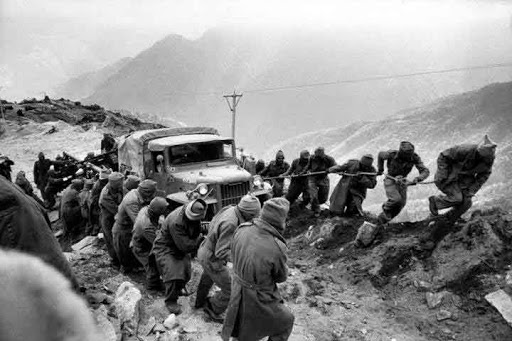
Sometimes back I was wondering what ails the Indian fighting muscle and will -- or lack there of. The obvious answer was Dabba-wallas of south bloc. There were quips that its not just Babus but military also has it equal share of NPAs. This article by Guruswamy gives a glimpse into the contagious disease of Dabbas. Its like Agent Smith of matrix, once it infects you it turns you into a Dabba-Walla. No one is immune to it, especially the very models of the modern (Indian?) major generals.
My own opinion is that the lack of war makes Indian Military a welcoming host for this malady. Why to seek competence when incompetent but glib will suffice? Chalta hai na?
Without further ado, the article itself!
@Falcon @BlackOpsIndia @Milspec @randomradio @nair @vstol Jockey
----------------------------------------------------------------------------------------------------------------------------------------------------------------------------------------------

Military Mediocrity - Who Will Bell the Cat?
Tribal loyalties?
In his seminal “On the Psychology of Military Incompetence” Norman Dixon poses the questions: “How, if they are so lacking in intelligence, do people become senior military commanders? And what is it about military organizations that they should attract, promote and ultimately tolerate those whose performance at the highest levels bring opprobrium upon the organizations they represent?”
Fortunately we have not had a major war in recent times to test the mettle of our commanders. But even in peacetime many have, unfortunately, managed by their acts of omission and commission to bring opprobrium to our military.
The upper echelons of India’s military are now visibly dense with obviously incompetent and uninspiring leaders, who invariably KAed their way to good ACR's year after year. They then go about expecting the same from their subordinates, and get it in plenty. Outstanding officers with a strong individuality and intellectual curiosity get culled in this way by the stubborn seniority system, adopted from the bureaucracy.
The Indian military, like many others, doesn’t appreciate standout talent and personality, and prefers an uniform grayness. The system beats out the commander and dashing leader in an officer often before he becomes a general. We will never study this, as if this opaque system of evaluation is a military secret.
Younger officers in western militaries often challenge mediocrity and are willing to run into their swords for this. Have we any serving officer who will write on this? No, I don’t think so. I recall an officer serving at the Army War College who wrote a fine study of the reorganization of the PLA into theatre commands and what it implies for the Indian military. He wanted my comments.
I made a few minor suggestions and urged him to publish his paper in the War College's Journal. He desisted and bluntly told me his superiors will take it amiss. It was ACR time and time to pick up a star.
Even those who are retired seem to have deep tribal loyalties. Tribal loyalty is very different from institutional loyalty.
"It was not always this way, Thomas Ricks has argued in his book "The Generals: American Military Command from World War II to Today" that the US military used to expect its generals to fail. In the Second World War, the US Army fired sixteen division commanders and at least five corps commanders. The British Army fired generals Wavell, Auchinleck, Cunningham and Ritchie in North Africa alone. Many were given second chances.
Somewhere along the way this tradition has lost. Ricks writes: "To a shocking degree, the [US] Army’s leadership ranks have become populated by mediocre officers, placed in positions where they are likely to fail. Success goes unrewarded, and everything but the most extreme failure goes unpunished, creating a perverse incentive system that drives leaders toward a risk-averse middle where they are more likely to find stalemate than victory."
At least the Americans have started the debate. In 2007, Lt. Col. Paul Yingling published an absolutely blistering, full-frontal assault on American generals entitled “A failure in generalship”. In it he challenged the US Army for producing generals with insufficient education, language skills, creativity and moral courage. He attacked the general officer promotion system as fundamentally flawed. His core argument was clear: “Our generals are not worthy of their soldiers”. Amazingly, the article – by a serving officer – was published in the Armed Forces Journal. Less surprisingly, Yingling is now a high school teacher. Can anyone imagine an India Army officer writing such an article, or the Army War College Journal publishing it?
Thomas Ricks further writes: "We often think of the military with a culture of clear accountability. This is only really true for lower ranks. In contrast, there is absolutely no question that if the British Army were a listed company (heaven forbid), a slew of generals would have been kicked out of theatre early. Boards of directors have very little patience for poor performance, and regularly give CEOs months rather than years to prove themselves. Recent examples include GM (four CEOs in eighteen months) and Hewlett-Packard (five CEOs in six years). In fact as many as a third of CEO departures are due to poor performance."
This begs the question, must all officers be promoted to their levels of incompetence? Once at the Farnborough Air Show, I ran into a serving RAF pilot who looked well into his middle years and was still a Wing Commander. He was flying an aircraft on show. When he saw the surprise writ on my face, he explained that he loved flying and hence to keep doing that he opted out of vying for higher command. His juniors wear stars but he prefers to see the stars from close up. He made his choice but many more get passed over and serve under course mates or juniors. Heavens don't fall when this happens.
Dwight Eisenhower became a brigadier general in September 1941. In December 1943 he was appointed as the Supreme Allied Commander in Europe. In January 1944 he also assumed command of the North Africa Theater and was re-designated as Supreme Allied Commander of the Allied Expeditionary Force (SHAEF) making him overlord of all allied forces in the West. He was also promoted to General of the Army, the US equivalent of Field Marshal. As SHAEF he was the master and commander of famous generals like Bradley, Patton, Montgomery and Alanbrooke.
Their views about Eisenhower were interesting. Montgomery said: “nice chap, no general.” Patton wrote: “its too bad Ike had no personal knowledge of war.” But Ike organized the greatest amphibious landing in history and oversaw the defeat of Nazi Germany in Africa and Europe. Not even Zhukov or Rokossovsky commanded such huge forces operating simultaneously in many sectors. Eisenhower went on to become POTUS and when laying down office after two terms warned his fellow countrymen against the growing power of the “military industrial complex.” Our problem is that the complexity of military organization eludes our leaders and the subject has become another sacred cow, despite there being no military industrial complex worth the name.
Nearer home William Slim was a brigadier doing a staff job in the Indian Army in Basra in 1941. He was fortuitously appointed GOC of the 10th Infantry Division in the middle east and his performance led to him becoming GOC of the 14th Army headquarter in Imphal. Here he led it to what is now arguably the Second Great War's greatest military victory. Interestingly enough he still held the official rank of Colonel with the wartime rank of Major General and temporary rank of Lieutenant General. He later became Field Marshal and Chief of the Imperial General Staff. The only Indian Army officer to become CIGS.
In 1965 an Indian GOC went to war with his briefcase containing papers pertaining to his passing over for promotion. In the face of a Pakistani counter-attack he withdrew in haste from his forward position on the Ichogil canal leaving behind his briefcase. The Pakistani’s gleefully read the out the contents of his gripe over being passed over on Radio Pakistan. In 1971 an IAF pilot (later an Air Marshal) landed his Gnat in a Pakistani airfield, but that didn’t stall his climb to higher command.
Sometimes fate intervenes is strange ways. In 1962 Maj.Gen. Sam Manekshaw, then Commandant of DSSC, Wellington, was being tried for insubordination by a gang up of ambititious brother generals and shady politicians. We must thank the Chinese for routing the Menond, Kauls, Thapars and Palits.
On November, 20 1962, Maneckshaw was given his third star and the routed 4th Corps in NEFA. His first order was: "Gentlemen, I have arrived and there will be no withdrawal without written orders and these orders shall never be issued". In 1967, as the Eastern Army Commander he oversaw the PLA get a shellacking at Nathula. In 1971 his army took the biggest surrender of the post WW2 era. It didn't take much longer for the military, bureaucratic and political hierarchies to go back to their old ways.
Clearly we need to separate the wheat from the chaff in time before it becomes expensive. As wars become shorter we can ill afford to test our generals in war. We have to do it well ahead and be ready for war.
The nation cannot afford the military to be a bureaucracy where even the undeserving rise. The solution to this can come only from within the military. The politician is not interested. The bureaucrats will just bring more of their ideas, which could be fatal. The military must look within it and encourage the looking. But who will bell the cat?
My own opinion is that the lack of war makes Indian Military a welcoming host for this malady. Why to seek competence when incompetent but glib will suffice? Chalta hai na?
Without further ado, the article itself!
@Falcon @BlackOpsIndia @Milspec @randomradio @nair @vstol Jockey
----------------------------------------------------------------------------------------------------------------------------------------------------------------------------------------------
Military Mediocrity - Who Will Bell the Cat?
Tribal loyalties?
In his seminal “On the Psychology of Military Incompetence” Norman Dixon poses the questions: “How, if they are so lacking in intelligence, do people become senior military commanders? And what is it about military organizations that they should attract, promote and ultimately tolerate those whose performance at the highest levels bring opprobrium upon the organizations they represent?”
Fortunately we have not had a major war in recent times to test the mettle of our commanders. But even in peacetime many have, unfortunately, managed by their acts of omission and commission to bring opprobrium to our military.
The upper echelons of India’s military are now visibly dense with obviously incompetent and uninspiring leaders, who invariably KAed their way to good ACR's year after year. They then go about expecting the same from their subordinates, and get it in plenty. Outstanding officers with a strong individuality and intellectual curiosity get culled in this way by the stubborn seniority system, adopted from the bureaucracy.
The Indian military, like many others, doesn’t appreciate standout talent and personality, and prefers an uniform grayness. The system beats out the commander and dashing leader in an officer often before he becomes a general. We will never study this, as if this opaque system of evaluation is a military secret.
Younger officers in western militaries often challenge mediocrity and are willing to run into their swords for this. Have we any serving officer who will write on this? No, I don’t think so. I recall an officer serving at the Army War College who wrote a fine study of the reorganization of the PLA into theatre commands and what it implies for the Indian military. He wanted my comments.
I made a few minor suggestions and urged him to publish his paper in the War College's Journal. He desisted and bluntly told me his superiors will take it amiss. It was ACR time and time to pick up a star.
Even those who are retired seem to have deep tribal loyalties. Tribal loyalty is very different from institutional loyalty.
"It was not always this way, Thomas Ricks has argued in his book "The Generals: American Military Command from World War II to Today" that the US military used to expect its generals to fail. In the Second World War, the US Army fired sixteen division commanders and at least five corps commanders. The British Army fired generals Wavell, Auchinleck, Cunningham and Ritchie in North Africa alone. Many were given second chances.
Somewhere along the way this tradition has lost. Ricks writes: "To a shocking degree, the [US] Army’s leadership ranks have become populated by mediocre officers, placed in positions where they are likely to fail. Success goes unrewarded, and everything but the most extreme failure goes unpunished, creating a perverse incentive system that drives leaders toward a risk-averse middle where they are more likely to find stalemate than victory."
At least the Americans have started the debate. In 2007, Lt. Col. Paul Yingling published an absolutely blistering, full-frontal assault on American generals entitled “A failure in generalship”. In it he challenged the US Army for producing generals with insufficient education, language skills, creativity and moral courage. He attacked the general officer promotion system as fundamentally flawed. His core argument was clear: “Our generals are not worthy of their soldiers”. Amazingly, the article – by a serving officer – was published in the Armed Forces Journal. Less surprisingly, Yingling is now a high school teacher. Can anyone imagine an India Army officer writing such an article, or the Army War College Journal publishing it?
Thomas Ricks further writes: "We often think of the military with a culture of clear accountability. This is only really true for lower ranks. In contrast, there is absolutely no question that if the British Army were a listed company (heaven forbid), a slew of generals would have been kicked out of theatre early. Boards of directors have very little patience for poor performance, and regularly give CEOs months rather than years to prove themselves. Recent examples include GM (four CEOs in eighteen months) and Hewlett-Packard (five CEOs in six years). In fact as many as a third of CEO departures are due to poor performance."
This begs the question, must all officers be promoted to their levels of incompetence? Once at the Farnborough Air Show, I ran into a serving RAF pilot who looked well into his middle years and was still a Wing Commander. He was flying an aircraft on show. When he saw the surprise writ on my face, he explained that he loved flying and hence to keep doing that he opted out of vying for higher command. His juniors wear stars but he prefers to see the stars from close up. He made his choice but many more get passed over and serve under course mates or juniors. Heavens don't fall when this happens.
Dwight Eisenhower became a brigadier general in September 1941. In December 1943 he was appointed as the Supreme Allied Commander in Europe. In January 1944 he also assumed command of the North Africa Theater and was re-designated as Supreme Allied Commander of the Allied Expeditionary Force (SHAEF) making him overlord of all allied forces in the West. He was also promoted to General of the Army, the US equivalent of Field Marshal. As SHAEF he was the master and commander of famous generals like Bradley, Patton, Montgomery and Alanbrooke.
Their views about Eisenhower were interesting. Montgomery said: “nice chap, no general.” Patton wrote: “its too bad Ike had no personal knowledge of war.” But Ike organized the greatest amphibious landing in history and oversaw the defeat of Nazi Germany in Africa and Europe. Not even Zhukov or Rokossovsky commanded such huge forces operating simultaneously in many sectors. Eisenhower went on to become POTUS and when laying down office after two terms warned his fellow countrymen against the growing power of the “military industrial complex.” Our problem is that the complexity of military organization eludes our leaders and the subject has become another sacred cow, despite there being no military industrial complex worth the name.
Nearer home William Slim was a brigadier doing a staff job in the Indian Army in Basra in 1941. He was fortuitously appointed GOC of the 10th Infantry Division in the middle east and his performance led to him becoming GOC of the 14th Army headquarter in Imphal. Here he led it to what is now arguably the Second Great War's greatest military victory. Interestingly enough he still held the official rank of Colonel with the wartime rank of Major General and temporary rank of Lieutenant General. He later became Field Marshal and Chief of the Imperial General Staff. The only Indian Army officer to become CIGS.
In 1965 an Indian GOC went to war with his briefcase containing papers pertaining to his passing over for promotion. In the face of a Pakistani counter-attack he withdrew in haste from his forward position on the Ichogil canal leaving behind his briefcase. The Pakistani’s gleefully read the out the contents of his gripe over being passed over on Radio Pakistan. In 1971 an IAF pilot (later an Air Marshal) landed his Gnat in a Pakistani airfield, but that didn’t stall his climb to higher command.
Sometimes fate intervenes is strange ways. In 1962 Maj.Gen. Sam Manekshaw, then Commandant of DSSC, Wellington, was being tried for insubordination by a gang up of ambititious brother generals and shady politicians. We must thank the Chinese for routing the Menond, Kauls, Thapars and Palits.
On November, 20 1962, Maneckshaw was given his third star and the routed 4th Corps in NEFA. His first order was: "Gentlemen, I have arrived and there will be no withdrawal without written orders and these orders shall never be issued". In 1967, as the Eastern Army Commander he oversaw the PLA get a shellacking at Nathula. In 1971 his army took the biggest surrender of the post WW2 era. It didn't take much longer for the military, bureaucratic and political hierarchies to go back to their old ways.
Clearly we need to separate the wheat from the chaff in time before it becomes expensive. As wars become shorter we can ill afford to test our generals in war. We have to do it well ahead and be ready for war.
The nation cannot afford the military to be a bureaucracy where even the undeserving rise. The solution to this can come only from within the military. The politician is not interested. The bureaucrats will just bring more of their ideas, which could be fatal. The military must look within it and encourage the looking. But who will bell the cat?
Last edited: